Background
The relentless progress of modern digital society is underpinned by continuous advancements in semiconductor chip performance. Yet, the pursuit of ever-higher processing speeds has encountered a fundamental obstacle: an unavoidable and proportional increase in heat generation. This ‘thermal wall’ poses a significant barrier to further performance enhancements, particularly acute in high-performance computing (HPC) environments such as data centers. Here, extensive cooling systems consume exorbitant amounts of energy, contributing to substantial environmental footprints and operational costs. Recognizing this critical limitation, a research team at the University of Tokyo embarked on a mission to develop a fundamentally different paradigm for information processing, aiming to surmount this long-standing thermal bottleneck.
Key Findings
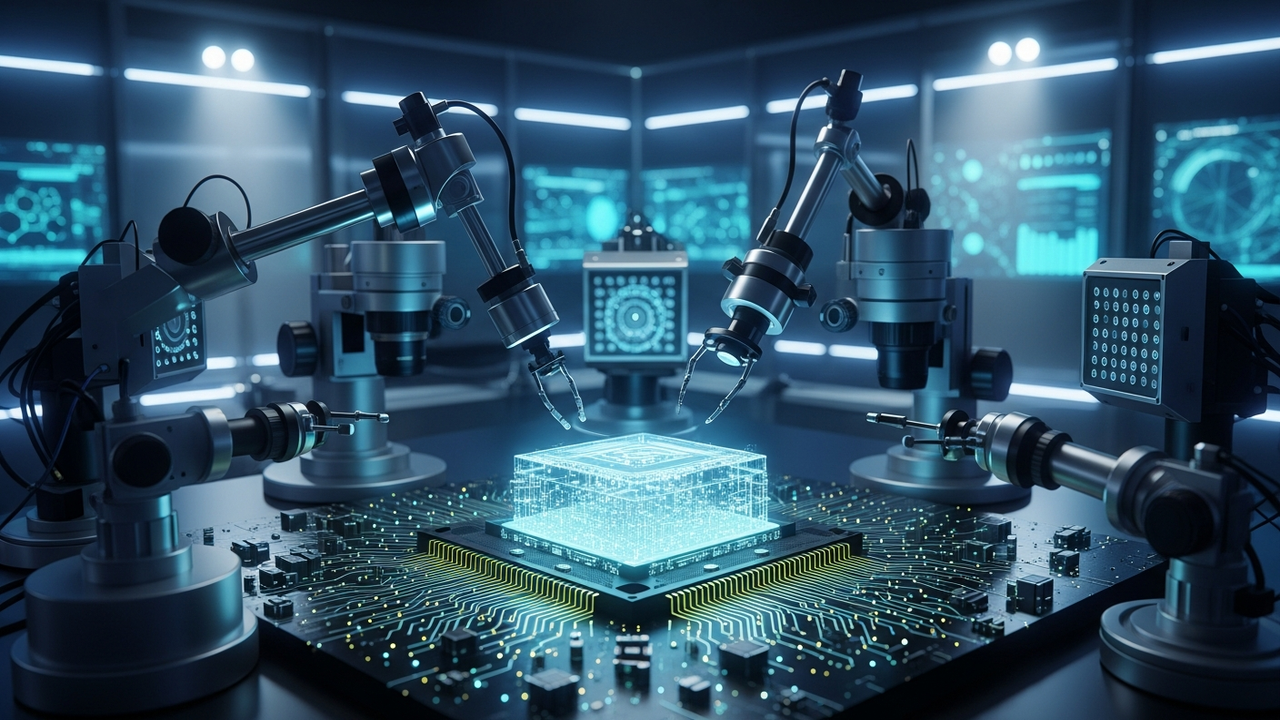
The University of Tokyo team has achieved a pivotal breakthrough, developing a novel chip element that processes information through the ingenious conversion of electrical signals into magnetic information. This innovative approach harnesses the intrinsic magnetic property of electron spin—a distinct departure from relying solely on electrical charge—to drastically minimize energy loss during information transfer and effectively suppress the generation of excess heat. This paradigm shift, rooted in a deep understanding of advanced semiconductor physics and materials science, theoretically enables processing speeds up to an astonishing 1,000 times faster than conventional silicon-based chips, critically, without any corresponding increase in heat output. This foundational work pushes the very boundaries of conventional electronics, ushering in a new era of energy-efficient, high-speed computation.
Societal and Industrial Impact, and Future Prospects
Should this groundbreaking technology reach commercialization, its implications for information technology would be transformative. A primary and immediate benefit would be a drastic reduction in power consumption for data centers, which currently represent a substantial and growing portion of global electricity usage. Cooling infrastructure, a major operational expense for these facilities, would see its demands fundamentally mitigated by heat-neutral, high-speed chips, thereby contributing significantly to sustainable IT infrastructure worldwide. Furthermore, consumer electronics such as smartphones and laptops could benefit from markedly faster performance, extended battery life, and less frequent charging cycles. Looking ahead, this innovation promises to accelerate advancements in artificial intelligence (AI) processing capabilities and even holds potential for synergistic applications in the nascent field of quantum computing, fostering innovation across a broad spectrum of technological disciplines.









Comments