
Background and Challenges of Miniaturization
Spectroscopic analysis, a fundamental tool for identifying and quantifying chemical substances based on light-matter interaction, is crucial across scientific research and industrial applications. However, conventional spectrometers typically require bulky and expensive optical components like prisms or diffraction gratings. This size and cost have long impeded their deployment in rapid field analysis and integration into portable or wearable devices. Researchers at the University of California, Davis, have been working to overcome these limitations, aiming for smaller, more powerful spectroscopic technologies.
Innovative AI-Driven Spectrometer Chip
The newly developed AI-powered chip dramatically shrinks laboratory-grade spectroscopic capabilities to an astonishing grain-of-sand size. This miniaturization is achieved through a fundamentally different operating principle than traditional spectrometers. Instead of physically dispersing light into its constituent wavelengths for detection, this AI chip employs artificial intelligence in conjunction with a specialized sensor array to computationally reconstruct the light spectrum. This approach significantly reduces the need for physical optical components, thereby drastically cutting down the device’s size and complexity. The AI algorithms learn and compare input data from the sensor array with known spectral patterns to rapidly derive high-precision spectral information.
Diverse Applications and Future Outlook
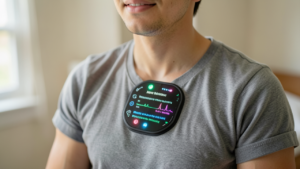
This ultra-compact AI spectrometer chip holds the potential to revolutionize various sectors. In medicine, it could enable rapid disease diagnosis and biomarker detection in portable devices, enhancing early and point-of-care diagnostics. For the food industry, it offers capabilities for quality inspection and anti-counterfeiting measures. In environmental monitoring, it can facilitate real-time surveillance of water and air pollutants. Furthermore, its integration into wearables and IoT devices could unlock continuous chemical analysis in previously inaccessible locations, opening new frontiers in smart cities, precision agriculture, and even space exploration. The device’s small footprint and AI-driven intelligence represent a significant step toward ubiquitous chemical sensing.








Comments