Key Findings
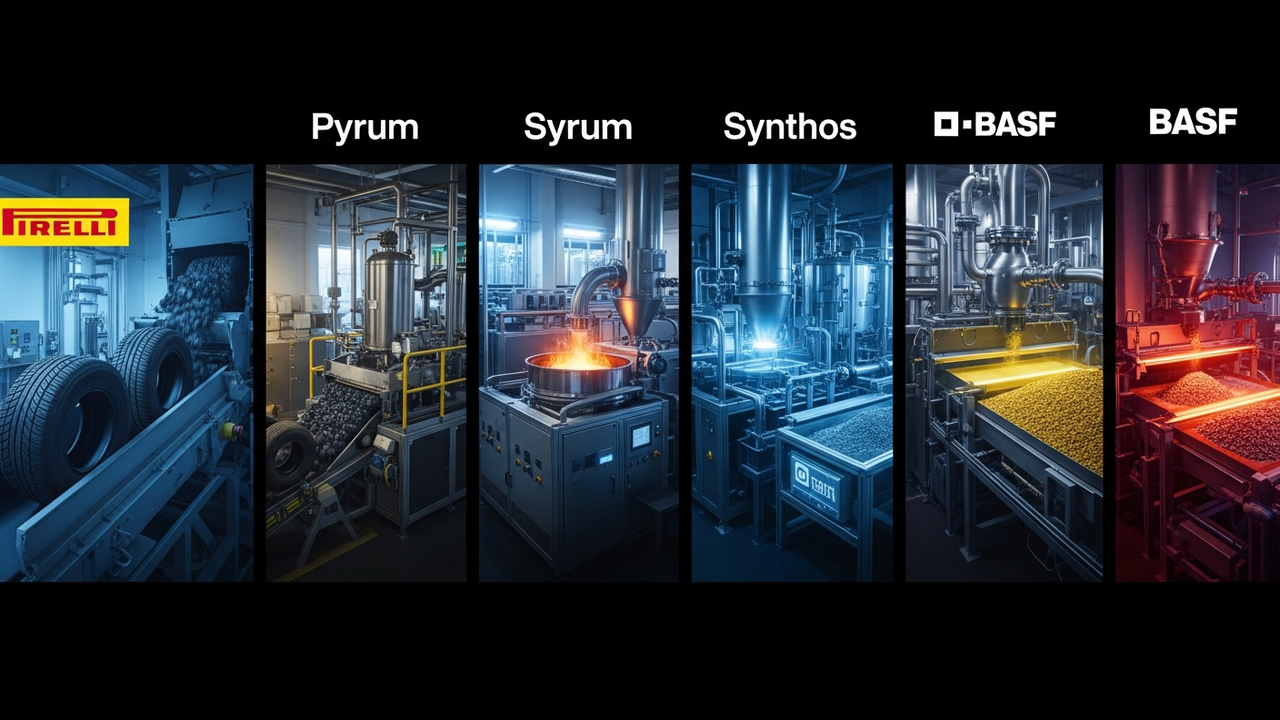
Leading tire manufacturer Pirelli, recycling technology company Pyrum Innovations, synthetic rubber producer Synthos, and chemical giant BASF have forged a strategic partnership to revolutionize end-of-life tires into recycled materials for new products. This alliance is specifically designed to achieve product circularity and significantly enhance sustainability within the tire industry.
Technical / Clinical Details
At the core of this partnership is Pyrum Innovations’ advanced pyrolysis process. This technology converts recovered end-of-life and scrap tires by heating them in an oxygen-free environment, yielding two valuable secondary raw materials: recovered carbon black (rCB) and tire pyrolysis oil (TPO). rCB can directly replace virgin carbon black in the production of new tires, while TPO serves as a crucial feedstock for Synthos and BASF to produce monomers required for synthetic rubber manufacturing. Notably, the synthetic rubber produced through this partnership is certified under the ISCC PLUS (International Sustainability & Carbon Certification PLUS) scheme, ensuring it meets stringent sustainable supply chain standards. This process significantly reduces reliance on virgin resources in tire manufacturing and contributes to a reduction in CO2 emissions.
Background & Context
The automotive industry is under increasing pressure to transition towards a circular economy, driven by stricter environmental regulations and growing consumer awareness of sustainability. Tires, with billions discarded globally each year, present a substantial environmental challenge in terms of disposal and recycling. Traditional tire recycling methods have often been limited by issues of quality and cost. Pyrolysis technology has emerged as a promising method for recovering valuable secondary raw materials from used tires, but its commercialization and large-scale deployment require collaboration across the entire supply chain. This partnership involving key players from different segments—Pirelli, Pyrum, Synthos, and BASF—serves as a powerful model for resolving these challenges and implementing industrial-scale circular solutions.
Strategic Significance & Outlook
This strategic partnership marks a significant milestone towards achieving a circular economy in the tire industry. The effective reuse of rCB and TPO in new tires and chemical products will lead to substantial advancements in resource efficiency and reduction of environmental impact. The ISCC PLUS certification ensures the sustainability credentials of this initiative and can serve as a benchmark for other companies. In the future, this model is expected to inspire similar circular solutions in other industrial sectors, promoting broader sustainable material management. This collaboration stands out as a compelling example of industrial cooperation dedicated to building a sustainable future.
Source: https://www.basf.com/global/en/media/news-releases/2026/07/p-26-137
Get our weekly technology intelligence — free
Receive an infographic that lets you judge at a glance whether each field’s analysis report is worth reading.
Subscribe Free — Weekly Tech Intelligence
By subscribing, you’ll receive Troy-Technical’s weekly technology intelligence newsletter.
- Your email and selected fields are used only to deliver the newsletter.
- We never share your information with third parties.
- You can unsubscribe anytime via the link in each email.
See our Privacy Policy for details.
Takes about a minute · Unsubscribe anytime






Comments