


Key Findings
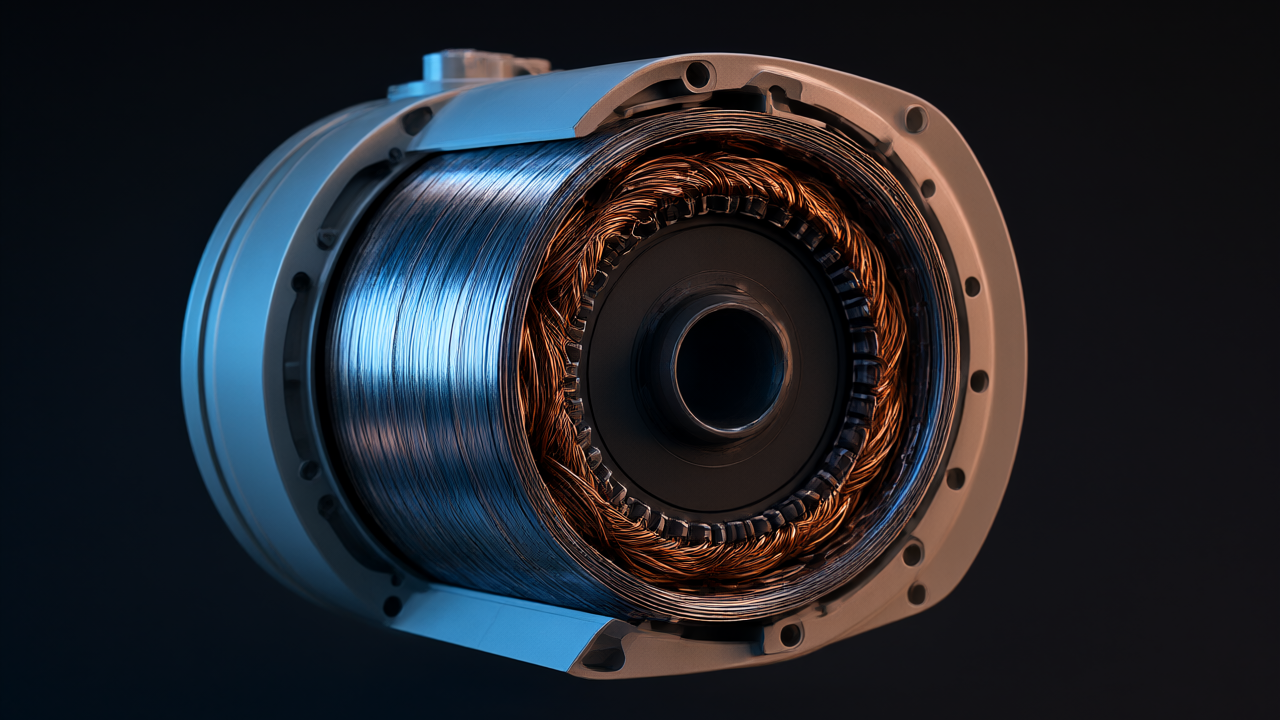
Electromagnetic simulations conducted by Proterial and FEV indicate that a traction motor utilizing amorphous alloy and heavy-rare-earth (HRE)-free magnets can increase peak power from 230 kW to 300 kW. The simulation shows a 27% reduction in motor weight and significant efficiency gains: efficiency rises from 95.5% to 97.9% on the WLTP Class 3 cycle and from 95.3% to 97.4% on the ARTEMIS MW 150 drive cycle.
Technical Details
The simulation compared a reference 230 kW drive unit featuring a silicon steel motor core against a new concept. To leverage the lower iron loss of the amorphous alloy, the concept increases the maximum motor speed to 20,000 rpm, up from 14,900 rpm in the reference model. To maintain equivalent maximum torque and speed during vehicle operation, the reduction ratio was increased from 10.8 to 14.4.
The conceptual motor incorporates the following specifications:
- 12 poles (compared to eight in the reference)
- 72 slots
- 200 mm stator outer diameter
- Active length reduced to 77.1% of the reference length
Background & Context
Amorphous alloy is produced by rapidly cooling molten alloy to create a metal without a crystalline structure, resulting in lower iron loss than standard electrical steel sheets. Proterial has implemented a continuous lamination and bonding process to enable the punching of amorphous alloy ribbons into motor cores.
Additionally, the motor utilizes Proterial’s neodymium sintered magnets which are free of heavy rare earths such as terbium and dysprosium. These materials are used to mitigate procurement risks and resource constraints while maintaining high coercivity and high remanence flux density.
Significance & Outlook
By combining advanced core materials with HRE-free magnets, the simulation demonstrates a path toward higher power density and efficiency in passenger-car BEVs without relying on constrained rare earth elements.
Get our weekly technology intelligence — free
Receive an infographic that lets you judge at a glance whether each field’s analysis report is worth reading.
Subscribe Free — Weekly Tech Intelligence
By subscribing, you’ll receive Troy-Technical’s weekly technology intelligence newsletter.
- Your email and selected fields are used only to deliver the newsletter.
- We never share your information with third parties.
- You can unsubscribe anytime via the link in each email.
See our Privacy Policy for details.
Takes about a minute · Unsubscribe anytime