Key Findings
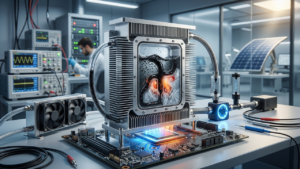
The engineered biochar-graphene hybrid significantly improves the performance of organic phase-change materials (PCMs). The optimal formulation, FK7G/C22, delivered a 72.0% increase in latent heat compared to composites made with unmodified biochar. In durability tests simulating three years of energy-recovery ventilation operation (1,000 heating-cooling cycles), FK7G/C22 retained 90.2% of its latent heat, while FK6G/C22 retained 93.1%. Thermal diffusivity increased by nearly 188.3% compared to pristine docosane, and the heat storage factor for FK7G/C22 was 38.1% higher than that of the unmodified biochar composite.
Technical Details
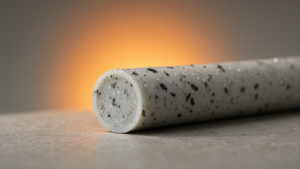
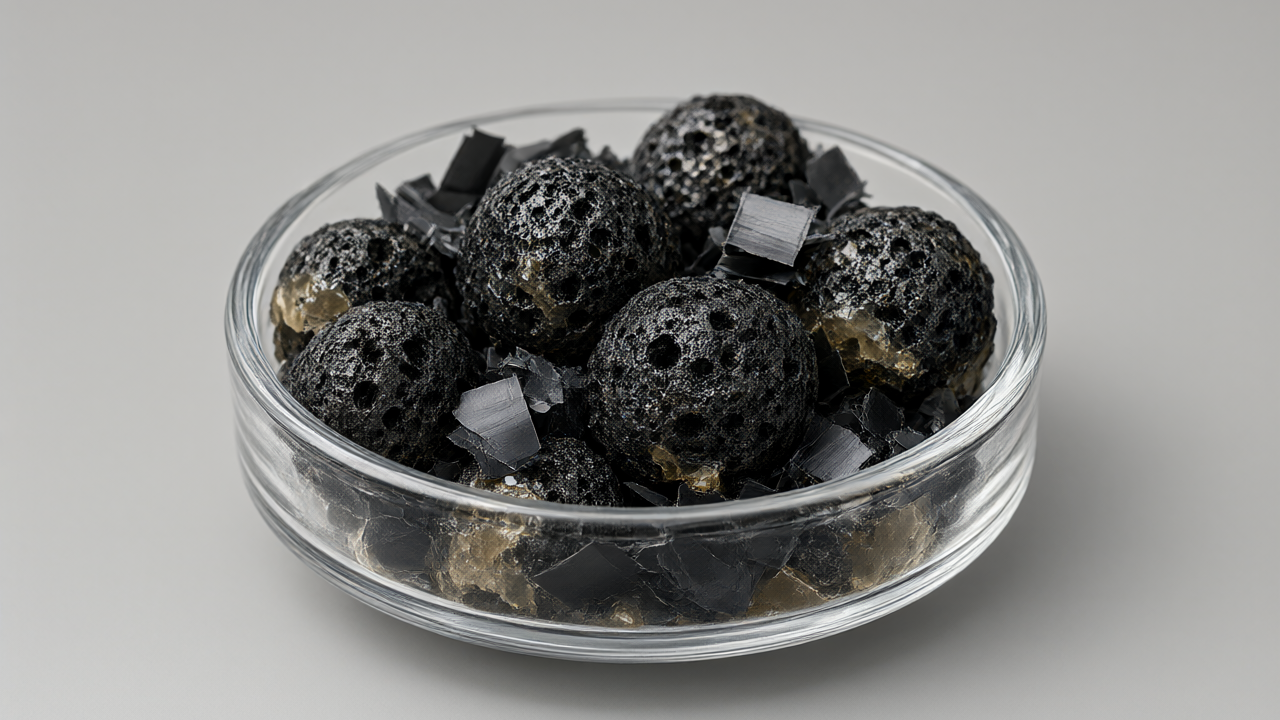
The team produced the hybrid by pyrolyzing mixed food waste at 400 degrees Celsius, followed by carbonization with potassium hydroxide at 600, 700, or 800 degrees Celsius. These samples (FK6, FK7, FK8) were coated with a 0.1 weight percent graphene suspension in ethanol via dip-coating and ultrasonication. The FK7G sample exhibited the highest performance, with a BET specific surface area of 323.1 square meters per gram and a total pore volume of 0.582 cubic centimeters per gram. The paraffin docosane was then encapsulated into these scaffolds via vacuum impregnation at 70 degrees Celsius.
- Thermal Properties: Melting occurred between 47.6 and 48.4 degrees Celsius; crystallization occurred between 37.5 and 38.3 degrees Celsius.
- Enthalpy: FK7G/C22 reached a melting enthalpy of 93.1 joules per gram, nearly matching the 95.6 joules per gram of pristine graphene composites.
- Leakage: At 70 degrees Celsius, FK7G/C22 lost only 13.2 ± 0.82% of its mass over 180 minutes.
Background & Context
Organic paraffins like docosane are effective for buffering temperature swings in ventilation systems due to high phase-change enthalpies. However, they typically suffer from leakage during melting, poor heat conduction, and capacity loss over time. While porous carbons like graphene can confine these paraffins, production is often energy-intensive and costly. Biochar provides a high-porosity alternative rich in hydroxyl, carboxyl, and amine groups, though it historically lacked sufficient energy storage density.
Significance & Outlook
By integrating small amounts of graphene with food-waste biochar, the researchers created a graphitic scaffold that functions as an effective heat-transfer network. This approach allows food-waste materials to substitute for mined graphite-derived graphene at a fraction of the dosage, providing a scalable method to manage heat and moisture in ventilation systems.
Source: https://bioengineer.org/food-waste-biochar-turned-graphene-hybrid-stores-heat-and-manages-moisture/
Get our weekly technology intelligence — free
Receive an infographic that lets you judge at a glance whether each field’s analysis report is worth reading.
Subscribe Free — Weekly Tech Intelligence
By subscribing, you’ll receive Troy-Technical’s weekly technology intelligence newsletter.
- Your email and selected fields are used only to deliver the newsletter.
- We never share your information with third parties.
- You can unsubscribe anytime via the link in each email.
See our Privacy Policy for details.
Takes about a minute · Unsubscribe anytime