

Key Findings
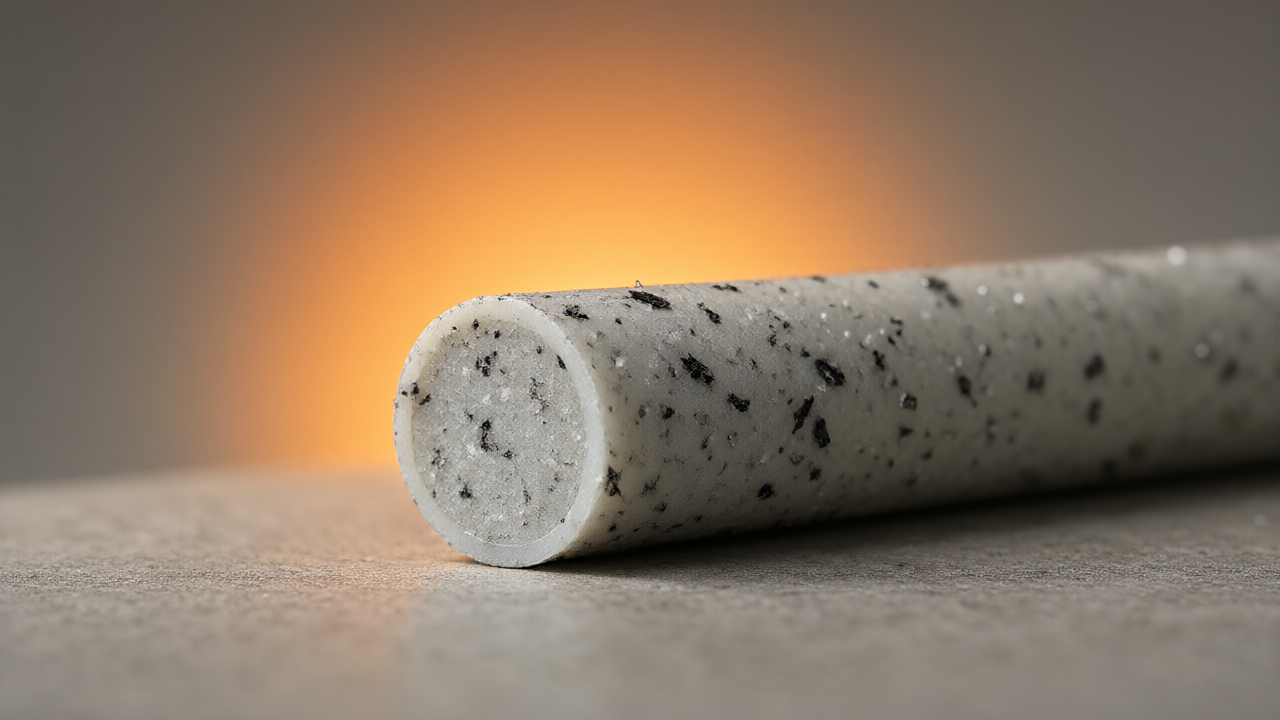
In standardized fire resistance testing following KS F 2845, a hybrid silicone sealant maintained stability for over 60 minutes without flame penetration. In contrast, a conventional control formulation failed after approximately 40 minutes, reaching critical temperature rise on its unexposed surface at 37 minutes. The optimized formulation (Group 4) also showed significant mechanical gains, achieving a tensile strength of 41 kgf/cm²—a 46.43 percent improvement over the control’s 28 kgf/cm²—and an adhesion strength of 30 kgf/cm², an increase of approximately 15.38 percent.
Technical Details
The sealant utilizes a sequential composite defense mechanism involving two primary nanomaterials:
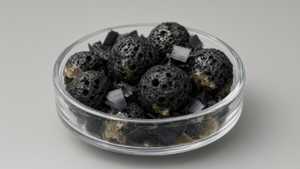
- Silica Aerogel: A nanoporous solid with porosity exceeding 90 percent and thermal conductivity of approximately 0.013 W/(m·K), which suppresses initial temperature rise.
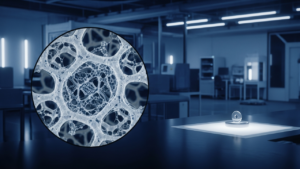
- Nanographene Flakes: Two-dimensional platelets that act as physical barriers to gas and heat migration, promoting a dense char layer to block oxygen ingress.
To prevent agglomeration, researchers used atmospheric-pressure plasma treatment, followed by immersion of the aerogel in an aqueous ammonium phosphate solution and the nanographene in a silane emulsion. The formulation also includes boron-treated titanium for a vitreous protective layer and Pigment Yellow 181 to act as a radical scavenger.
Background & Context
Conventional fire-resistant sealants typically rely on inorganic fillers like aluminum hydroxide and iron oxide. While these improve fire performance, they often degrade the elasticity and adhesion necessary for sealants to withstand long-term aging and daily building movement. The research, published in Architectural Research by Do Su Yoon, Kee Sun Park, and Sumin Kim, sought to resolve this trade-off through interfacial control of nanomaterials.
Significance & Outlook
The hybrid material provides a multi-stage defense: aerogel shields the matrix below 200 °C, aluminum hydroxide releases cooling water vapor above 220 °C, and nanographene flakes build a char skeleton between 300 and 600 °C. Group 4 retained more than 85 percent of its initial tensile strength after accelerated thermal aging at 200 °C for four weeks, suggesting high durability for high-rise building joints.
Source: https://bioengineer.org/hybrid-silicone-sealant-withstands-fire-for-over-an-hour-in-building-joints/
Get our weekly technology intelligence — free
Receive an infographic that lets you judge at a glance whether each field’s analysis report is worth reading.
Subscribe Free — Weekly Tech Intelligence
By subscribing, you’ll receive Troy-Technical’s weekly technology intelligence newsletter.
- Your email and selected fields are used only to deliver the newsletter.
- We never share your information with third parties.
- You can unsubscribe anytime via the link in each email.
See our Privacy Policy for details.
Takes about a minute · Unsubscribe anytime