

Key Findings
The optimized PDES electrolyte achieved a high ionic conductivity of 1.39 mS cm–1 at 30 °C and a Na-ion transference number of 0.58. In full-cell testing at 0.1 C, the system delivered an initial discharge capacity of 110.2 mAh g-1 with nearly 99% coulombic efficiency. Long-term stability tests showed 90.4% capacity retention over 1000 cycles at a rate of 2 C. Additionally, the electrolyte demonstrated high flame retardance and leakage resistance, maintaining power to an LED in a pouch cell even when the cell was folded and cut.
Technical Details
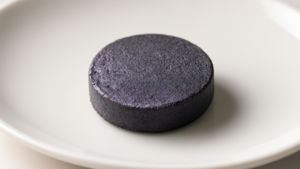
The PDES electrolyte is composed of sodium perchlorate (NaClO4), N-isopropylacrylamide (NIPAM), and succinonitrile (SN). These components initially form a homogenous liquid deep eutectic solvent (DES) stabilized by hydrogen bonding and ion-dipole interactions. To prevent the leakage common in liquid DES, the team performed in-situ polymerization to create a robust solid matrix.
- NaClO4: Serves as the Na-ion source; weak coordination between the perchlorate (ClO4-) anion and Na-ion facilitates salt dissociation.
- NIPAM: Promotes Na-ion dissociation via ion-dipole interactions and forms the polymer matrix.
- SN: Provides plasticity and further assists in Na-ion dissociation.
This configuration creates a robust electrode-electrolyte interface on the cathode, which suppresses irregular Na growth and parasitic side reactions.
Background & Context
Sodium-metal batteries are viewed as cost-effective alternatives to lithium-ion batteries due to the abundance of sodium reserves. However, practical application has been hindered by the high reactivity of sodium metal, dendrite growth, and the volatility and toxicity of conventional organic liquid electrolytes, which can lead to catastrophic failure at high operating temperatures.
Significance & Outlook
The study, published in Volume 90 of Energy Storage Materials on August 01, 2026, suggests that this PDES design enables more sustainable and safer rechargeable batteries. Professor Chan-Jin Park indicates that these advancements could support backup power systems, low-cost battery systems, and renewable energy storage at the grid-level.
Source: https://www.miragenews.com/chonnam-researchers-develop-safer-durable-1769603/
Get our weekly technology intelligence — free
Receive an infographic that lets you judge at a glance whether each field’s analysis report is worth reading.
Subscribe Free — Weekly Tech Intelligence
By subscribing, you’ll receive Troy-Technical’s weekly technology intelligence newsletter.
- Your email and selected fields are used only to deliver the newsletter.
- We never share your information with third parties.
- You can unsubscribe anytime via the link in each email.
See our Privacy Policy for details.
Takes about a minute · Unsubscribe anytime