Key Findings
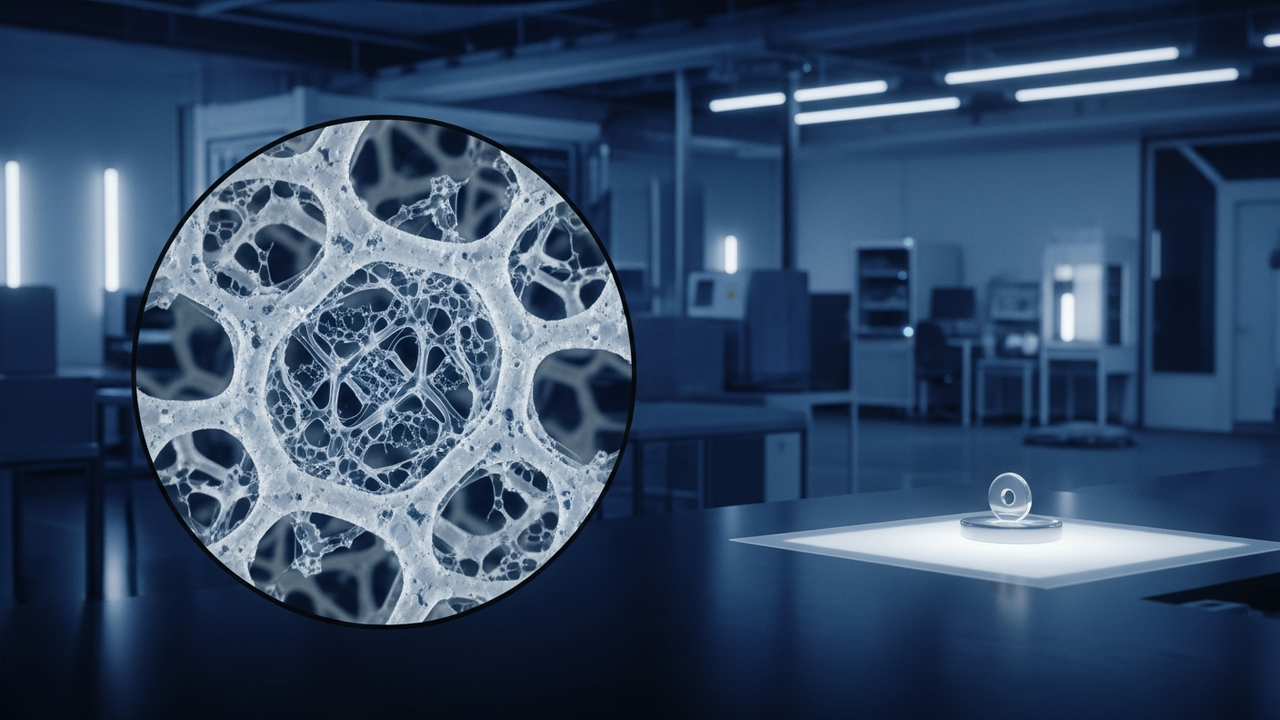
Researchers have successfully fabricated a 200 μm-thick KNN (Potassium Sodium Niobate)-based ceramic that exhibits an extraordinary giant electrostrain, reaching up to 1068 pm/V under an electric field of 15 kV/cm. This groundbreaking achievement, accomplished through a sintering process in a reducing atmosphere, marks a significant leap forward in the development of high-performance lead-free piezoelectric ceramics.
Technical / Clinical Details
This impressive electrostrain is primarily attributed to the material’s “inherent strain,” which arises from a synergistic effect between defect engineering and domain engineering. Defect engineering involves the deliberate introduction of lattice defects into the material to tune its piezoelectric properties. Domain engineering, on the other hand, refers to controlling the orientation and size of ferroelectric domains within the ceramic’s microstructure. By combining these techniques, the mobility of domain walls is enhanced when an electric field is applied, leading to a much larger strain response. Specifically, sintering in a reducing atmosphere was crucial, as it generates particular oxygen vacancies that facilitate domain wall movement and maximize electrostrain characteristics. This method significantly boosts the performance of lead-free piezoelectric materials, which is increasingly important given tightening environmental regulations.
Background & Context
Piezoelectric ceramics are utilized in a wide array of applications, including sensors, actuators, and energy harvesting devices. However, lead zirconate titanate (PZT), the most commonly used piezoelectric material, contains toxic lead. This necessitates a transition to lead-free alternatives due to escalating environmental regulations. KNN-based ceramics are considered promising candidates for lead-free piezoelectric materials, but their piezoelectric performance has traditionally lagged behind that of PZT. Achieving a giant electrostrain, as demonstrated in this research, is vital for accelerating the practical application of KNN-based materials and closing the performance gap with lead-containing counterparts.
Strategic Significance & Outlook
The development of these high-electrostrain KNN-based ceramics will profoundly impact the creation of low-cost, high-performance multilayer piezoelectric actuators. Applications are anticipated in industrial sectors requiring high-precision control, such as precision positioning systems, micropumps, ultrasonic transducers, and fuel injection systems. Their high efficiency will also be advantageous for energy harvesting in wearable devices and IoT sensors. Future research will focus on the material’s long-term stability, fatigue properties, and the scalability of manufacturing processes. This technology represents a crucial step towards realizing environmentally friendly and high-performance next-generation piezoelectric devices.
Get our weekly technology intelligence — free
Receive an infographic that lets you judge at a glance whether each field’s analysis report is worth reading.
Subscribe Free — Weekly Tech Intelligence
By subscribing, you’ll receive Troy-Technical’s weekly technology intelligence newsletter.
- Your email and selected fields are used only to deliver the newsletter.
- We never share your information with third parties.
- You can unsubscribe anytime via the link in each email.
See our Privacy Policy for details.
Takes about a minute · Unsubscribe anytime




