Key Findings
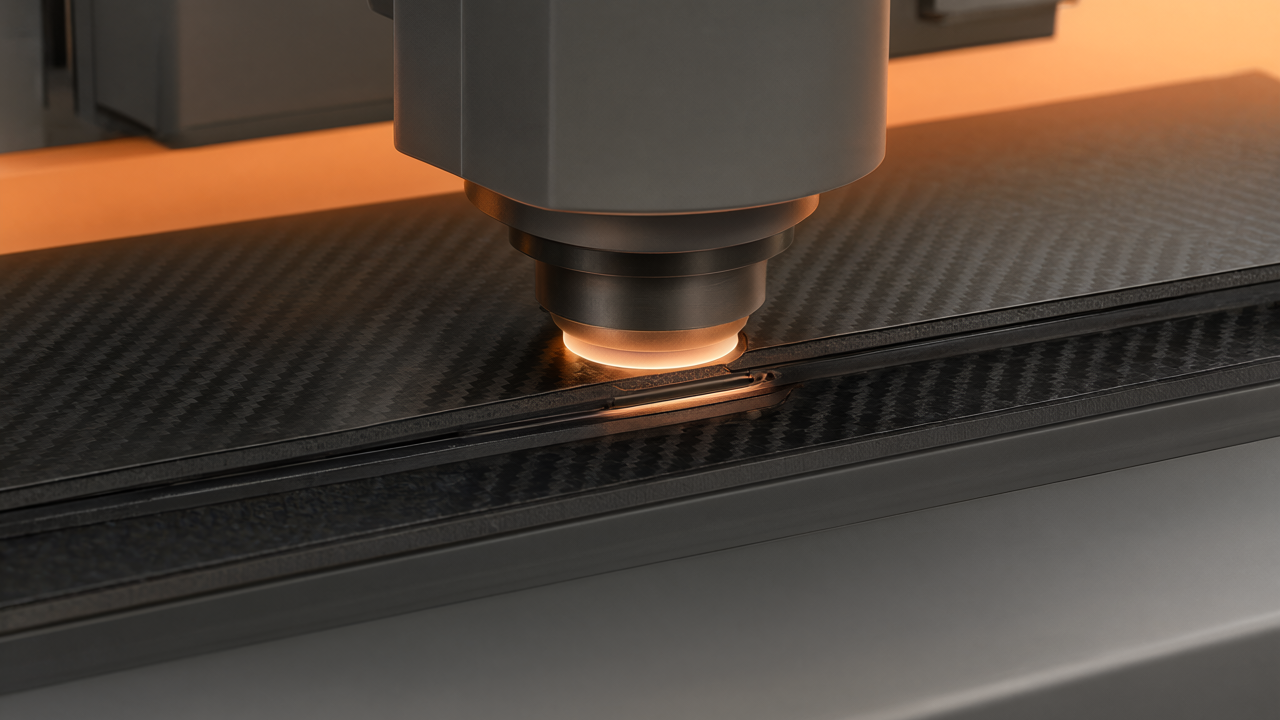
Researchers have successfully developed a nanocomposite aerogel featuring varying ratios of carbon nanotubes (CNT) and Fe3O4 nanoparticles, dramatically accelerating the heating rate in the induction welding of carbon fiber composites. This nanocomposite-enhanced welding system recorded an initial heating rate of 148.7°C/s, representing a 94.6% improvement compared to the rate achieved with carbon fiber composites alone. This breakthrough promises to significantly enhance the efficiency and reliability of composite manufacturing and repair processes.
Technical / Clinical Details
The study involved the fabrication and evaluation of diverse nanocomposite compositions to identify the optimal ratio of CNT and Fe3O4. The key to this performance enhancement lies in the precise control over the balance between the nanocomposite’s electrical conductivity and magnetic loss. During the induction welding process, high-frequency magnetic fields generate eddy currents and hysteresis losses within the material, which in turn produce heat. By combining the excellent electrical conductivity of CNTs with the magnetic properties of Fe3O4, the system achieves highly efficient heat generation—a capability not possible with conventional composites alone—leading to a substantial increase in the initial heating rate.
Background & Context
Carbon fiber composites are widely used across industries such as aerospace, automotive, and wind energy due to their exceptional lightweight and high-strength properties. However, efficient and reliable joining of these composite materials has been a major challenge in manufacturing and repair processes. Induction welding is a promising technique given its ability for rapid and localized heating, but improvements in heating efficiency were needed. The nanocomposite aerogel developed in this research offers an innovative solution to this challenge, contributing to the realization of faster and more robust composite joining technologies.
Strategic Significance & Outlook
This induction welding technology, leveraging nanocomposite aerogels, is expected to find broad industrial applications, including airframe manufacturing and repair in aerospace, assembly of lightweight components in the automotive sector, and production of wind turbine blades. The accelerated heating rates will directly translate into reduced production cycle times and lower manufacturing costs, further boosting the adoption of composite materials. In the future, this technology is anticipated to establish new standards in composite design and manufacturing, promoting the development of more sustainable and higher-performance products.
Get our weekly technology intelligence — free
Receive an infographic that lets you judge at a glance whether each field’s analysis report is worth reading.
Subscribe Free — Weekly Tech Intelligence
By subscribing, you’ll receive Troy-Technical’s weekly technology intelligence newsletter.
- Your email and selected fields are used only to deliver the newsletter.
- We never share your information with third parties.
- You can unsubscribe anytime via the link in each email.
See our Privacy Policy for details.
Takes about a minute · Unsubscribe anytime