Key Findings
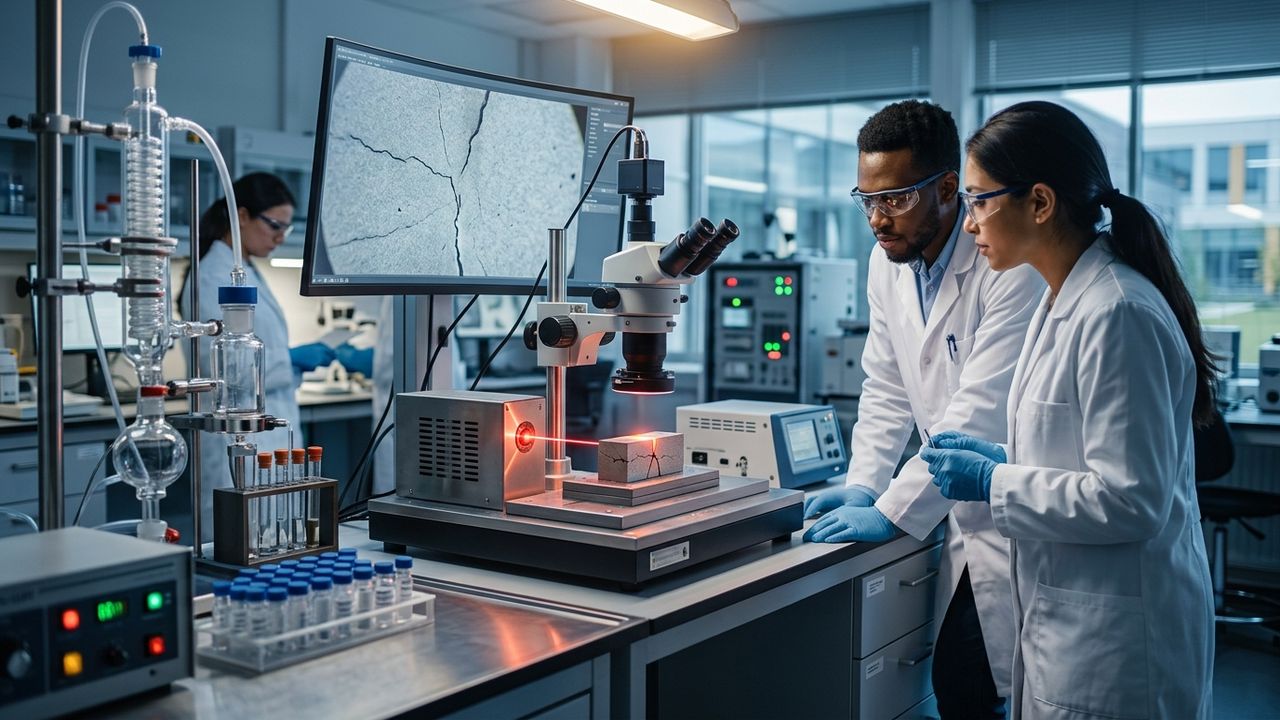
Researchers at South Ural State University in Russia are developing a groundbreaking self-healing metal capable of repairing its own microcracks upon heating. This innovative material leverages a high-entropy alloy matrix embedded with low-melting-point inclusions. The technology promises to significantly extend the lifespan of metal components and reduce failure risks across various critical applications.
Technical / Clinical Details
The self-healing metal combines the robustness of a high-entropy alloy with the fluidity of low-melting-point inclusions. When microcracks or defects form in the metal, external heat causes the inclusions within the matrix to melt. Driven by capillary action, these molten inclusions flow into the cracks, and upon cooling, they solidify to fill the voids and restore the structural integrity of the material. This approach directly addresses the formidable challenge of self-healing in structural metals, a domain far more demanding than that of self-healing polymers. The development holds significant promise for enhancing safety and reliability in high-stress sectors such as aerospace and energy.
Background & Context
Fatigue cracks and micro-defects caused by corrosion are persistent issues in metal components, leading to reduced structural lifespan and potential catastrophic failures. While self-healing functionalities have been extensively explored in polymers, their realization in metals has remained an elusive goal due to the extreme conditions under which metals typically operate. The research from South Ural State University offers a novel solution to this long-standing problem, potentially improving the reliability of components used in high-temperature and high-stress environments. This also translates to significant reductions in maintenance costs and more efficient resource utilization.
Strategic Significance & Outlook
If successfully commercialized, this self-healing metal technology could find widespread adoption in industries where safety and durability are paramount, including aircraft components, power plant turbines, and automotive engines. While still in its early stages, the underlying principles and demonstrated effects are highly promising, potentially establishing a new paradigm in materials science. Future research will likely explore its applicability across broader temperature ranges and different alloy types, further expanding its potential impact.
Get our weekly technology intelligence — free
Receive an infographic that lets you judge at a glance whether each field’s analysis report is worth reading.
Subscribe Free — Weekly Tech Intelligence
By subscribing, you’ll receive Troy-Technical’s weekly technology intelligence newsletter.
- Your email and selected fields are used only to deliver the newsletter.
- We never share your information with third parties.
- You can unsubscribe anytime via the link in each email.
See our Privacy Policy for details.
Takes about a minute · Unsubscribe anytime






Comments