Key Findings
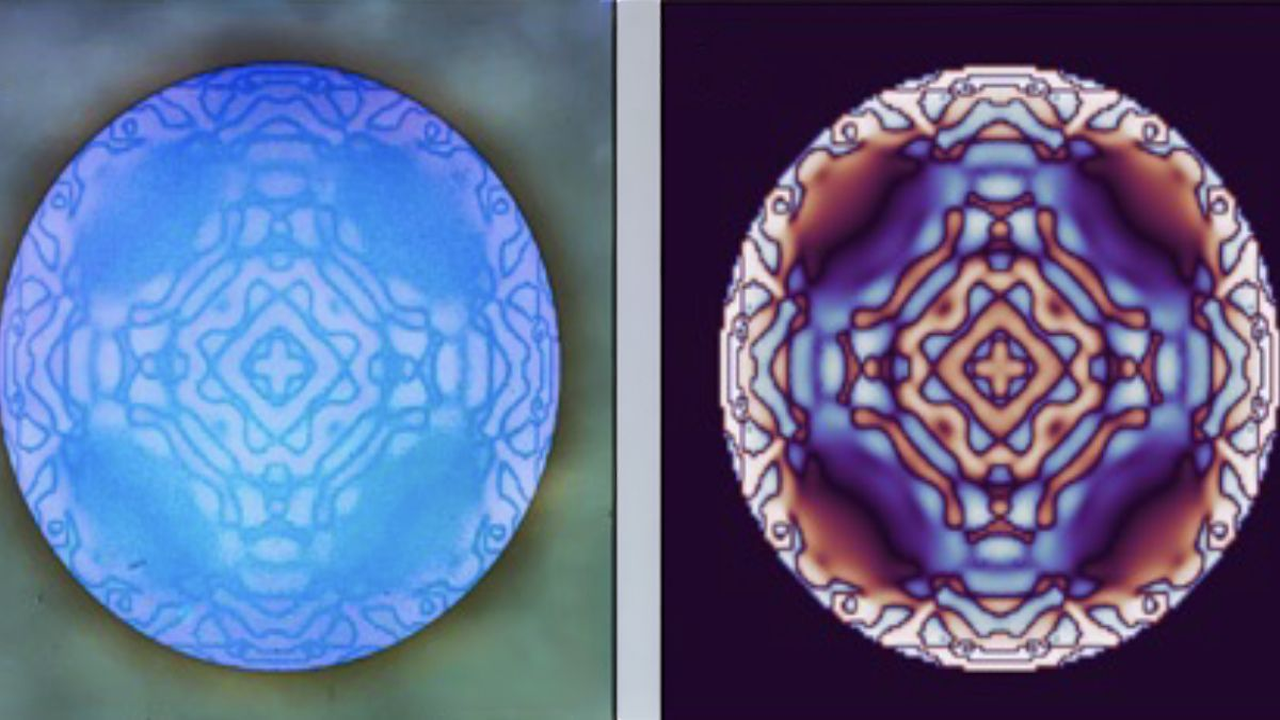
A research team at UC San Diego has pioneered a novel technique that integrates an AI-designed compact optical device with an AI-powered analysis system to correct distorted light in real time, enabling significantly sharper imaging. This innovation, published in Nature Communications, leverages a metasurface composed of titanium dioxide nanopillars to generate a unique image signature for each optical distortion. A deep neural network then interprets these signatures, allowing for immediate correction of distortions. This patent-pending approach establishes a scalable foundation for next-generation optical and photonic systems, with profound implications for fields ranging from biology to astronomy.
Technical / Clinical Details
- The Problem of Light Distortion: Optical systems, particularly high-resolution microscopes and telescopes, frequently encounter light distortions due to lens imperfections, atmospheric turbulence, or inhomogeneities in biological samples. These distortions severely degrade image quality and resolution.
- AI-Designed Metasurface: Central to this technology is an AI-designed metasurface, a 2D array of precisely arranged titanium dioxide nanopillars on a microscale. The AI algorithms optimize the configuration of these nanopillars to manipulate incident light wavefronts at a very fine granularity, tailored to correct specific types of distortions.
- Unique Image Signatures: The metasurface is engineered to produce a unique “image signature” for each incident light distortion. This means that distorted light passing through the metasurface forms a distinctive pattern that correlates directly with the nature and extent of the original distortion.
- AI-Powered Real-Time Correction: A deep neural network is trained to rapidly analyze these image signatures. Upon identifying the type and magnitude of the distortion, the network either adjusts the optical system or applies digital image processing techniques to correct the distortion in real time. This real-time capability is crucial for dynamic imaging environments.
Background & Context
High-resolution imaging is indispensable across numerous scientific, medical, and industrial domains. However, light distortions have consistently been a limiting factor in achieving ultra-precise imaging. Traditional distortion correction methods, such as adaptive optics, typically rely on complex and expensive hardware, often struggling with real-time processing demands. The convergence of AI and metamaterials offers a more compact, faster, and cost-effective solution to this longstanding challenge.
Strategic Significance & Outlook
This AI-integrated optical distortion correction technology has the potential to revolutionize numerous fields. With a patent pending, commercialization efforts are expected to follow:
- Biomedical Imaging: Enabling unprecedented clarity in observing live cells and internal tissues, which can advance early disease diagnosis and therapeutic development.
- Astronomy: Correcting atmospheric turbulence in telescopes to obtain sharper images of distant celestial objects, furthering our understanding of the universe.
- Microelectronics Manufacturing: Compensating for optical distortions in next-generation lithography, enabling the fabrication of even finer circuit patterns.
- Consumer Electronics: Improving image quality in smartphone cameras and enhancing the immersive experience in AR/VR devices.
This approach establishes a scalable foundation that will fundamentally transform the design and performance of optical systems, paving the way for a new era of innovation in imaging and photonics.








Comments