Key Findings
The Massachusetts Institute of Technology (MIT) has been officially selected by the U.S. National Science Foundation (NSF) to lead a new Materials Science and Engineering Research Center (MRSEC). This center will receive a substantial grant totaling $18 million (approximately 2.7 billion JPY) over the next six years, and will pursue diverse research projects focused on medical imaging, sustainable metal production, advanced materials technologies for next-generation semiconductors, and the establishment of an innovative laboratory for magnetic materials testing. This selection reaffirms MIT’s global leadership in materials science research.
Technical / Clinical Details
This new MRSEC aims to integrate experts across multiple disciplines to achieve both fundamental understanding and innovative applied development in materials science. Specifically, the following key research areas have been established:
- Medical Imaging: Development of new probes, contrast agents, and sensor materials to enable higher-resolution, non-invasive imaging. This will contribute to improving the accuracy of early disease detection and treatment efficacy monitoring.
- Sustainable Metal Production: Research into resource-efficient, environmentally friendly new metal refining processes and alloy design. This will support industrial transformation toward a carbon-neutral society.
- Materials Technologies for Next-Generation Semiconductors: Exploration and application of new materials (e.g., 2D materials, topological materials) to enable ultra-low power, high-speed, and high-density semiconductor devices crucial for future information technology such as AI chips and quantum computing.
- New Laboratory for Magnetic Materials Testing: A state-of-the-art facility for evaluating the properties of advanced magnetic materials (e.g., spintronic materials, rare earth-free magnets) and developing new magnetic devices.
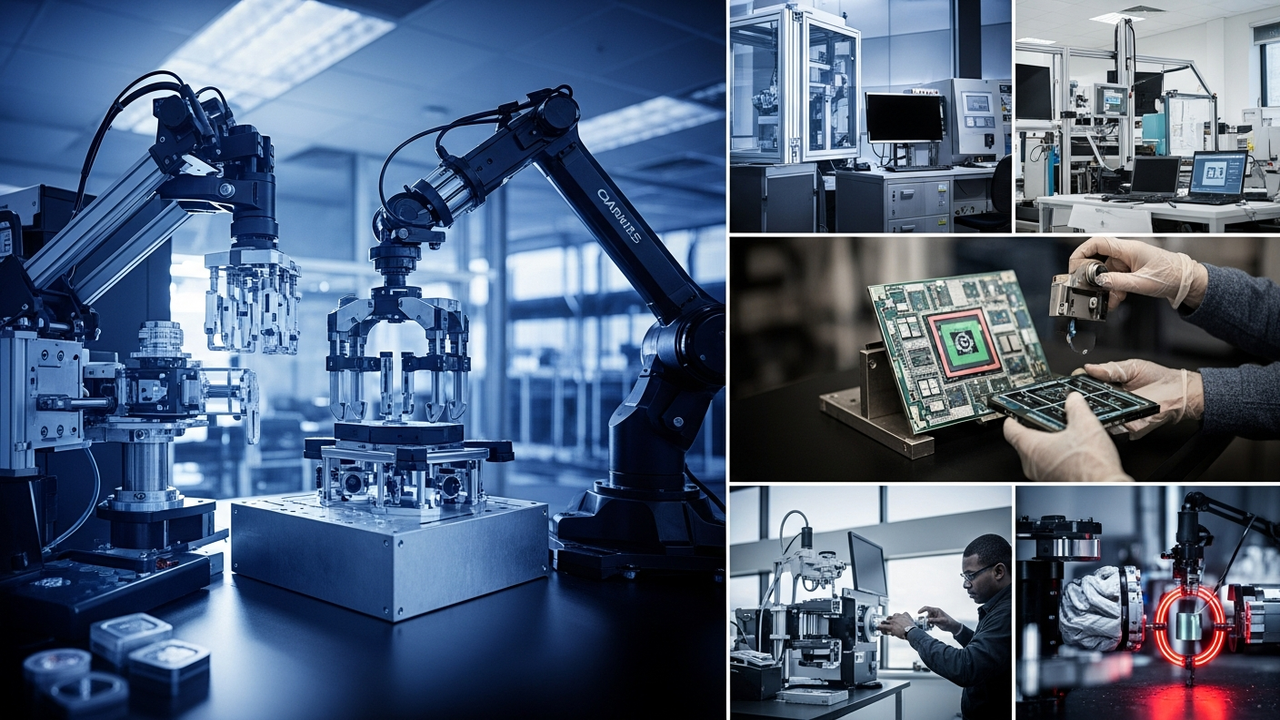
These research efforts will integrate cutting-edge tools such as computational science, nanotechnology, robotics, and AI, aiming to accelerate the entire cycle from material design to synthesis and characterization.
Background & Context
The NSF’s MRSEC program aims to promote excellence in materials science research in the U.S. and generate scientific breakthroughs and technological innovations through interdisciplinary approaches. MIT’s selection to lead this major center is a testament to its track record and its capacity to tackle complex scientific and engineering challenges. Modern society faces numerous issues such as global warming, advancements in healthcare, and limits in information technology, all of which critically require fundamental progress in materials science. The establishment of this center is a strategic investment for the U.S. to maintain global leadership in these fields and represents a significant opportunity to strengthen collaboration between academia and industry.
Strategic Significance & Outlook
The MIT-led MRSEC is expected to generate groundbreaking discoveries and technological innovations in each of the aforementioned research areas over the next six years. In particular, advancements in medical diagnostic accuracy, the development of sustainable industrial processes, and the provision of foundational materials for next-generation information technology will have a profound impact on society as a whole. Furthermore, the establishment of a new laboratory will contribute to nurturing young researchers and developing future leaders in materials science. This program will strengthen the innovation ecosystem that connects basic research to applied research and ultimately to commercialization, contributing to the long-term economic growth and international competitiveness of the U.S.
Source: https://news.mit.edu/2026/mit-to-lead-nsf-materials-research-center-0812
Get our weekly technology intelligence — free
Receive an infographic that lets you judge at a glance whether each field’s analysis report is worth reading.
Subscribe Free — Weekly Tech Intelligence
By subscribing, you’ll receive Troy-Technical’s weekly technology intelligence newsletter.
- Your email and selected fields are used only to deliver the newsletter.
- We never share your information with third parties.
- You can unsubscribe anytime via the link in each email.
See our Privacy Policy for details.
Takes about a minute · Unsubscribe anytime