Key Findings
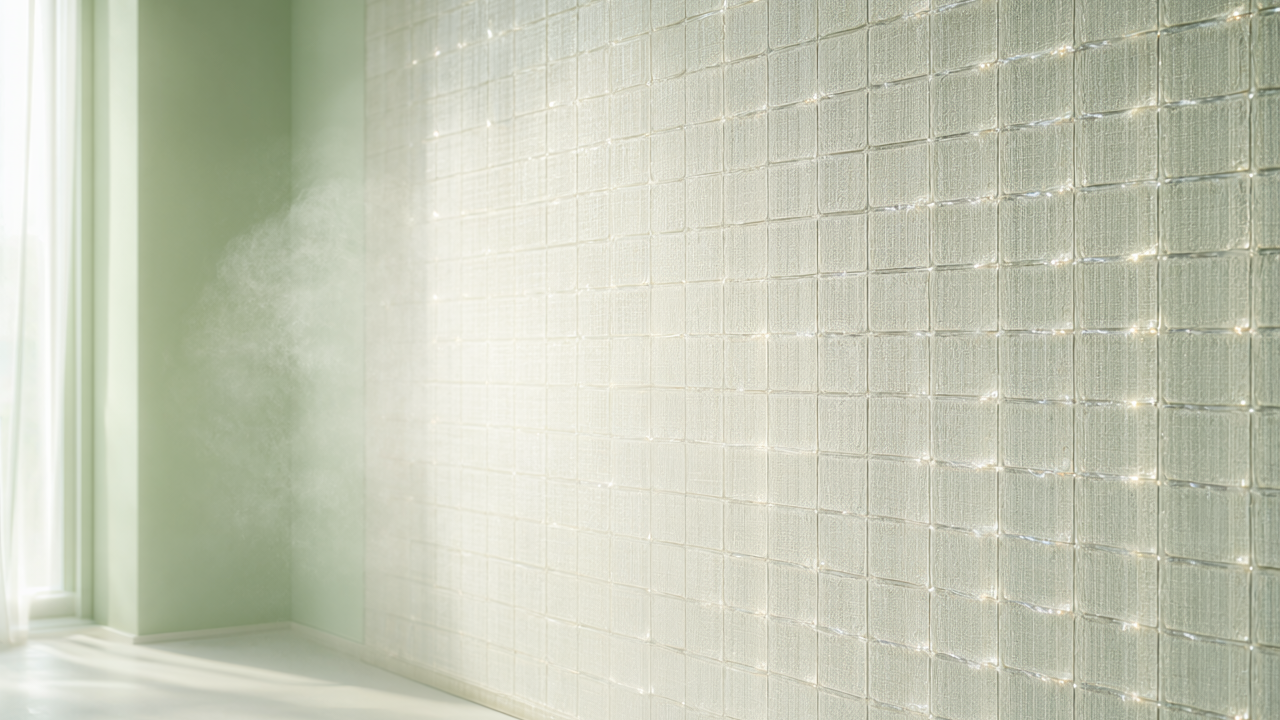
Engineers at Binghamton University have successfully developed a novel wall-mounted panel, dubbed “moisture-powered wallpaper,” capable of converting indoor humidity into electrical power. This groundbreaking technology signifies a paradigm shift, transforming passive architectural elements into active, self-powering climate-responsive interfaces and unlocking new avenues for sustainable, distributed energy generation.
Technical/Clinical Details
The innovative wallpaper functions through a carefully engineered material and structural design that leverages the natural absorption and desorption cycles of moisture from the air to generate electricity. Specifically, a compact array measuring 35 square centimeters demonstrated sufficient power output to operate a humidity sensor for approximately 15 minutes. Scaling up the technology, a larger array comprising 1,596 units was able to continuously power a wireless keyboard, all while actively reducing the indoor relative humidity from 38% to a more comfortable 32%. This dual functionality not only provides a renewable energy source but also offers a potential benefit for indoor environmental quality by passively managing humidity levels. The full details of this advancement have been published in the journal, ‘Advanced Energy Materials’.
Background & Context
The proliferation of IoT devices and smart home technologies has introduced growing challenges related to battery life, replacement logistics, waste generation, and the need for widespread charging infrastructure. This research offers a compelling solution by tapping into ubiquitous ambient energy sources, a field known as energy harvesting. By focusing on humidity, a readily available yet often overlooked energy vector, the Binghamton team has developed a technology with broad applicability for powering low-power electronics in smart homes, wearable devices, and remote sensor networks, circumventing the traditional limitations of battery-dependent systems.
Strategic Significance & Outlook
The moisture-powered wallpaper holds significant potential to revolutionize residential and commercial buildings by enabling them to become self-sustaining energy hubs. Envisioned applications include integration into walls and ceilings to provide localized power for smart lighting, climate control systems, and an array of environmental sensors, thereby fostering greater energy independence for structures. Furthermore, its capacity as a distributed power source makes it particularly valuable for off-grid applications or in regions with unreliable grid infrastructure, contributing to global energy sustainability goals. Key challenges for commercialization will involve further enhancing power output, ensuring long-term durability and scalability, and optimizing manufacturing costs to facilitate widespread adoption.
Get our weekly technology intelligence — free
Receive an infographic that lets you judge at a glance whether each field’s analysis report is worth reading.
Subscribe Free — Weekly Tech Intelligence
By subscribing, you’ll receive Troy-Technical’s weekly technology intelligence newsletter.
- Your email and selected fields are used only to deliver the newsletter.
- We never share your information with third parties.
- You can unsubscribe anytime via the link in each email.
See our Privacy Policy for details.
Takes about a minute · Unsubscribe anytime