Key Findings
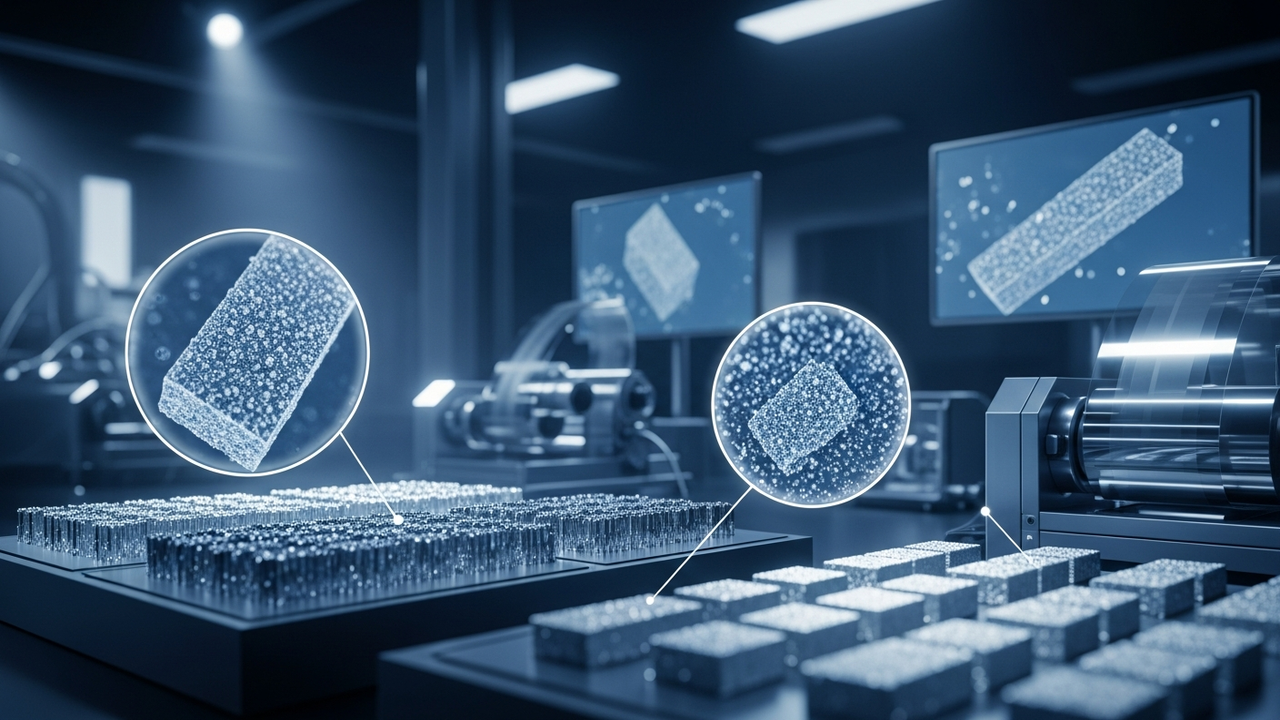
The innovation trajectory in lithium-ion batteries (LIBs) is being fundamentally shaped by the critical interplay of chemical purity and stringent process control during manufacturing. These factors are paramount in dictating the safety, performance, cost-effectiveness, and sustainability of next-generation energy storage. Significant progress is being made through the adoption of high-capacity anode materials, particularly silicon-carbon composites, and the increasing integration of LFP (lithium iron phosphate) and LMFP (lithium manganese iron phosphate) cathode materials. Furthermore, the advent and refinement of dry electrode coating techniques are rapidly accelerating the realization of these advanced LIB technologies by enhancing manufacturing efficiency and reducing environmental footprint.
Technical & Clinical Details
The evolution of next-generation LIBs is underpinned by several key technological advancements:
- High-Capacity Anode Materials: Silicon, with its theoretical capacity 4-10 times higher than graphite, promises substantial increases in energy density, crucial for extended EV range and rapid charging. Addressing the significant volume expansion during cycling, silicon-carbon composites have emerged as a leading solution to stabilize performance.
- LFP/LMFP Cathode Materials: LFP and its derivatives, like LMFP, offer compelling advantages in safety, cycle life, and cost, making them increasingly popular for stationary energy storage systems (ESS) and specific EV segments. Optimizing the performance of these materials critically depends on strict impurity control and precise particle engineering. LMFP cathodes co-doped with vanadium and sulfur have demonstrated superior initial discharge capacity of 156.7 mAh g^-1 at 0.1C and maintained 125 mAh g^-1 after 600 cycles at 1C, attributed to improved Li+ diffusion and structural stabilization.
- Dry Electrode Coating Technology: This innovative manufacturing method bypasses the use of liquid solvents, directly applying active materials onto current collectors in a powder-based process. Pioneering companies like Tesla are integrating this technology to drastically cut manufacturing costs by up to 50% and improve energy density by 15-20%, while also reducing environmental impact. It allows for thicker electrodes (over 500 µm), further boosting cell-level energy density.
- Process Control and Analytical Chemistry: Across the entire battery production chain, from material synthesis to electrode fabrication and cell assembly, precise control is vital. This includes meticulous monitoring of impurity levels, optimization of particle size distribution (PSD) for uniform coatings, and maintaining ultra-low humidity environments (as seen in PNNL’s new dry lab). Analytical chemistry provides the indispensable tools to identify bottlenecks and ensure consistent quality and reliability.
- Sodium-Ion Batteries (NIBs): For stationary energy storage, NIBs are emerging as a cost-effective, resource-abundant alternative to lithium, with research actively focused on improving cycle stability across extreme temperatures (e.g., Giner’s DOE-funded project targeting 50°C and -40°C performance).
Background & Context
The global surge in electric vehicle adoption and renewable energy integration has fueled an unprecedented demand for high-performance, safe, and sustainable battery storage. However, conventional LIBs face inherent challenges including resource scarcity, high costs, safety concerns, and environmental footprint. The dominance of Chinese manufacturers in the LFP market and Europe’s reliance on nickel-rich chemistries highlight a significant cost differential and supply chain vulnerabilities. Both the U.S. and Europe are actively pursuing strategies to bolster domestic battery supply chains and manufacturing prowess, including significant investments in raw material sourcing (e.g., graphite) and advanced production facilities.
Strategic Significance & Outlook
The next decade will see a concerted push towards commercializing battery technologies that offer higher energy density, enhanced safety, extended cycle life, lower costs, and superior environmental compatibility. The continued evolution of silicon anodes, LFP/LMFP cathodes, the widespread adoption of dry electrode technology, and the commercial rollout of sodium-ion batteries are critical steps towards this future. The integration of digitalization and AI into manufacturing processes is expected to revolutionize quality control, accelerate innovation cycles, and shorten time-to-market. These advancements are essential for facilitating the deeper integration of renewable energy sources, accelerating EV proliferation, and ultimately, realizing a more sustainable global energy landscape.








Comments