Key Findings
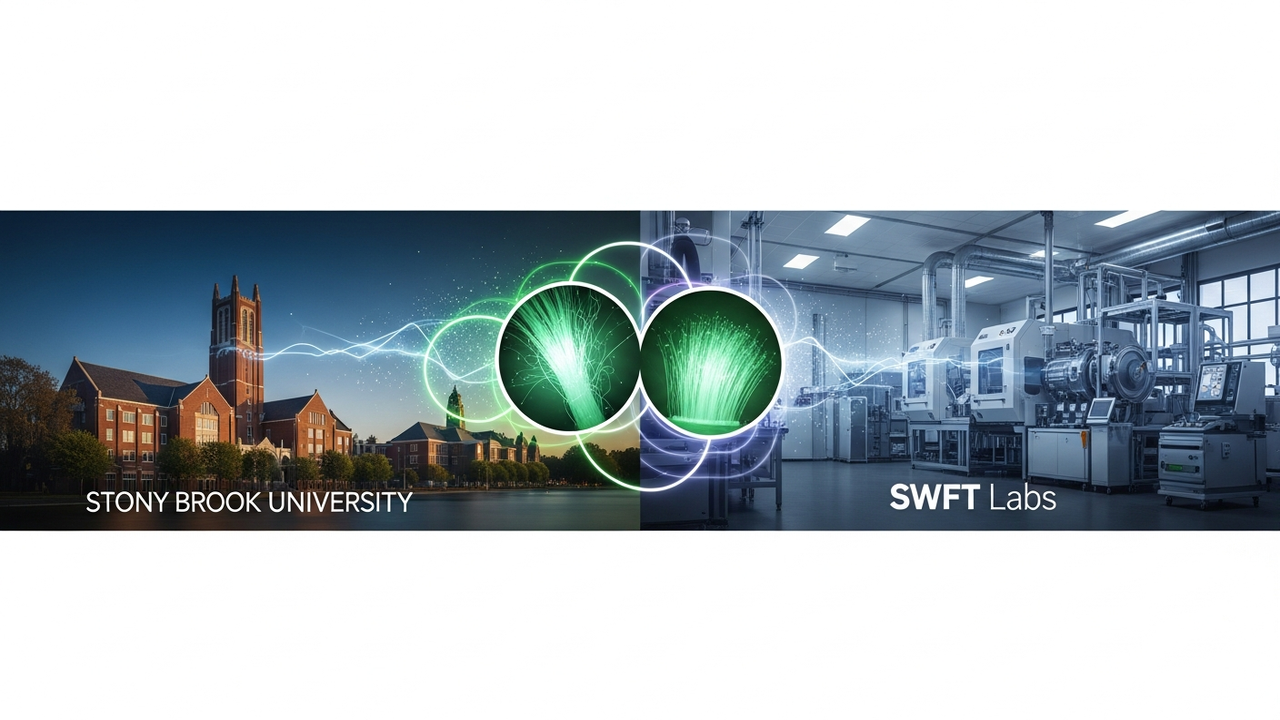
Stony Brook University and SWFT Labs have announced an expanded partnership aimed at accelerating the industrialization of sustainable cellulose nanomaterials (CNF) as direct alternatives to plastics and petroleum-based materials. SWFT Labs is poised to enter its commercialization phase, beginning with its inaugural product launch in the agricultural sector. The collaboration is also actively pursuing strategic discussions to apply CNF across diverse fields, including industrial materials, water filtration, and medical technologies.
Technical / Clinical Details
Cellulose nanomaterials (CNF) are innovative bio-based materials derived from cellulose, a natural polymer found in plants, processed to the nanoscale. They possess exceptional properties such as lightweight, high strength, transparency, and excellent gas barrier capabilities. SWFT Labs has leveraged Stony Brook University’s research expertise to develop efficient production processes and application technologies for CNF. This expanded partnership will focus on scaling up CNF production and enhancing cost-effectiveness to facilitate large-scale commercial market penetration. Initial agricultural products may include sustainable packaging solutions to reduce plastic use or soil amendments. Due to its high surface area and adsorptive properties, CNF also promises to improve the performance of water filtration membranes. In medical technology, its biocompatibility makes it a strong candidate for drug delivery systems and tissue engineering scaffolds.
Background & Context
Plastic pollution and reliance on fossil fuels represent critical global environmental challenges, driving a rapidly increasing demand for sustainable alternative materials. Cellulose nanomaterials, with their low environmental footprint and multifunctional properties, are recognized as one of the most promising solutions to these issues. Collaborations between academia and industry are crucial for translating fundamental research into real-world products. The Stony Brook University and SWFT Labs partnership exemplifies how combining academic expertise with commercial know-how can accelerate growth in the bio-based materials market, setting a model for future initiatives.
Strategic Significance & Outlook
The expanded partnership between Stony Brook University and SWFT Labs signals a future where cellulose nanomaterials could become a leading alternative, enabling a significant shift away from plastics and petroleum-based materials. The launch of agricultural products serves as the initial step demonstrating CNF’s practical viability. Moving forward, full-scale applications are anticipated in industrial materials (e.g., high-performance composites, coatings), water filtration (e.g., high-efficiency filters), and medical technologies (e.g., implants, wound dressings). As the commercialization of this technology progresses, it is expected to contribute significantly to global sustainability goals and foster the creation of a new bioeconomy.
Source: https://www.stonybrook.edu/ipp/news/3.18.26-sbu-swftlabs-expand-partnership.html
Get our weekly technology intelligence — free
Receive an infographic that lets you judge at a glance whether each field’s analysis report is worth reading.
Subscribe Free — Weekly Tech Intelligence
By subscribing, you’ll receive Troy-Technical’s weekly technology intelligence newsletter.
- Your email and selected fields are used only to deliver the newsletter.
- We never share your information with third parties.
- You can unsubscribe anytime via the link in each email.
See our Privacy Policy for details.
Takes about a minute · Unsubscribe anytime






Comments