
Key Findings
Driven by remarkable progress in lunar base technology, the construction of lunar habitats, once a realm of science fiction, is rapidly transitioning into a tangible engineering endeavor. Global governmental agencies and private enterprises are actively pursuing concrete plans to establish human-supporting bases on the Moon within the next decade, thereby shaping the future of space colonization.
Technical & Clinical Details
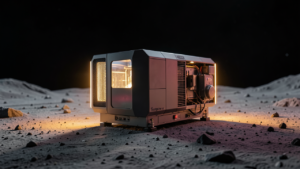
Major technological innovations for lunar base construction include advanced robotic systems for autonomous building tasks and 3D printing techniques to construct shelters and infrastructure using lunar regolith (Moon dust) as raw material. This significantly reduces the cost of transporting materials from Earth. Furthermore, In-Situ Resource Utilization (ISRU), which involves extracting water ice and oxygen directly from the lunar surface, is indispensable for providing potable water, breathable oxygen, and rocket propellant. Power systems will integrate solar cells for periods of sunlight with nuclear fission power systems for the extremely cold and prolonged lunar nights (lasting up to two weeks), ensuring sustainable and efficient long-term operations. Modular designs, such as inflatable habitats, are also under consideration to allow for flexible and scalable base expansion. These technologies are crucial not only for astronaut life support but also for laying the groundwork for scientific research and industrial activities on the Moon.
Background & Industry Context
Since the Apollo missions, returning to the Moon and establishing a long-term presence has been a primary objective of space exploration. In recent years, international initiatives like the Artemis program and the rise of private companies such as Blue Origin and SpaceX have ushered in a new phase of lunar exploration. The Moon’s strategic importance as a stepping stone for deep-space exploration and a repository of valuable resources is being re-evaluated. Particularly, the water ice located at the lunar South Pole is a critical resource for future lunar activities, and the development of ISRU technologies to harness it is vital for achieving self-sufficient bases. Advances in lunar base technology transcend mere scientific inquiry, paving the way for the development of the space economy, the creation of new industries, and ultimately, humanity’s first step towards becoming a multi-planetary species.
Future Outlook
The continuous development of lunar base technology has the potential to fundamentally transform human activities in space. In the coming years, demonstration missions for robotic construction and ISRU technologies are expected to accelerate, leading to the full-scale design and construction of lunar bases. NASA aims to establish a permanent lunar outpost by the mid-2030s, with companies like Astrolab and Lunar Outpost contracted to deploy rovers by 2028 for reconnaissance and pre-positioning resources, thereby mitigating risks before astronaut arrival. Lunar bases will serve as hubs for scientific research, resource exploration, and even space tourism, and will be critical testbeds for future Mars missions. These technologies will lay the foundation for humanity to live and work beyond Earth, turning the dream of space colonization into a reality.





Comments