Key Findings
A novel asymmetric composite solid electrolyte (DDL) has been developed, demonstrating dramatic improvements in ionic conductivity and interfacial stability, which are critical for the advancement of all-solid-state lithium metal batteries. This DDL electrolyte achieved a high room-temperature ionic conductivity of 5.58 × 10⁻⁴ S cm−1 and superior oxidation stability of 4.84 V. Moreover, Li|DDL|Li symmetric cells showcased stable lithium stripping and plating for over 2000 hours, a significant milestone for long-duration battery performance.
Technical / Clinical Details
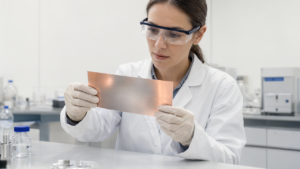
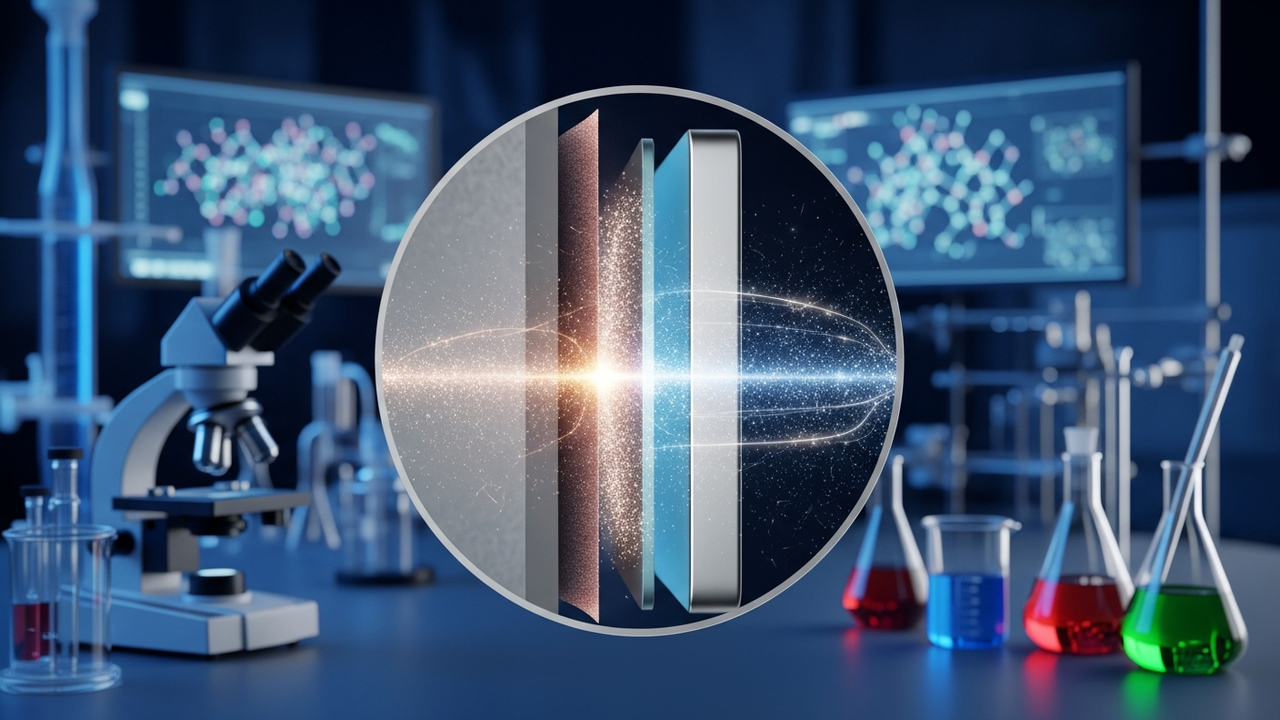
The developed DDL electrolyte was fabricated by integrating LiDFOB, LiFSI, and NASICON-type LATP (Lithium Aluminum Titanium Phosphate) fillers within a PVDF-HFP (polyvinylidene fluoride-hexafluoropropylene) polymer matrix. This asymmetric architecture is designed such that each layer contributes distinct functionalities, for instance, forming a stable interface with the lithium metal anode while maintaining high ionic conductivity towards the cathode. This unique design successfully achieved a combination of high room-temperature ionic conductivity (5.58 × 10⁻⁴ S cm−1) and a wide electrochemical stability window (4.84 V vs. Li+/Li), which has been challenging to accomplish with single-layer solid electrolytes. Evaluation using Li|DDL|Li symmetric cells confirmed stable lithium stripping and plating behavior for over 2000 hours, demonstrating effective dendrite suppression and long-term cycle stability.
Background & Context
All-solid-state lithium metal batteries are generating immense excitement in the electric vehicle (EV) and large-scale energy storage sectors as a next-generation battery technology offering higher energy density and improved safety over conventional liquid electrolyte lithium-ion batteries. However, major challenges to commercialization have included high interfacial resistance between the lithium metal anode and solid electrolyte, short-circuiting due to dendrite formation, and limitations in the solid electrolyte’s oxidative stability. The asymmetric composite solid electrolyte proposed in this study offers an effective solution to these critical issues and could represent a significant breakthrough in accelerating the commercialization of all-solid-state lithium metal batteries.
Strategic Significance & Outlook
The development of DDL electrolytes marks a crucial step towards realizing high-performance all-solid-state lithium metal batteries. Their high room-temperature ionic conductivity and excellent interfacial stability significantly broaden their potential for practical application. Future efforts will focus on scaling up manufacturing processes, reducing costs, and verifying performance in actual EV cell sizes. This technology is expected to enhance EV driving range and safety, contributing to the realization of a sustainable energy society.