Key Findings
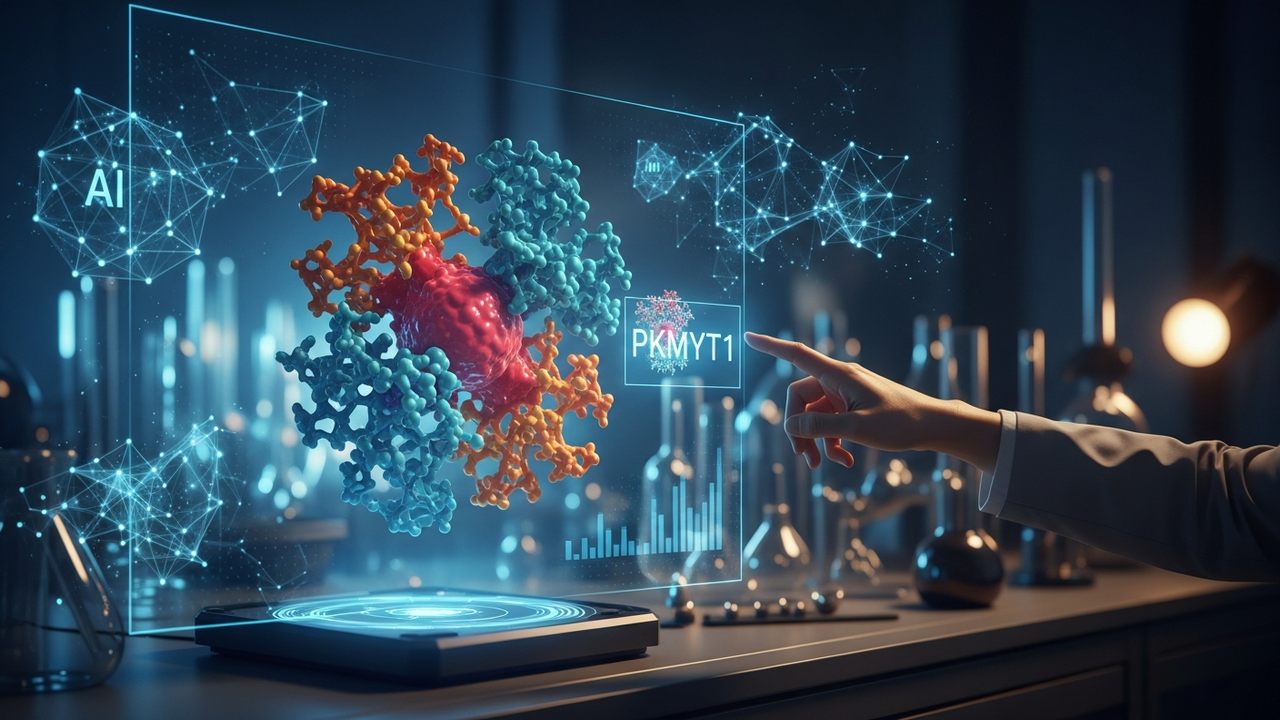
Scientists at Mount Sinai have discovered a previously overlooked drug-binding pocket in PKMYT1, a cancer-related protein. This discovery simultaneously highlights the powerful capabilities and the current limitations of AI drug discovery, potentially opening new avenues for more selective and effective drug design by suggesting that proteins exhibit far greater flexibility than previously understood.
Technical / Clinical Details
The research team initially utilized DeepMind’s AlphaFold2 to predict the structure of PKMYT1. However, the static structure predicted by AlphaFold2 did not reveal interactions with existing drugs in initial virtual screenings. To overcome this limitation, the researchers combined molecular dynamics simulations with advanced computational methods to account for the dynamic ‘fluctuations’ of the protein. This approach revealed that PKMYT1 undergoes much more flexible conformational changes than previously thought, transiently exposing a hidden binding pocket. Based on this dynamic structure, virtual screening was re-executed, identifying several novel small molecules that interact with PKMYT1, with their binding validated by in vitro experiments. Drugs targeting this newly identified binding pocket are expected to specifically inhibit PKMYT1’s phosphorylation activity and suppress cancer cell proliferation.
Background & Context
AI drug discovery holds immense potential to accelerate the drug discovery process through protein structure prediction and large-scale virtual screening. However, many AI models operate under the assumption of static protein structures, potentially overlooking dynamic aspects of proteins and transiently formed binding pockets. PKMYT1 is a crucial kinase involved in cell cycle checkpoints and is overexpressed in many cancers, but its active site has been considered ‘undruggable,’ thus not an effective therapeutic target. This discovery demonstrates that by incorporating protein dynamics, AI drug discovery can further enhance its predictive power and uncover new targets.
Strategic Significance & Outlook
The discovery of this hidden binding pocket in PKMYT1 opens the door for the development of a new class of cancer therapeutics targeting this kinase. This approach suggests the importance of integrating dynamic aspects of proteins into AI models, which will likely influence the design of future AI-driven drug discovery platforms. By combining more sophisticated AI tools with computational biology methods, therapeutics against previously ‘undruggable’ disease-related proteins could be developed, addressing unmet medical needs in cancer treatment. This reaffirms the potential of AI to push the boundaries of discovery in drug discovery.