Key Findings
Researchers are actively investigating an innovative light-based process that holds the potential to efficiently reduce plastic waste while simultaneously generating clean fuel. This significant advancement in sustainable photonics applications opens new and promising avenues for addressing pressing environmental challenges, specifically plastic pollution and energy demands. By utilizing light energy as a catalyst, the process demonstrates the potential to produce valuable resources from waste in a more energy-efficient and environmentally friendly manner compared to conventional chemical processes.
Technical / Clinical Details
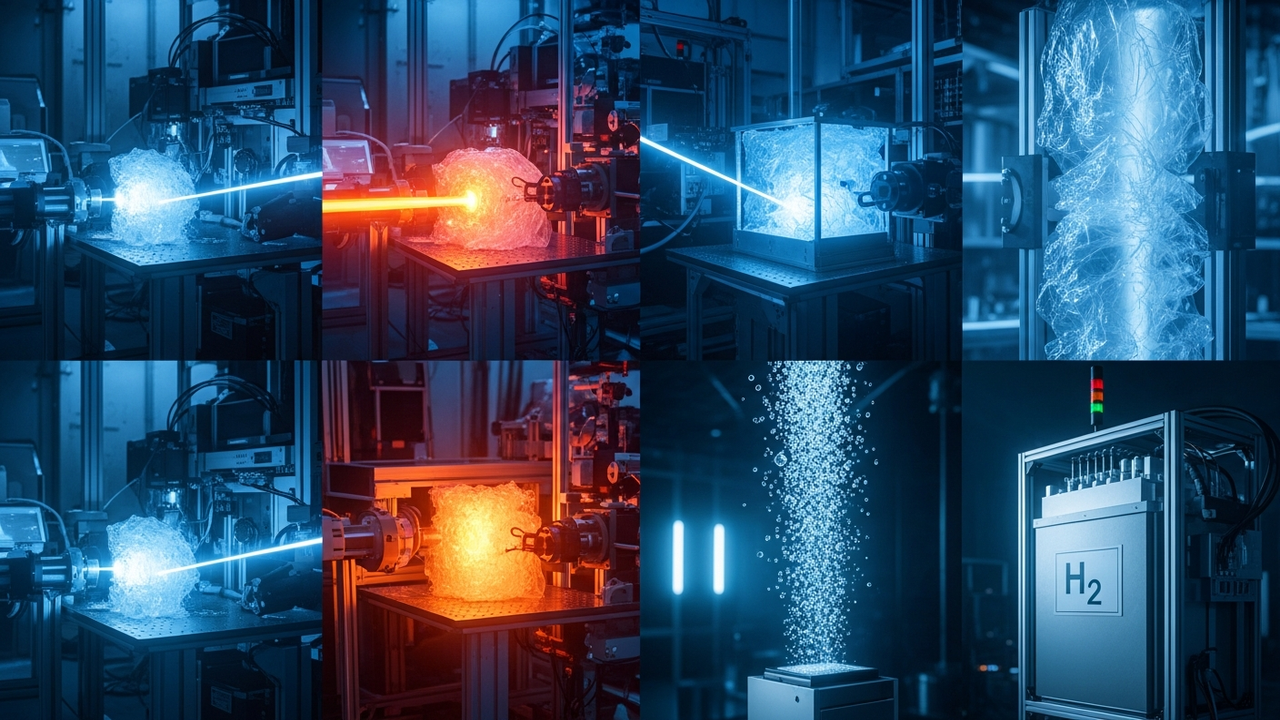
The core of this light-based process lies in utilizing photocatalytic reactions to break down plastics from polymers into fuels such as hydrogen or methane. Key technical aspects include:
- Photocatalytic Materials: Specific semiconductor materials or composite materials absorb energy from sunlight or artificial light to promote chemical reactions that cleave plastic molecular bonds. The efficiency and stability of these materials determine the practicality of the process.
- Photochemical Reactor Design: Optimized reactor designs are required to efficiently deliver light to plastic waste and catalysts, and to safely recover the generated fuels. This involves precise control of parameters such as light wavelength, intensity, and irradiation time.
- Selective Decomposition: Research focuses on selective decomposition processes that generate desired fuels (e.g., hydrogen, methane) while minimizing the production of unwanted byproducts. This enhances the purity and economic value of the generated fuels.
- Energy Efficiency: Compared to conventional processes like pyrolysis or gasification, light-based processes operate at lower temperatures and require less external energy input, improving overall energy efficiency.
This technology has broad applicability as it can utilize low-cost and abundant sunlight as an energy source.
Background & Context
The increasing volume of plastic waste and associated environmental pollution represent urgent global challenges. Concurrently, the transition to clean energy is an indispensable goal for achieving a sustainable society. Traditional plastic recycling often faces challenges such as high costs, quality degradation, and applicability to only limited materials. The new light-based process aims to overcome these challenges, promoting the concept of a circular economy by transforming plastics from mere waste into a renewable fuel source. Research in this area is gaining attention as an interdisciplinary effort merging environmental science, materials science, and photonics.
Strategic Significance & Outlook
Should this light-based process become practical, it has the potential to offer groundbreaking solutions to both the plastic waste problem and the clean energy challenge. Firstly, it would significantly improve the current reliance on plastic waste landfilling and incineration, reducing environmental impact. Secondly, the generated clean fuels could reduce dependence on fossil fuels and enhance energy security through utilization in transportation and industrial sectors. Furthermore, this technology also holds the potential to open pathways to decentralized energy systems, where local communities can generate energy from their own waste. Further research and demonstration are anticipated to verify the scalability, economic viability, and long-term stability of this process, clearly showcasing the significant role photonics plays in innovating environmental technology.
Source: https://www.photonics.com/Articles/Raytheon-and-GH-Build-Out-a-Domestic-TFLN-Supply/a71968