Key Findings
REPROCELL announced that its StemEdit platform, which combines AI-designed CRISPR gene-editing technology with optimized workflows, has achieved superior efficiency and significantly reduced off-target activity in induced pluripotent stem cells (iPSCs) compared to conventional methods. This breakthrough is paramount for developing ‘hypoimmune iPSCs’ that can evade host immune rejection, thereby substantially accelerating the realization of off-the-shelf cell therapies applicable to a diverse patient population.
Technical and Clinical Details
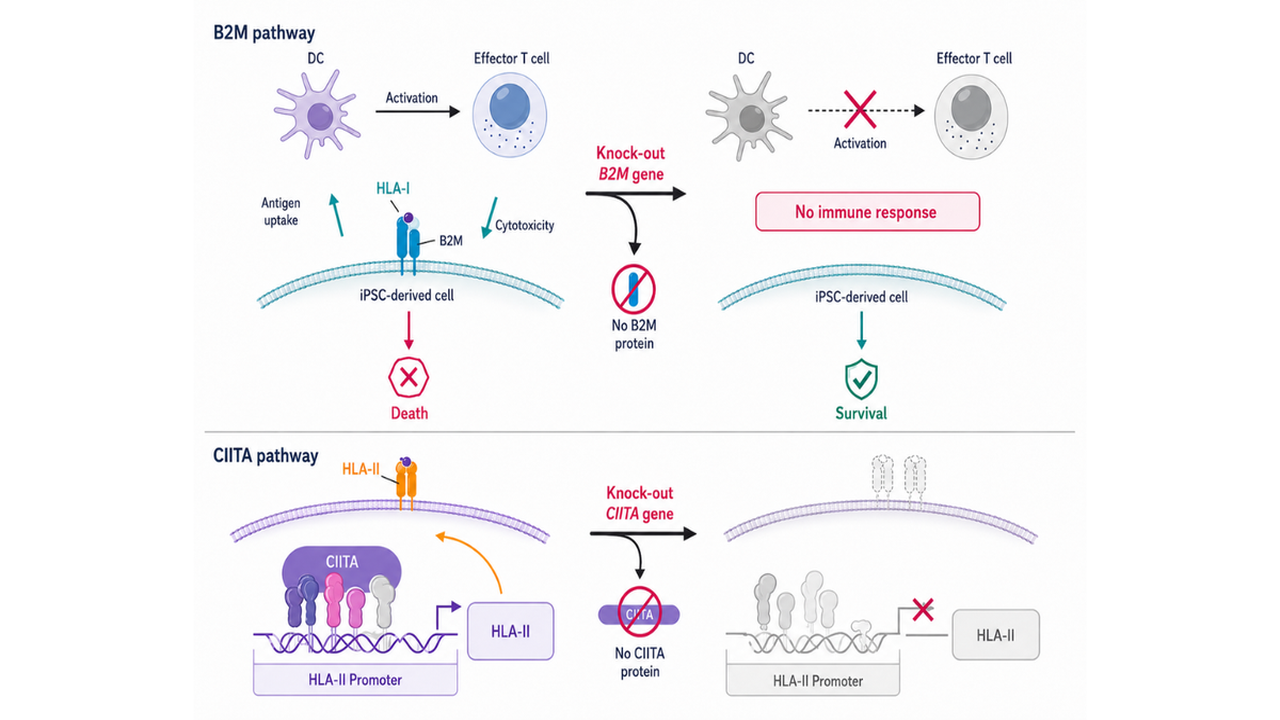
The StemEdit platform utilizes AI algorithms to design CRISPR guide RNAs, ensuring high binding specificity to target genes and minimal off-target effects. REPROCELL researchers have demonstrated that this platform can maintain both the pluripotency (the ability to differentiate into any cell type of the body) and genomic stability (the integrity of genetic information) of iPSCs even after genome editing. Specifically, the successful ‘hypoimmunization’ strategy involves editing major histocompatibility complex (MHC) genes, making iPSC-derived cells less recognizable by the host’s immune system. This approach aims to reduce the time and cost associated with preparing patient-specific donor cells, enabling rapid and widespread therapeutic application.
Background and Industry Context
iPSC-derived cell therapies hold immense promise for treating numerous intractable diseases such as Parkinson’s disease, diabetes, and heart disease. However, significant challenges have persisted: high costs and prolonged manufacturing times for autologous cells, and severe immune rejection for allogeneic cells. Hypoimmune iPSC technology offers a fundamental solution to the immune rejection problem, making ‘universal donor cells’ a reality in regenerative medicine. The convergence of AI and CRISPR dramatically enhances the precision and efficiency of gene editing, establishing a critical technological milestone for the commercialization and dissemination of regenerative medicine.
Future Outlook
REPROCELL’s StemEdit platform is poised to accelerate the development of hypoimmune iPSCs, paving the way for safer and more effective off-the-shelf cell therapy products in clinical applications. This technology is expected to reduce manufacturing costs for regenerative medicine products and improve access to treatment, ultimately benefiting a vast number of patients. Strong expectations exist for cell therapies utilizing hypoimmune iPSCs, generated from this platform, to advance into clinical trials across various disease areas and establish themselves as new therapeutic options. The integration of AI and CRISPR holds the potential to profoundly transform the future of regenerative medicine.