Key Findings
Researchers at the Beckman Institute, University of Illinois, have devised a groundbreaking “end-of-life strategy” for thermosetting plastics, enabling these tough and durable materials to be recycled multiple times while retaining their high-performance characteristics. This innovative approach skillfully utilizes polymer entanglement combined with strategically limited, reversible crosslinking, demonstrating that key material properties such as strength and stiffness can be preserved across several recycling cycles.
Technical / Clinical Details
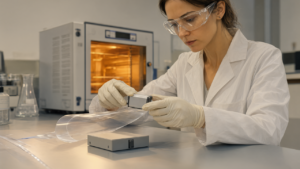
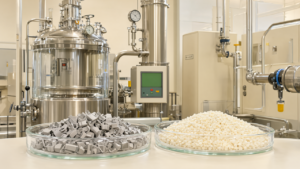
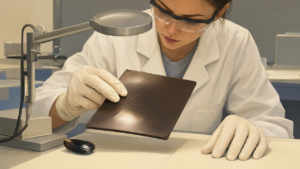
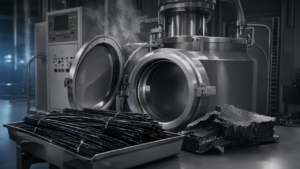
Thermoset plastics traditionally form irreversible cross-linked structures upon curing, making them extremely difficult to recycle. The new strategy, however, involves designing specific polymer types where molecular chains are physically intertwined (polymer entanglement) and incorporating reversible crosslinks that can be broken and reformed under controlled conditions. This allows for the separation of thermosets from used products, followed by thermal or specific chemical treatment to temporarily decouple the crosslinks. After reshaping, the crosslinks can be reformed, restoring the material’s original performance. The research has successfully demonstrated that mechanical properties are not significantly degraded even after multiple recycling processes, a critical advancement for sustainable material engineering.
Background & Context
Thermoset plastics are indispensable in industries such as aerospace, automotive, and electronics due to their exceptional strength, heat resistance, and durability. However, their poor recyclability contributes significantly to the global plastic waste crisis, posing a major barrier to establishing sustainable material cycles. This research offers a transformative solution to this long-standing problem, enhancing the sustainability of high-performance materials and making a substantial contribution to the realization of a circular economy. The support from the U.S. Department of Energy underscores the national importance and potential impact of this technological breakthrough.
Strategic Significance & Outlook
This novel recycling strategy propels the concept of “generational material systems,” envisioning a future where materials can be “reprogrammed” throughout their lifecycle. This could fundamentally alter how thermoset plastics are designed, manufactured, and managed post-use. In the future, recycled high-performance polymers are expected to be reused in new products repeatedly, at lower costs and with reduced environmental impact, thereby improving resource efficiency and drastically cutting waste. This technology represents a crucial cornerstone for achieving a sustainable society and could set new global benchmarks for material circularity and performance.
Get our weekly technology intelligence — free
Receive an infographic that lets you judge at a glance whether each field’s analysis report is worth reading.
Subscribe Free — Weekly Tech Intelligence
By subscribing, you’ll receive Troy-Technical’s weekly technology intelligence newsletter.
- Your email and selected fields are used only to deliver the newsletter.
- We never share your information with third parties.
- You can unsubscribe anytime via the link in each email.
See our Privacy Policy for details.
Takes about a minute · Unsubscribe anytime