Background
Composite materials are indispensable across aerospace, automotive, and wind energy sectors, prized for their exceptional strength-to-weight ratios. Yet, the waste generated during their manufacturing, particularly auxiliary materials like vacuum bags and films, presents a substantial environmental hurdle. Their complex compositions often lead to landfill disposal, contrary to sustainability goals. The IMPLICIT project directly confronts this challenge, developing sustainable recycling solutions that deeply align with circular economy principles. Supported by the Spanish Ministry of Science and the European Regional Development Fund, this initiative is not merely about waste management; it’s designed to significantly bolster Europe’s infrastructure for recycling advanced materials.
Key Findings
The IMPLICIT project has successfully pioneered multimodal recycling strategies targeting auxiliary composite manufacturing waste, effectively valorizing materials such as spent vacuum bags and processing films. This innovative approach integrates a suite of methods—mechanical processing, physical separation via selective dissolution, and advanced chemical recycling (solvolysis)—to efficiently recover high-value monomers and oligomers. The core aim is to transform these meticulously recovered raw materials into new, high-performance products for critical sectors, including automotive, textile manufacturing, and urban furniture design.
Technical Details
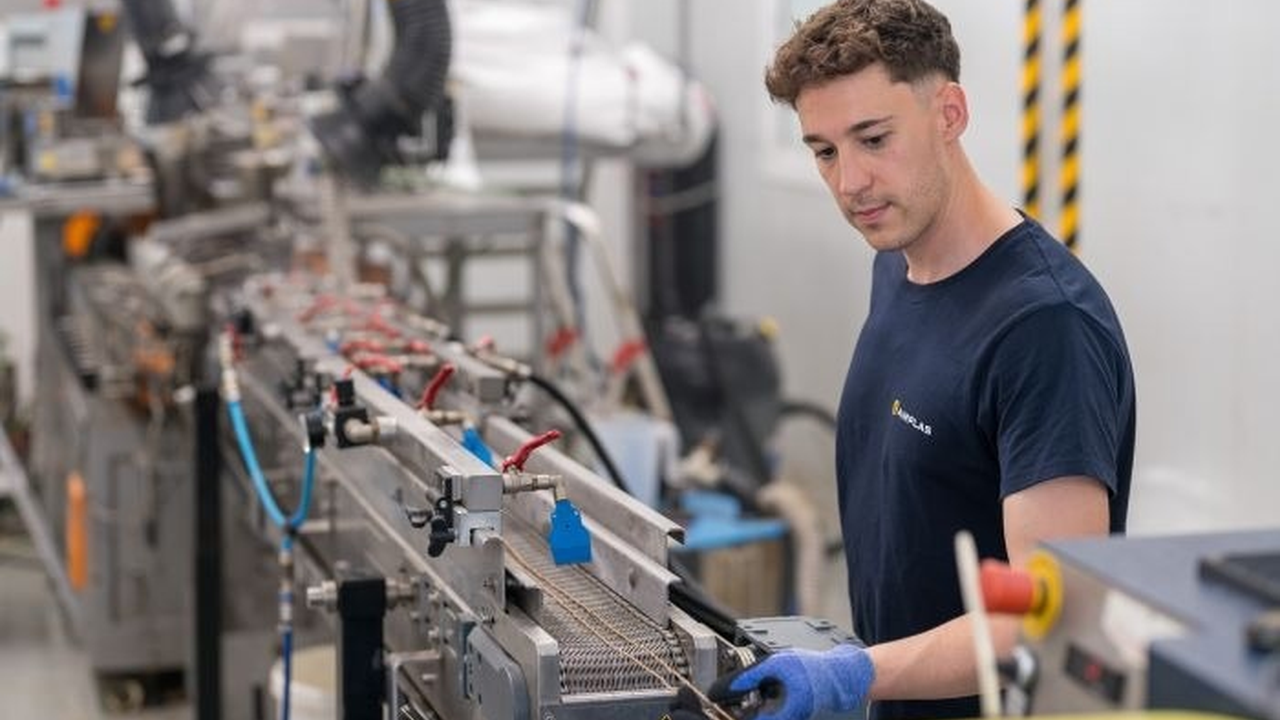
The project’s sophisticated strategy deploys a synergistic combination of recycling pathways. The process begins with initial mechanical treatment of composite waste, preparing it for subsequent stages. This is followed by selective dissolution, a physical method engineered to precisely isolate specific polymer components from the heterogeneous waste stream. Subsequently, advanced chemical recycling techniques, notably solvolysis, are meticulously employed to depolymerize complex polymers into their foundational monomers and oligomers. This multi-pronged approach is critical for ensuring the high purity required for recovered raw materials, which are then seamlessly re-integrated into new manufacturing processes. These re-engineered components are slated for high-value applications, including lightweight yet robust automotive parts, advanced textile fibers, and durable urban furniture, with target properties demonstrating parity or even enhancement compared to virgin materials.
Strategic Significance & Outlook
The multimodal recycling strategies pioneered by the IMPLICIT project are poised to instigate a fundamental paradigm shift in composite materials waste management. Successful commercial-scale implementation of this innovative technology promises a dramatic reduction in landfill waste and the highly efficient reutilization of valuable resources. This innovation holds particular significance for addressing the critical lightweighting demands in the automotive sector and fulfilling the escalating need for sustainable textile products. By transforming recovered materials into high-performance new products, the project is projected to substantially enhance sustainability metrics and competitive advantage across multiple industrial supply chains, thereby fostering a truly circular economy for composite materials and laying the groundwork for a more resource-efficient industrial future.
Source: https://www.azom.com/news.aspx?newsID=65525
Get our weekly technology intelligence — free
Receive an infographic that lets you judge at a glance whether each field’s analysis report is worth reading.
Subscribe Free — Weekly Tech Intelligence
By subscribing, you’ll receive Troy-Technical’s weekly technology intelligence newsletter.
- Your email and selected fields are used only to deliver the newsletter.
- We never share your information with third parties.
- You can unsubscribe anytime via the link in each email.
See our Privacy Policy for details.
Takes about a minute · Unsubscribe anytime