Background
Scaling up bioprocesses in bioreactors presents a myriad of engineering and biological hurdles critical to efficient biopharmaceutical manufacturing. Major factors contributing to potential scale-up failures include:
- Oxygen Limitation: Ensuring sufficient oxygen supply to meet cellular demand becomes increasingly challenging in larger reactor volumes.
- CO₂ Accumulation: The buildup of carbon dioxide, a byproduct of cell respiration, can lead to detrimental shifts in pH within the culture.
- Shear Damage: Mechanical forces generated by agitation systems can induce significant shear stress, damaging fragile mammalian cells.
- pH Gradients: Maintaining uniform pH distribution is difficult, often resulting in localized pH variations that impair cell viability and productivity.
- Metabolite Accumulation: The accumulation of inhibitory metabolites, such as lactate or ammonia, can impede cell growth and reduce target product yield.
- Temperature Control: Achieving and maintaining precise temperature control across large volumes and heterogeneous environments presents significant engineering challenges.
Cellbase’s comprehensive new guide on bioreactor selection and scale-up is designed to equip engineers and scientists with the insights needed to overcome these challenges, with a particular focus on optimizing for high-density cultivation and maximizing productivity.
Key Findings: Perfusion Culture’s Transformative Potential
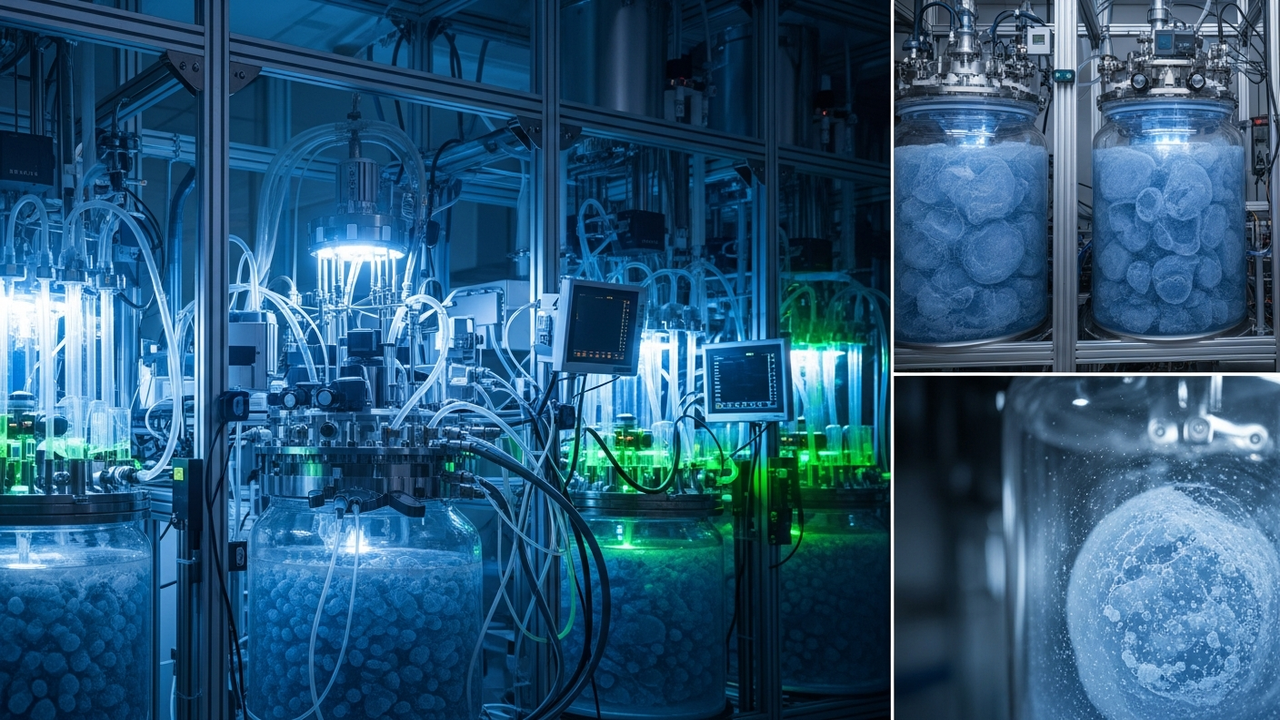
Cellbase’s guide provides a detailed comparative analysis of various bioreactor formats, decisively emphasizing the significant advantages of perfusion culture for next-generation biomanufacturing. Perfusion culture stands out for its unique ability to achieve exceptionally high cell densities, typically ranging from 10^7 to 10^8 cells/mL, and in some documented cases, reaching an unprecedented 10^9 cells/mL. This capability represents a paradigm shift, offering transformative potential for dramatically boosting productivity in biopharmaceutical manufacturing.
Comparison of Bioreactor Formats:
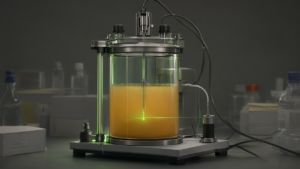
- Stirred-Tank Bioreactors (STRs): As the most common and versatile format, STRs utilize impellers for uniform mixing and gas exchange. However, their primary limitations include potential high shear stress on cells and challenges in maintaining mixing homogeneity during significant scale-up.
- Airlift Bioreactors: These systems circulate culture medium using air, thereby reducing shear stress on cells. While suitable for large-scale operations, their mixing and gas exchange efficiencies can be comparatively lower than those of STRs.
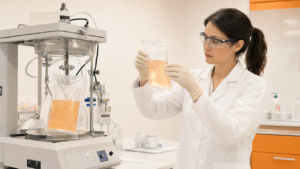
- Rocking Motion Bioreactors: Predominantly single-use systems, rocking motion bioreactors facilitate mixing and gas exchange by gently rocking culture bags. They are ideal for small to medium-scale applications, offering high containment and reduced contamination risks.
- Fixed-Bed/Packed-Bed Bioreactors: In these systems, cells are immobilized on carriers like microcarriers or membranes, enabling high cell densities. However, operational complexities can arise concerning consistent media supply and efficient cell harvesting.
Perfusion Culture Mechanics and Advantages:
Perfusion culture operates on a principle of continuous medium refreshment: fresh culture medium is continuously supplied while spent medium, laden with metabolic byproducts, is simultaneously removed. Crucially, cells are retained within the reactor via internal or external separation devices (e.g., hollow-fiber modules), allowing for the sustained maintenance of exceptionally high cell densities. This continuous removal of waste products and replenishment of nutrients directly translates to a dramatic increase in the target product yield. Technologies such as hollow-fiber bioreactors are commonly employed for this culture type. The superior cell densities achievable with perfusion culture facilitate productivity levels that are exceedingly difficult, if not impossible, to attain with conventional batch or fed-batch cultivation methods. This continuous fresh media supply also serves as a powerful strategy to mitigate many of the scale-up challenges previously mentioned, ensuring sustained high productivity and process robustness.
Future Outlook: Driving Cost Efficiency and Accessibility
The strategic adoption of advanced bioreactor technologies, particularly perfusion culture with its capacity for ultra-high cell densities, is poised to dramatically enhance the cost efficiency and overall productivity of biopharmaceutical manufacturing. This advancement is critical for improving the accessibility of high-cost therapeutics, notably in the rapidly evolving fields of cell and gene therapy. Effective bioreactor selection demands a holistic evaluation, encompassing not only initial capital expenditure but also scalability, sustained productivity, process robustness, and adherence to stringent regulatory standards. Cellbase’s guide is specifically designed to support industry stakeholders in navigating this complex decision-making process, ensuring optimal outcomes for next-generation bioprocessing.
Source: https://cellbase.com/fi/blogs/uutiset/bioreactor-selection-guide-scale-up
Get our weekly technology intelligence — free
Receive an infographic that lets you judge at a glance whether each field’s analysis report is worth reading.
Subscribe Free — Weekly Tech Intelligence
By subscribing, you’ll receive Troy-Technical’s weekly technology intelligence newsletter.
- Your email and selected fields are used only to deliver the newsletter.
- We never share your information with third parties.
- You can unsubscribe anytime via the link in each email.
See our Privacy Policy for details.
Takes about a minute · Unsubscribe anytime