Key Findings
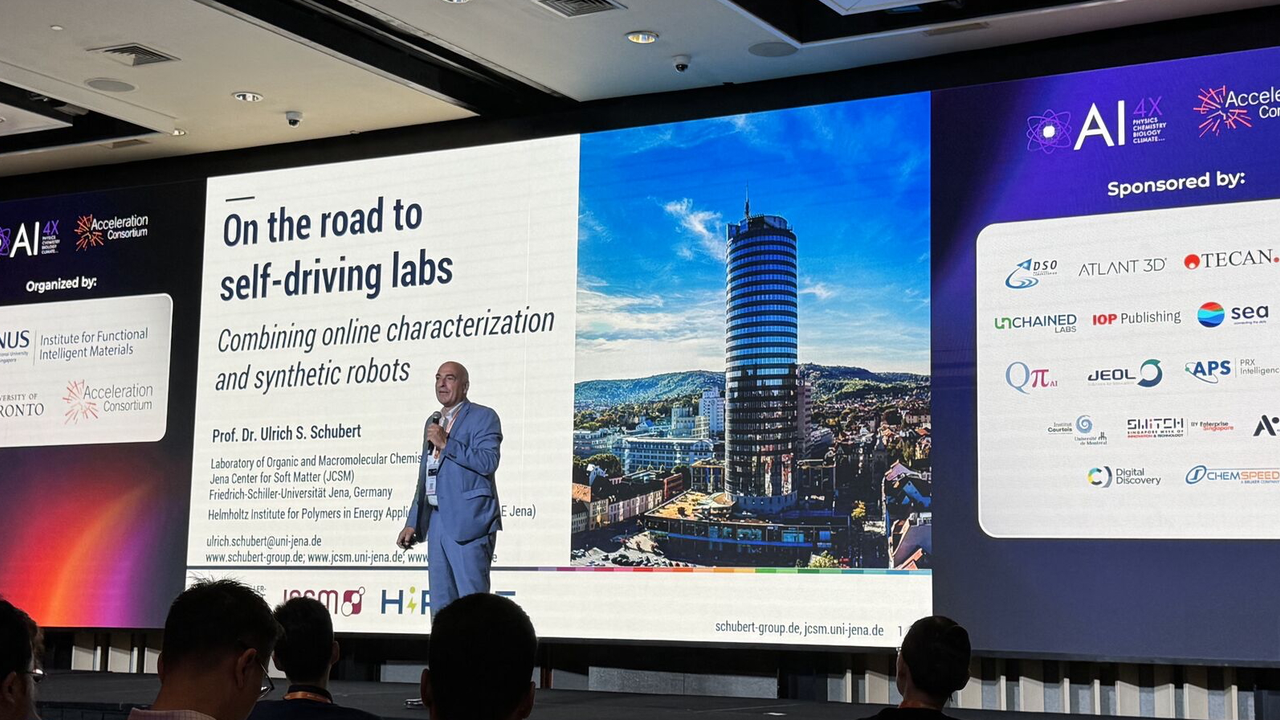
The Schubert Group from HIPOLE Jena showcased significant progress in AI-driven polymer research at the AI4X Conference 2026 in Singapore. Their findings underscore how the synergistic integration of automated experimentation, high-throughput screening, and machine learning (ML) is dramatically accelerating the discovery process for new functional materials, fundamentally transforming polymer science.
Technical / Clinical Details
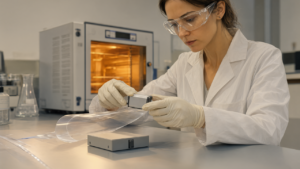
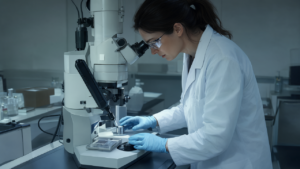
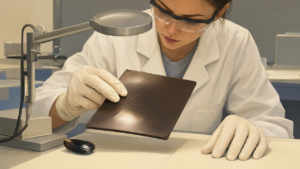
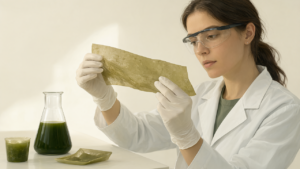
The Schubert Group’s methodology centers on a data-driven strategy for polymer synthesis and characterization. They have implemented automated experimental systems and adopted the concept of “self-driving laboratories” to rapidly synthesize and test a vast number of polymeric materials with minimal human intervention. The large datasets generated from these automated experiments are then analyzed by sophisticated machine learning models. These models uncover complex relationships between polymer structures and their physicochemical properties, enabling the efficient identification of novel polymer candidates that meet specific performance requirements, a task often intractable with traditional research methods.
Background & Context
Historically, the discovery and optimization of new materials, particularly polymers, have been time-consuming and resource-intensive endeavors. Traditional experimental approaches are labor-intensive, and the vastness of the chemical space acts as a bottleneck for innovation. The introduction of AI and ML is globally recognized as a game-changer, fundamentally altering this exploration process to enable faster and more efficient material development. Polymers for energy applications are crucial for sectors like batteries, solar cells, and fuel cells, making AI integration in this area vital for accelerating the global energy transition.
Strategic Significance & Outlook
HIPOLE Jena’s AI-driven polymer research is set to play a pivotal role in shaping the future of materials science. This approach promises faster development of polymers with enhanced thermal stability, superior mechanical performance, and specific functionalities (e.g., conductivity, self-healing properties). In the long term, these technologies are expected to form the foundation for new product development across diverse industrial sectors, including pharmaceuticals, electronics, automotive, and aerospace. The advancements in data-driven approaches and automation will accelerate the innovation cycle in polymer science, contributing to the creation of more sustainable and higher-performing material solutions globally, and solidifying Germany’s position in advanced materials research.
Get our weekly technology intelligence — free
Receive an infographic that lets you judge at a glance whether each field’s analysis report is worth reading.
Subscribe Free — Weekly Tech Intelligence
By subscribing, you’ll receive Troy-Technical’s weekly technology intelligence newsletter.
- Your email and selected fields are used only to deliver the newsletter.
- We never share your information with third parties.
- You can unsubscribe anytime via the link in each email.
See our Privacy Policy for details.
Takes about a minute · Unsubscribe anytime