Key Findings
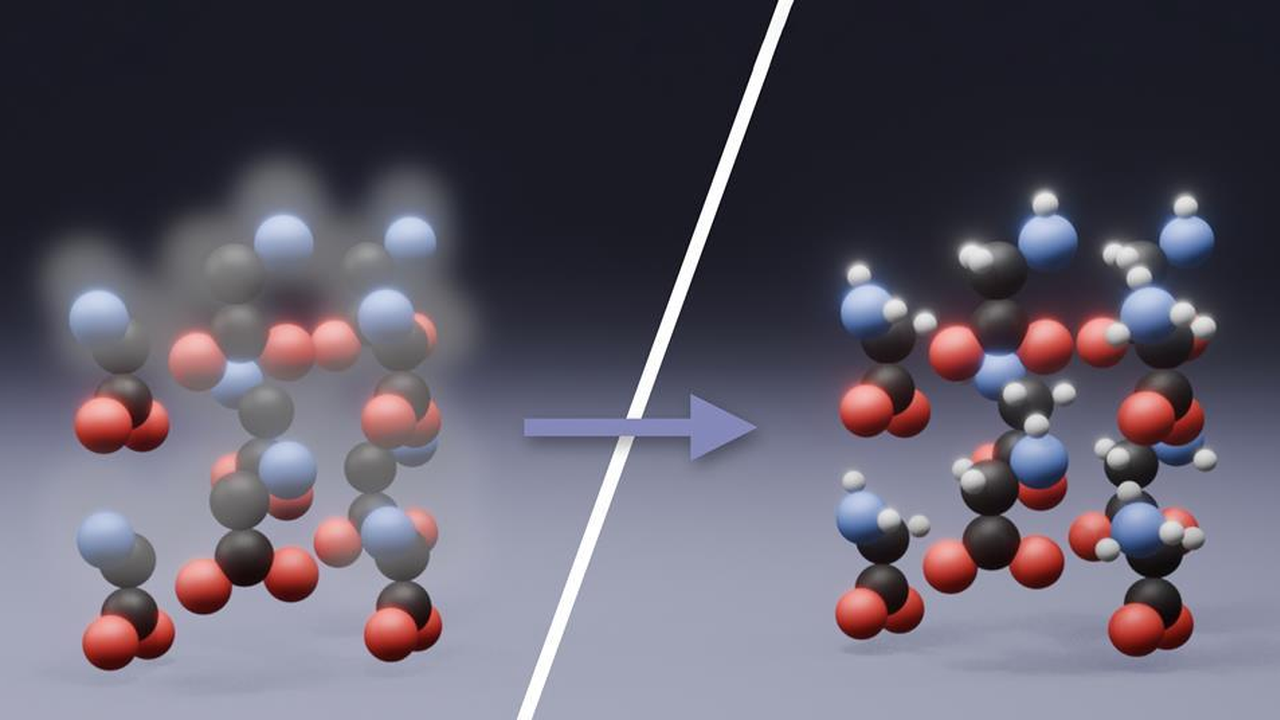
Scientists at the Paul Scherrer Institute (PSI) in Switzerland have developed a groundbreaking AI model capable of precisely locating hydrogen atoms in inorganic crystal structures that were previously undetectable by conventional X-ray diffraction. This innovation addresses a long-standing challenge in materials science, enabling significantly more accurate materials characterization and simulation, and promises to unlock new understanding of the role of hydrogen in complex materials.
Technical / Clinical Details
The developed AI model leverages existing crystal structure data and advanced machine learning algorithms to predict the optimal placement of missing hydrogen atoms. Traditional X-ray diffraction struggles with hydrogen atoms due to their low scattering power. This AI model circumvents this limitation by inferring hydrogen bond configurations and other interactions within the crystal lattice, drawing upon information from heavier atom arrangements. This allows for more reliable simulations in the design and performance prediction of materials where hydrogen plays a decisive role, such as electron conduction pathways in superconducting materials, proton transport in fuel cells, and ion mobility mechanisms in solid-state batteries.
Background & Context
In materials science, first-principles calculations and molecular dynamics simulations are vital tools for designing new materials. However, the accuracy of the initial structural input for these simulations profoundly impacts the final predicted outcomes. Hydrogen atoms, being light, exhibit significant quantum effects and are deeply involved in a material’s structural stability, electronic properties, and lattice vibrations. Historically, direct localization of hydrogen atoms has been difficult with most experimental techniques, apart from neutron diffraction, creating a significant source of uncertainty in materials design. PSI’s AI model bridges this long-standing gap, offering the potential to dramatically enhance the reliability of models in computational materials science.
Strategic Significance & Outlook
The introduction of this AI model marks a new era in the design of hydrogen-containing materials. Researchers and engineers can now accelerate the development of innovative superconductors, highly efficient fuel cell electrolytes, next-generation battery materials, and even hydrogen storage materials, all based on more precise structural information. In the future, this technology is expected to be integrated into various materials databases, becoming a core component of AI-driven autonomous materials discovery platforms. This integration will accelerate innovation in areas crucial for societal sustainability and advancement, including clean energy technologies and quantum computing.
Get our weekly technology intelligence — free
Receive an infographic that lets you judge at a glance whether each field’s analysis report is worth reading.
Subscribe Free — Weekly Tech Intelligence
By subscribing, you’ll receive Troy-Technical’s weekly technology intelligence newsletter.
- Your email and selected fields are used only to deliver the newsletter.
- We never share your information with third parties.
- You can unsubscribe anytime via the link in each email.
See our Privacy Policy for details.
Takes about a minute · Unsubscribe anytime