Key Findings
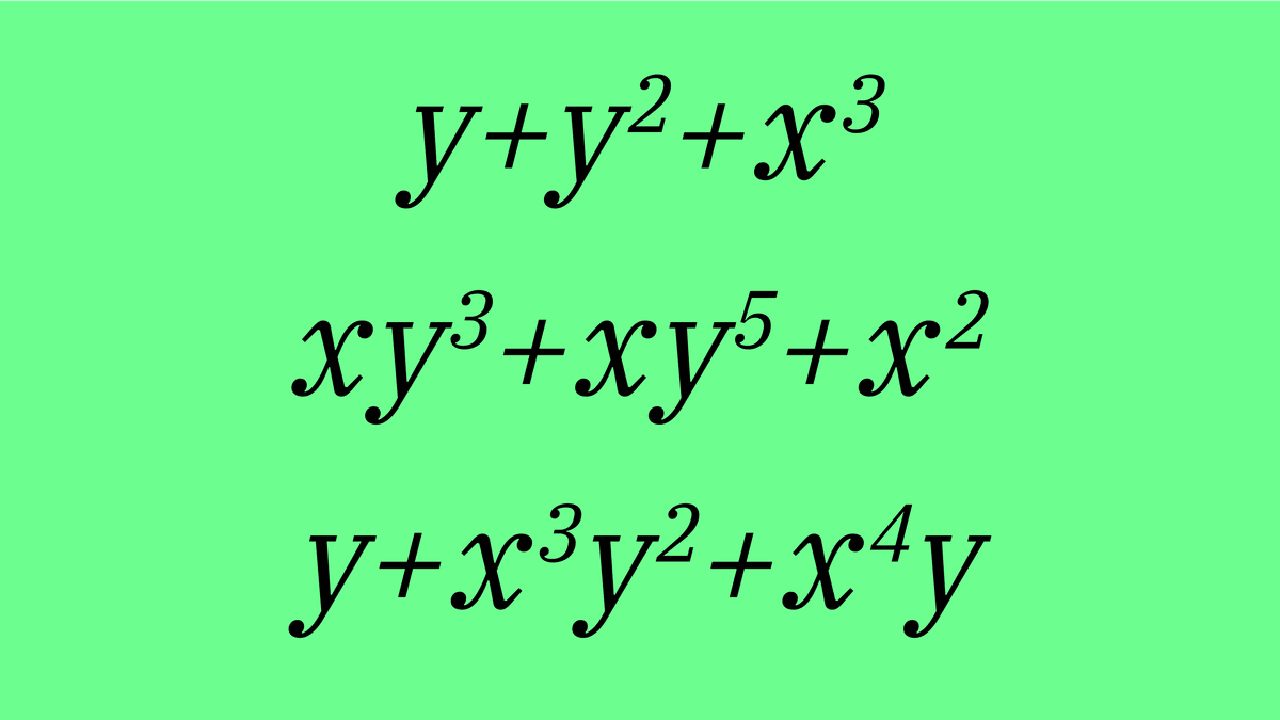
IBM researchers have achieved a significant breakthrough by integrating Large Language Models (LLMs) with an evolutionary framework to identify 465 novel candidate quantum error correction codes. This innovative workflow introduces new discoveries in the fundamental field of error correction for quantum computing, paving the way for more stable and reliable quantum systems.
Technical / Clinical Details
The research employs a unique framework that combines the natural language understanding capabilities of LLMs with evolutionary algorithms designed to efficiently navigate complex search spaces. The LLM learns principles of quantum error correction and code structures, then proposes new code candidates or generates mutations of existing ones. Subsequently, the evolutionary algorithm evaluates these candidates, selecting high-performing ones for further refinement in a closed-loop process. This methodology allowed for the efficient exploration of thousands of code variations, leading to the discovery of novel codes that might have been overlooked by traditional approaches. This work demonstrates the LLM’s ability to comprehend and apply complex error correction rule sets, offering concrete solutions to enhance the reliability of quantum hardware.
Background & Context
Quantum computing holds the potential to revolutionize diverse fields such as drug discovery, materials science, and financial modeling due to its powerful computational capabilities. However, due to the delicate nature of qubits, noise and qubit errors represent one of the biggest challenges to the practical implementation of quantum computing. Quantum error correction codes are essential technologies for detecting and correcting these errors, serving as the key to realizing fault-tolerant quantum computers. Traditionally, the design of error correction codes has relied on advanced mathematical knowledge and trial-and-error; however, IBM’s new AI-driven approach can dramatically accelerate this discovery process.
Strategic Significance & Outlook
IBM’s research clearly demonstrates the potential for the convergence of classical AI and quantum computing to open new scientific frontiers. The novel quantum error correction code candidates discovered will form the foundation for significantly improving the stability and reliability of future quantum computing systems. Moving forward, experimental validation of these codes is expected, along with the application of LLM-based discovery frameworks to the design of other quantum algorithms and protocols. This acceleration of quantum technology commercialization is likely to bring about groundbreaking applications with broad societal impact.
Source: https://research.ibm.com/blog/ai-for-qec
Get our weekly technology intelligence — free
Receive an infographic that lets you judge at a glance whether each field’s analysis report is worth reading.
Subscribe Free — Weekly Tech Intelligence
By subscribing, you’ll receive Troy-Technical’s weekly technology intelligence newsletter.
- Your email and selected fields are used only to deliver the newsletter.
- We never share your information with third parties.
- You can unsubscribe anytime via the link in each email.
See our Privacy Policy for details.
Takes about a minute · Unsubscribe anytime