Key Findings
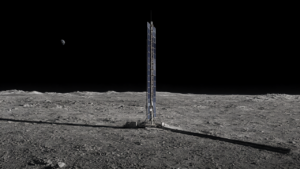
Amid increasing pressures on terrestrial data center infrastructure—stemming from power, cooling, and land availability—the concept of building data centers in space is rapidly gaining traction. Axiom Space is actively developing orbital data center nodes and computing infrastructure to support cloud computing, AI, cybersecurity, and data processing. Concurrently, Starcloud has announced plans to operate Nvidia H100 GPUs in orbit, deploying a network of tens of thousands of computing satellites. SpaceX is also advocating a massive vision to adapt its Starlink manufacturing and launch model for orbital computing infrastructure. These developments collectively possess the potential to fundamentally transform the future of cloud computing by 2035.
Technical and Clinical Details
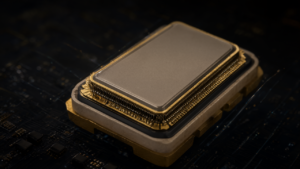
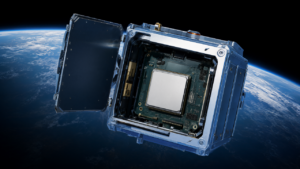
Orbital data centers will primarily consist of numerous small satellites positioned in Low Earth Orbit (LEO). These satellites will be interconnected at high speeds using Free-Space Optical Inter-Satellite Link (FSO ISL) technology, forming a global, distributed computing network. Key advantages of the space environment include access to abundant, near-continuous solar energy (estimated to provide up to 8 times more power than on Earth) and the efficient cooling capabilities offered by the vacuum of space. This significantly mitigates the critical heat dissipation challenges faced by terrestrial data centers. However, numerous technical hurdles remain. These include radiation-hardened hardware to prevent damage to electronics from space radiation, advanced thermal control systems to manage extreme temperature fluctuations, and developing methods for in-orbit maintenance and upgrades. Starcloud’s plan to fly high-performance AI chips like Nvidia H100 GPUs in orbit necessitates the integration of cutting-edge radiation-hardening and thermal management technologies.
Background and Industry Context
The rapid advancements in AI, IoT, and big data have generated unprecedented demand for data processing capabilities. Terrestrial data centers are reaching their limits due to strain on power grids, environmental impact, and geographical constraints. Against this backdrop, space is emerging as the ‘next network edge,’ offering new opportunities for providing services to remote regions, enhancing communication resilience, and enabling real-time processing of Earth observation data. SpaceX’s Starlink has already deployed thousands of satellites, providing global internet connectivity, and the potential to extend this network to AI computing signifies a paradigm shift in the space industry.
Strategic Significance and Outlook
The realization of orbital data centers will revolutionize cloud computing services, AI, cybersecurity, and data processing. Heading towards 2035, these space-based infrastructures will provide high-performance computing capabilities accessible from anywhere on Earth, eliminating current geographical limitations. This could lead to the emergence of new business models, industries, and national security strategies. Overcoming technical challenges (such as radiation, cooling, space debris, and economic viability) will be key to realizing this vision, but the aggressive investment and development by major players like Axiom Space, Starcloud, and SpaceX suggest that space data centers are poised to become a central component of future digital infrastructure.
Source: https://www.datacenterknowledge.com/build-design/breaking-points-2035-a-data-center-space-odyssey
Get our weekly technology intelligence — free
Receive an infographic that lets you judge at a glance whether each field’s analysis report is worth reading.
Subscribe Free — Weekly Tech Intelligence
By subscribing, you’ll receive Troy-Technical’s weekly technology intelligence newsletter.
- Your email and selected fields are used only to deliver the newsletter.
- We never share your information with third parties.
- You can unsubscribe anytime via the link in each email.
See our Privacy Policy for details.
Takes about a minute · Unsubscribe anytime