Key Findings
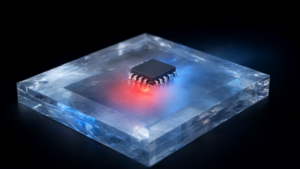
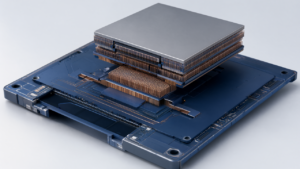
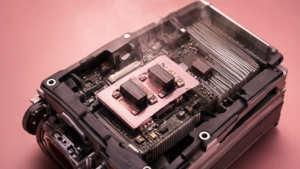
To combat the severe challenge of increasing heat generation accompanying the exponential rise in AI server computational power, new high-performance Thermal Interface Materials (TIMs) have been introduced to the market. These TIMs are specifically engineered to maximize heat transfer efficiency from high-heat-flux AI processors (such as GPUs and AI accelerators) to heatsinks. This ensures that AI servers can consistently maintain their required high performance over extended periods, providing an indispensable foundation for efficient data center operation and reliability.
Technical Details
- High Thermal Conductivity: Interposed between the processor and the cooling system (heatsinks, liquid cold plates, etc.), these TIMs minimize resistance in the heat conduction path. Some new TIMs report over 20% improvement in thermal conductivity compared to conventional TIMs.
- Excellent Wetting and Conformability: Adheres tightly even to microscopic surface irregularities, preventing air gaps and maximizing heat transfer performance. Available in various forms, including pastes, gels, and pads, to meet specific application requirements.
- Long-Term Stability: Suppresses material degradation and pump-out phenomena even in high-temperature environments, maintaining stable heat transfer performance over extended periods. This reduces server maintenance frequency and lowers operational costs.
- Low Volatility and High Reliability: Exhibits extremely low outgassing, minimizing impact on adjacent electronic components. This is critical for ensuring the long-term reliability of equipment in data centers.
Background & Context
With the rapid development of generative AI and large language models (LLMs), the demand for AI servers has exploded, and the AI processors within them are becoming increasingly powerful and integrated. This has led to unprecedented levels of heat generation from processors, confronting conventional cooling systems and TIMs with a ‘thermal wall.’ Effective thermal management is directly linked to the stable operation, lifespan of AI servers, and overall power efficiency of data centers, making the development of high-performance TIMs an urgent priority.
Strategic Significance & Outlook
These new Thermal Interface Materials will play a pivotal role in shaping the future of AI servers and data centers. The widespread adoption of TIMs capable of handling high heat flux will enable the design and deployment of even more powerful AI processors, accelerating the further evolution of AI technology. Data center operators will reap significant benefits, including reduced power consumption through improved cooling efficiency, optimized capital expenditure through extended equipment lifespan, and minimized downtime. Looking ahead, this technology is expected to find broad applications beyond AI servers, extending to HPC, 5G infrastructure, and advanced driver-assistance systems (ADAS) in automobiles, among other high-performance electronic devices.
Source: #
Get our weekly technology intelligence — free
Receive an infographic that lets you judge at a glance whether each field’s analysis report is worth reading.
Subscribe Free — Weekly Tech Intelligence
By subscribing, you’ll receive Troy-Technical’s weekly technology intelligence newsletter.
- Your email and selected fields are used only to deliver the newsletter.
- We never share your information with third parties.
- You can unsubscribe anytime via the link in each email.
See our Privacy Policy for details.
Takes about a minute · Unsubscribe anytime