Key Findings: Raw Material Management and Process Automation are Crucial for Quality Stabilization in Autologous Cell Therapies
Autologous Adoptive Cell Therapies (ATMPs), while holding immense promise for personalized medicine due to their use of a patient’s own cells, face a significant manufacturing challenge: the inherent biological variability of patient-derived raw materials. To overcome this and ensure consistent product quality and efficacy, the adoption of Chemically Defined Media (CDM), process standardization, high levels of automation, and rigorous characterization of each unit operation are deemed essential.
Technical and Clinical Details: Strategies for Reducing Process-Driven Variability
- Adoption of Chemically Defined Media (CDM): CDM, devoid of serum or undefined components, eliminates variability between media lots, making their impact on cell growth and function predictable. This significantly reduces raw material uncertainty and improves manufacturing process reproducibility. The adoption of GMP-grade CDM is particularly vital for meeting regulatory requirements in clinical-grade product manufacturing.
- Standardized Handling Protocols: Establishing rigorously standardized operating procedures for every step, from cell collection to processing, culture, and final product formulation, is critical. This minimizes human error-induced variability and enhances process robustness.
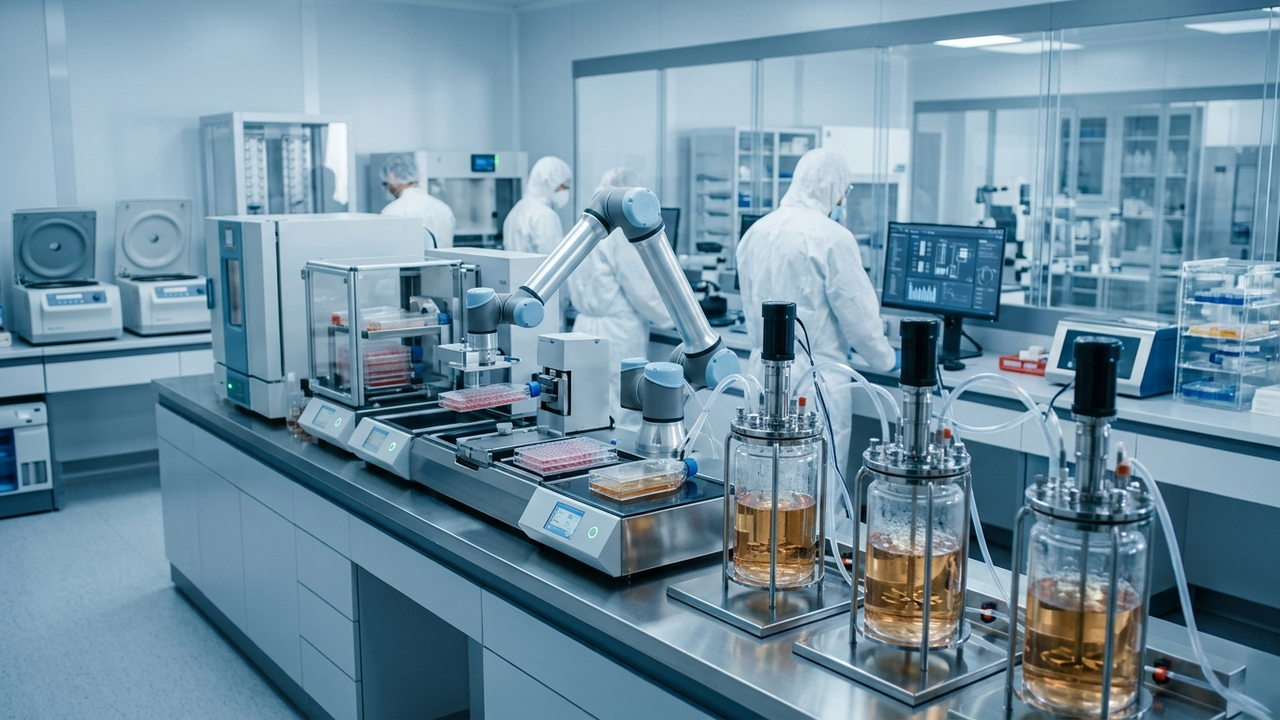
- Implementation of Automation Technologies: Automated, closed-system cell manufacturing systems are being introduced to reduce manual intervention. This lowers contamination risks, increases throughput, and eliminates operator-to-operator variability. Automation is indispensable for maintaining consistent quality, especially in large-scale production or multi-site manufacturing.
- Characterized Unit Operations: It is crucial to thoroughly characterize the performance of each manufacturing step (unit operation) — such as centrifugation, cell washing, cell culture, and cell concentration — and understand their variability factors. This allows quantitative evaluation of how each step influences final product quality and enables optimization.
Background and Industry Context: Challenges in Commercializing ATMPs
Autologous ATMPs are at the forefront of personalized medicine, yet their commercial success hinges on establishing scalable, cost-effective, and uniformly high-quality manufacturing processes. Given the unavoidable variability of raw materials in patient-specific therapies, there is a strong demand for process strategies that can absorb this variability and stabilize the quality of the final product. Regulatory authorities also impose high standards for quality control and consistency in ATMP manufacturing.
Future Outlook: Enhanced Reproducibility to Expand Patient Access
Comprehensive implementation of these strategies will significantly reduce process-driven variability in autologous cell therapy manufacturing. Consequently, it will become clearer how patient biological variability affects final product performance. This is key to streamlining troubleshooting, shortening product development cycles, and ultimately, delivering high-quality, safe cell therapy products to more patients. In the future, predictive modeling using AI and machine learning is expected to enable real-time adjustment of optimal manufacturing strategies based on individual patient raw material characteristics.
Get our weekly technology intelligence — free
Receive an infographic that lets you judge at a glance whether each field’s analysis report is worth reading.
Subscribe Free — Weekly Tech Intelligence
By subscribing, you’ll receive Troy-Technical’s weekly technology intelligence newsletter.
- Your email and selected fields are used only to deliver the newsletter.
- We never share your information with third parties.
- You can unsubscribe anytime via the link in each email.
See our Privacy Policy for details.
Takes about a minute · Unsubscribe anytime