Key Findings
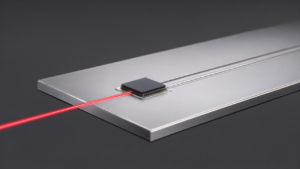
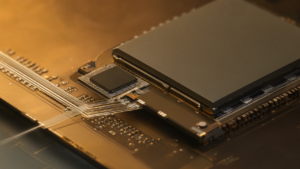
The commercialization of thin-film lithium niobate (TFLN) technology has reached a critical inflection point, with China’s National Optoelectronics Innovation Center (NOEIC) announcing the industry’s first 170GHz TFLN photonic modulator in June 2026. This groundbreaking device enables single-lane 200G/400G transmission, firmly establishing TFLN as an indispensable technology for the upcoming 1.6T/3.2T communication era. Further solidifying this trend, a domestic company simultaneously launched the world’s first TFLN photonic integrated circuit (PIC) wafer, signifying a pivotal shift of TFLN technology from research and development into wafer-scale manufacturing.
Technical / Clinical Details
TFLN leverages the outstanding electro-optic properties of bulk lithium niobate while dramatically enhancing optical confinement through its thin-film architecture. This enables modulators to achieve bandwidths exceeding 110 GHz and symbol rates over 130 Gbaud, alongside extremely low drive voltages and high modulation efficiency. The 170GHz modulator developed by NOEIC has the potential to revolutionize high-bandwidth applications such as data center interconnects, long-haul coherent communications, and microwave photonics, significantly improving performance and power efficiency. The mass production of TFLN PIC wafers opens the door for this advanced material to integrate seamlessly into large-scale manufacturing ecosystems, ensuring compatibility with existing silicon photonics and CMOS fabrication processes.
Background & Context
The explosive growth of AI and high-performance computing has placed unprecedented demands on data communication bandwidth and speed. This has exposed the limitations of existing optical modulator technologies, creating an urgent need for higher-performance solutions. TFLN, with its superior electro-optic efficiency and broad bandwidth, has been recognized as one of the most promising materials to address these challenges. These breakthroughs in China represent a significant turning point in the commercialization of TFLN technology, intensifying global competition in the optical communications market. The advent of TFLN PIC wafers signifies that the technology is now ready to scale up from laboratories to industrial applications.
Strategic Significance & Outlook
The introduction of the 170GHz TFLN photonic modulator and the launch of TFLN PIC wafers have the potential to fundamentally transform the performance of optical interconnects in fields such as AI data centers, 5G/6G communications, and quantum computing. TFLN is expected to be widely adopted as a foundational technology for the 1.6T/3.2T era due to its superior advantages, driving the growth of the entire optical communications and photonics industry. These achievements by Chinese companies strengthen China’s position in the global TFLN technology supply chain and are expected to make significant contributions to the evolution of next-generation information and communication infrastructure. Further developments in diverse TFLN-based products and solutions are anticipated, expanding their application scope across the industry.
Source: https://www.liniobate.com/news/photonics/31.html
Get our weekly technology intelligence — free
Receive an infographic that lets you judge at a glance whether each field’s analysis report is worth reading.
Subscribe Free — Weekly Tech Intelligence
By subscribing, you’ll receive Troy-Technical’s weekly technology intelligence newsletter.
- Your email and selected fields are used only to deliver the newsletter.
- We never share your information with third parties.
- You can unsubscribe anytime via the link in each email.
See our Privacy Policy for details.
Takes about a minute · Unsubscribe anytime