August 2026– date –
-

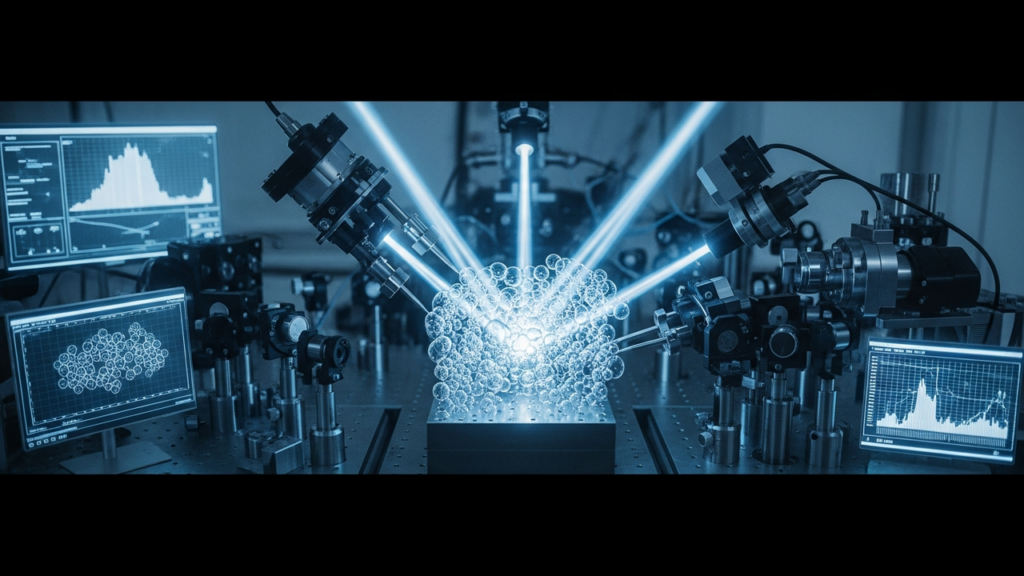
Flinders University Discover Novel Light-Switching Mechanism for Nanoscale ‘Bubble Domains’ in Ferroelectric Crystals, Revolutionizing Memory Devices
Flinders News Australia Overview Researchers at Flinders University discovered an unexpected way light can control nanoscale 'bubble' domains within a ferroelectric crystal. The most significant change in electronic state occurred *after... -
MIT Researchers Develop Scalable Fabrication for Damage-Free Molecular Integration into Electronic Devices, Fabricating Over 1,000 Devices with Sub-Nanometer Molecular Layers
MIT News USA Overview MIT researchers have developed a scalable fabrication technique to integrate delicate molecular materials into electronic devices on a chip without damage. This method extends standard semiconductor manufacturing pr... -
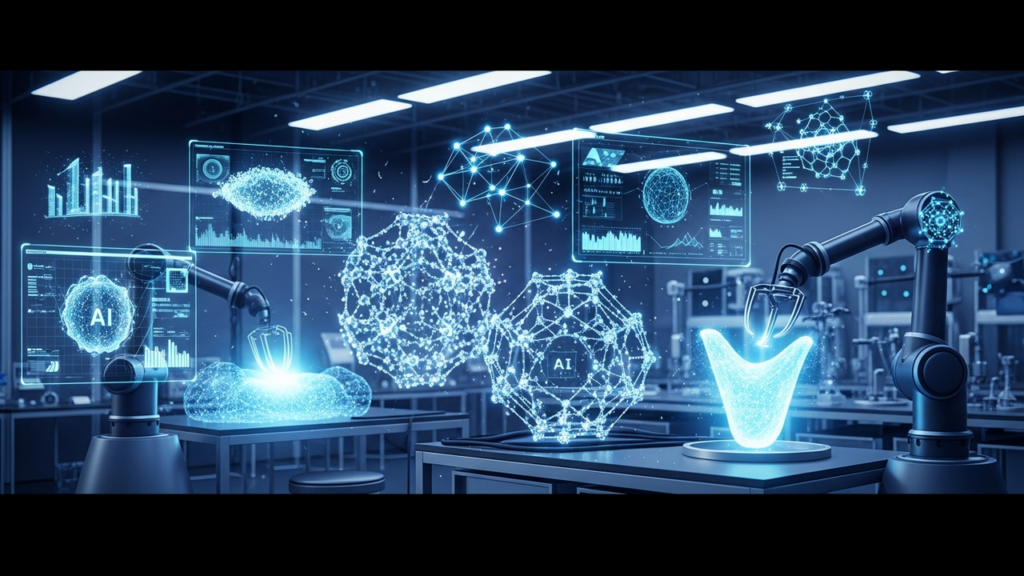
UW-Madison Secures $25M Federal Funding for ‘MATRIX-MIP’: AI Project to Drastically Enhance Advanced Materials Design for Extreme Conditions
Wisconsin Public Radio USA Overview The University of Wisconsin-Madison's research project, MATRIX-MIP, has received $25 million in federal funding to develop 'unprecedented capabilities' for designing and testing advanced materials. Thi... -
NSF Deploys $108M to 6 Research Centers for Materials Science, Advancing AI-Based Autonomous Experimentation for Soft Materials and Hybrid Quantum Metamaterials
National Science Foundation (NSF) USA Overview The U.S. National Science Foundation (NSF) has invested $108 million in six advanced materials research centers to push the boundaries of materials science. These centers will explore areas ... -
OAE Publishing Unveils ‘AI-eChemist Laboratory’ Roadmap: Shifting Electrochemical Materials Discovery to Autonomous Paradigm
OAE Publishing Inc. UK Overview This review introduces the 'AI-eChemist Laboratory' concept, aiming to transition electrochemical materials discovery from traditional trial-and-error to an autonomous laboratory paradigm. It outlines thre... -
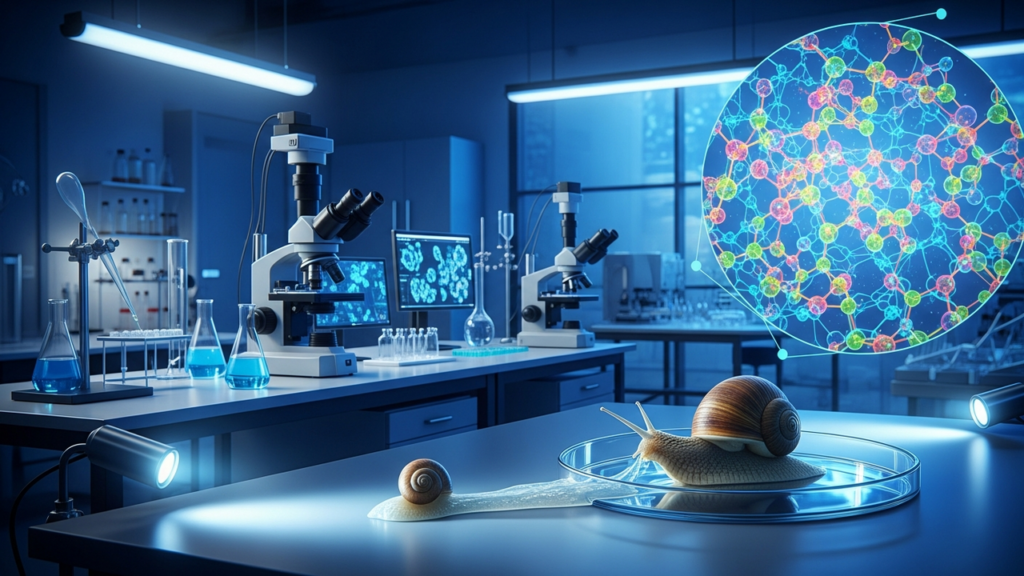
Max Planck Researchers Uncover Snail Slime’s Multifunctional Recipes, Paving Way for Eco-Friendly Adhesives and Medical Materials
Max Planck Institute of Colloids and Interfaces Germany Overview Researchers at the Max Planck Institute of Colloids and Interfaces have deciphered the garden snail's slime, revealing it as a multifunctional biomaterial that dynamically ... -
MIT Scientists Discover ‘Hidden Atomic Patterns’ (Short-Range Order) in Metal Alloys, Poised to Revolutionize Aerospace and Nuclear Engineering Design
Facebook (re-shared from Nature Communications content) USA Overview Scientists at MIT have discovered hidden atomic patterns, or chemical short-range order (SRO), within metal alloys that persist even after extreme manufacturing process... -
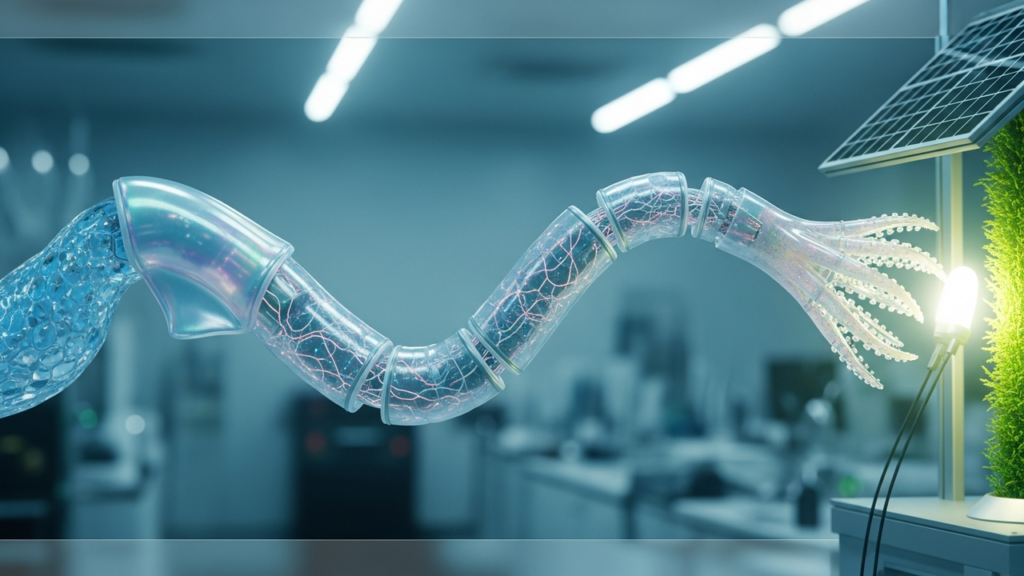
PMC Review: Soft Robots Powered by Sustainable Energy – Potential and Challenges of LCEs and Shape-Memory Alloys Explored
PMC Unknown Overview This review explores thermo-responsive materials like shape-memory materials, liquid crystalline elastomers (LCEs), and hydrogels for soft robotics powered by sustainable energy. While LCEs show potential for signifi... -
LCEs as Artificial Muscles: Compact, Multifunctional Soft Robots Safely Handle Delicate Objects with Electrically Controlled Actuators
Facebook (re-shared from Science Advances content) USA Overview Engineers have developed compact, portable, and multifunctional soft robots using electrically controlled tubular actuators made from liquid crystal elastomers (LCEs). These... -
PMC Proposes Framework to Identify ‘Strategic Advanced Materials’ for Enhanced Supply Chain Resilience and Technological Sovereignty
PMC Unknown Overview This framework proposes defining 'strategic advanced materials' as those offering high performance through locally available inputs to strengthen supply chain resilience and technological sovereignty. It distinguishe...