Key Findings
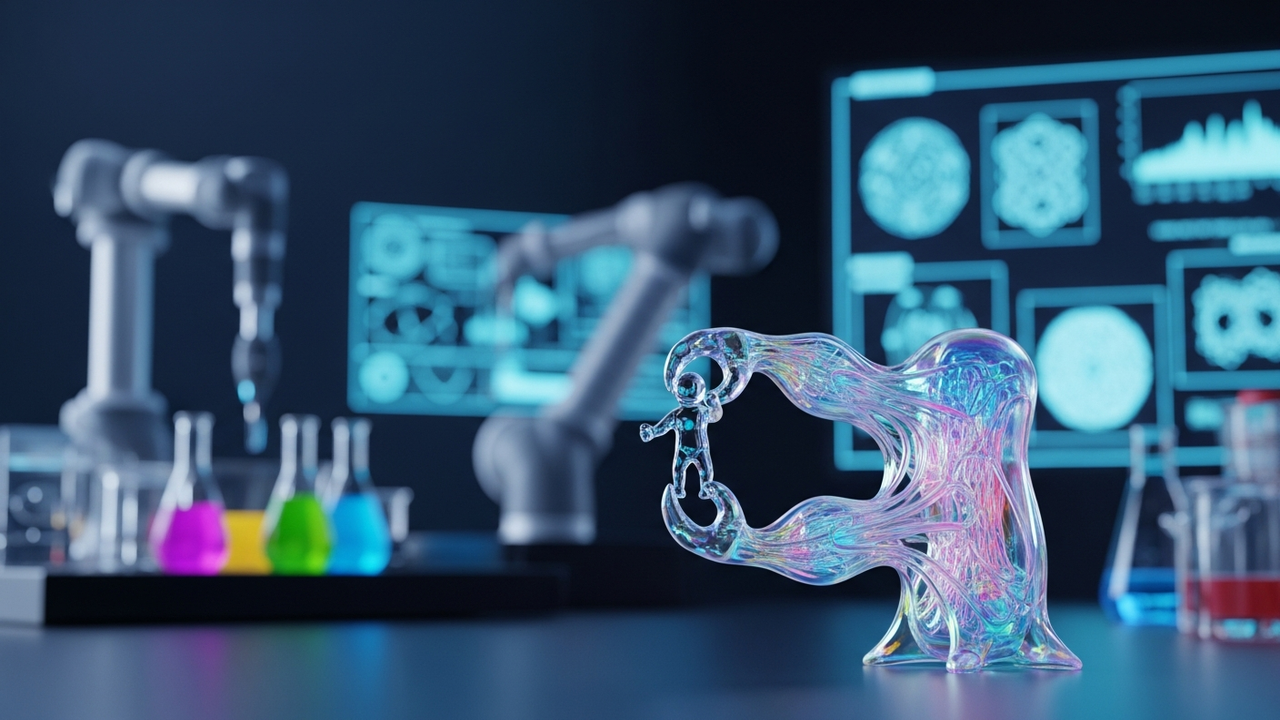
Engineers have successfully developed compact, portable, and multifunctional soft robots that utilize electrically controlled tubular actuators. The core material for these actuators is Liquid Crystal Elastomers (LCEs), which function akin to artificial muscles, precisely changing shape and contracting in response to thermal or electrical stimuli. This technology significantly contributes to the realization of robots that can gently and safely interact with objects, particularly in medical fields and industries requiring delicate manipulation.
Technical / Clinical Details
The developed soft robots leverage the full potential of Liquid Crystal Elastomers (LCEs), a type of smart material. LCEs are polymer materials that combine the ordered structure of liquid crystals with the elasticity of elastomers. They exhibit large and reversible shape changes (e.g., contraction or bending) in response to specific temperature or electric field variations, as their aligned molecules reorient. The tubular actuators developed in this research are formed by molding LCEs into cylindrical shapes and embedding electrodes within them. This configuration allows for direct electrical control of the LCE’s temperature, thereby enabling precise control over its contraction and expansion movements. This results in compact, autonomous actuators that do not require external motors or hydraulic systems. By combining multiple LCE actuators, researchers can design and fabricate robots capable of untethered walking or grippers that can handle delicate and irregularly shaped objects, such as eggs or biological tissues, without causing damage. The technology is capable of low-voltage operation and is easily integrated with existing small electronic components, promising a wide range of applications.
Background & Context
Traditional robots, typically constructed from rigid materials like metal, have inherent limitations in safety and adaptability when operating in complex environments or collaborating with humans. In contrast, soft robotics, characterized by flexible materials and deformable structures, offer greater adaptability to unknown or uncertain situations and can safely interact with humans and delicate objects. The demand for soft robots is particularly high in fields requiring delicate tasks, such as healthcare (endoscopy, surgical assistance), elder care (physical aids), food processing, and precision manufacturing. LCEs have been considered one of the most promising materials for ‘artificial muscles’ in soft robots due due their excellent responsiveness and actuation capabilities, but challenges in efficient control and miniaturization remained for their practical implementation.
Strategic Significance & Outlook
The advancement in LCE-based soft robot technology opens new possibilities in the field of soft robotics. Enhanced miniaturization and autonomy will accelerate practical applications in areas previously difficult to achieve, such as wearable medical devices, home assistant robots, exploration robots, and even robots performing delicate tasks in space. The ability to safely grasp and manipulate delicate objects will provide innovative solutions in agriculture (e.g., fruit harvesting), electronic component assembly, and medical tissue manipulation. These robots are expected to contribute to society by complementing or replacing human labor in various capacities. This research serves as an excellent example of how the convergence of smart materials and robotics technology can transform our lives and industries, driving forward the next generation of human-robot interaction and automated systems.
Source: https://www.facebook.com/groups/1572893699951268/posts/2196640820909883/
Get our weekly technology intelligence — free
Receive an infographic that lets you judge at a glance whether each field’s analysis report is worth reading.
Subscribe Free — Weekly Tech Intelligence
By subscribing, you’ll receive Troy-Technical’s weekly technology intelligence newsletter.
- Your email and selected fields are used only to deliver the newsletter.
- We never share your information with third parties.
- You can unsubscribe anytime via the link in each email.
See our Privacy Policy for details.
Takes about a minute · Unsubscribe anytime




