Background
The burgeoning adoption of electric vehicles (EVs) has brought the management and recycling of end-of-life batteries to the forefront as a critical global challenge, encompassing both environmental protection and resource efficiency imperatives. Securing a sustainable supply of critical minerals, such as lithium, is contingent upon the development of highly efficient recycling processes and robust domestic manufacturing capabilities. In the United States, the battery sector is witnessing a strategic pivot from purely EV applications towards broader energy storage solutions, with federal incentives for domestically sourced recycled materials poised to accelerate future recycling initiatives. Concurrently, the European Union is actively developing a ‘digital battery passport’ system, while innovative policies and public-private partnerships across the U.S. and Europe are fostering the development of resilient reuse and recycling supply chains for spent EV batteries. Further exemplifying this global push, South Korea sees a collaborative pilot project between Hyundai Motor Group, LG Energy Solution, Hyundai Engineering, and Wonik PNE. This initiative repurposes EV batteries into 200 kWh energy storage systems (UBESS) to power fast-charging stations, targeting grid stabilization and reduced charging infrastructure costs.
Key Findings
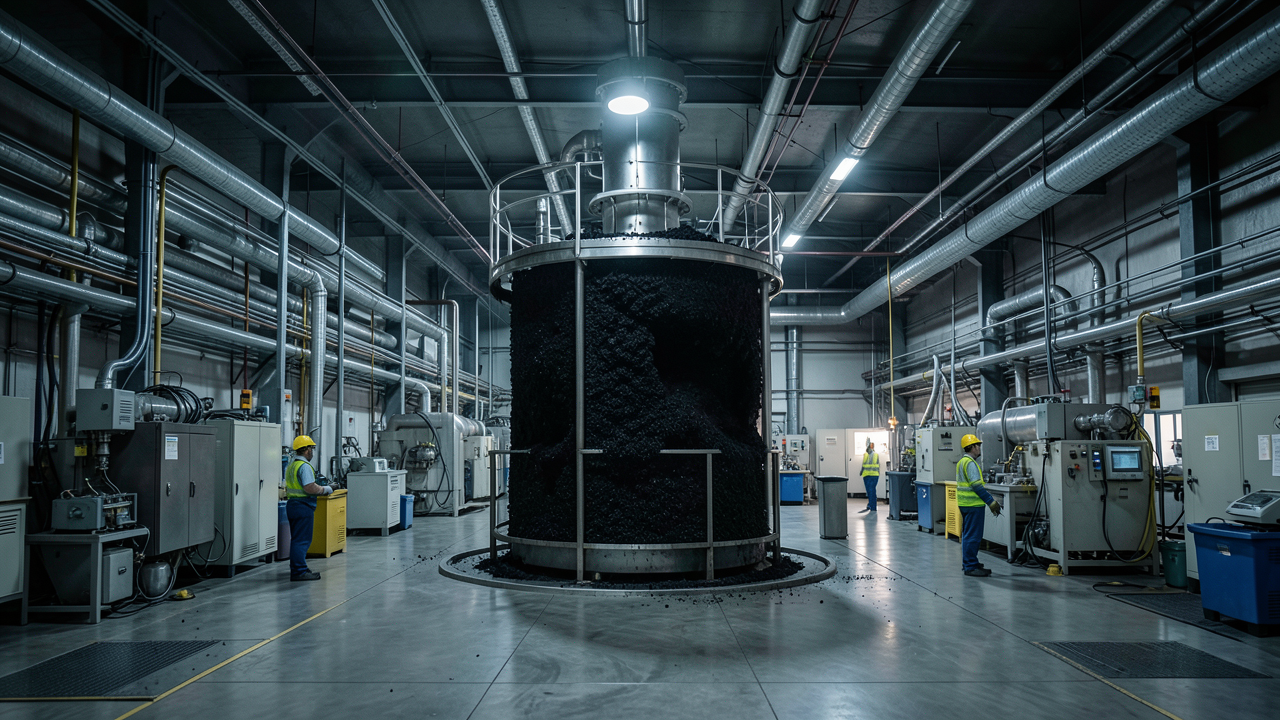
R3 Lithium, a newly established company, has announced its intent to reactivate a dormant battery recycling facility in Covington, Georgia. The plant aims to process ‘black mass’ derived from end-of-life electric vehicle (EV) batteries and manufacturing scrap, producing 99% pure lithium carbonate. This strategic initiative is projected to significantly diminish U.S. dependence on imported lithium carbonate, thereby strengthening the nation’s nascent domestic battery supply chain. In parallel, South Korea’s Hyundai Motor Group and LG Energy Solution have commenced a pilot program focused on repurposing used EV batteries into 200 kWh energy storage systems (ESS) designed to power rapid EV charging stations.
Technical Details
Battery recycling facilities are pivotal in the recovery of valuable materials from EV batteries once their primary operational lifecycle concludes. Post-primary use, EV batteries typically retain 70-80% of their initial capacity, rendering them ideal candidates for a ‘second life’ application rather than immediate disposition. These batteries can be effectively repurposed for 8-10 years as stationary energy storage systems, serving applications such as residential power backup, telecommunication tower support, or solar-powered streetlighting. Following their second-life utility, batteries proceed to advanced recycling processes capable of achieving over 95% recovery rates for critical cathode materials. R3 Lithium’s Covington plant is slated to implement advanced hydrometallurgical technologies to efficiently recover high-purity lithium compounds from spent batteries, thereby cultivating a robust circular economy for battery materials. Moreover, companies like Moment Energy have successfully attained third-party verified non-PFE (Prohibited Foreign Entity) status and full FEOC (Foreign Entity of Concern) compliance for their second-life EV battery energy storage systems deployed across North America. This compliance is crucial for supporting domestic energy storage initiatives and qualifying for federal investment tax credits, consequently reducing dependence on newly manufactured battery cells. On the international front, Italy’s Seval Group has inaugurated a new facility dedicated to lithium-ion battery processing. Meanwhile, in the U.S., Redwood Materials is significantly expanding its Nevada operations through a multi-billion-dollar investment aimed at augmenting its production capacities for copper foil and cathode active materials.
Strategic Significance & Outlook
The revitalization of R3 Lithium’s Georgia plant marks a substantial stride forward for the U.S. battery recycling industry and represents a critical step towards establishing a comprehensive closed-loop domestic supply chain. This development will facilitate end-to-end domestic battery manufacturing and recycling, significantly bolstering supply chain resilience and fostering greater economic independence for the nation. Both the repurposing of EV batteries for second-life applications and their efficient recycling are indispensable pillars for realizing a sustainable energy transition. Sustained investment and continuous technological innovation within this burgeoning sector are widely anticipated. As the U.S. battery sector continues its pivot towards energy storage solutions, federal incentives supporting the integration of recycled materials will further fortify the domestic supply chain, thereby cultivating a robust circular economy for essential battery components.
Get our weekly technology intelligence — free
Receive an infographic that lets you judge at a glance whether each field’s analysis report is worth reading.
Subscribe Free — Weekly Tech Intelligence
By subscribing, you’ll receive Troy-Technical’s weekly technology intelligence newsletter.
- Your email and selected fields are used only to deliver the newsletter.
- We never share your information with third parties.
- You can unsubscribe anytime via the link in each email.
See our Privacy Policy for details.
Takes about a minute · Unsubscribe anytime






Comments