Key Findings
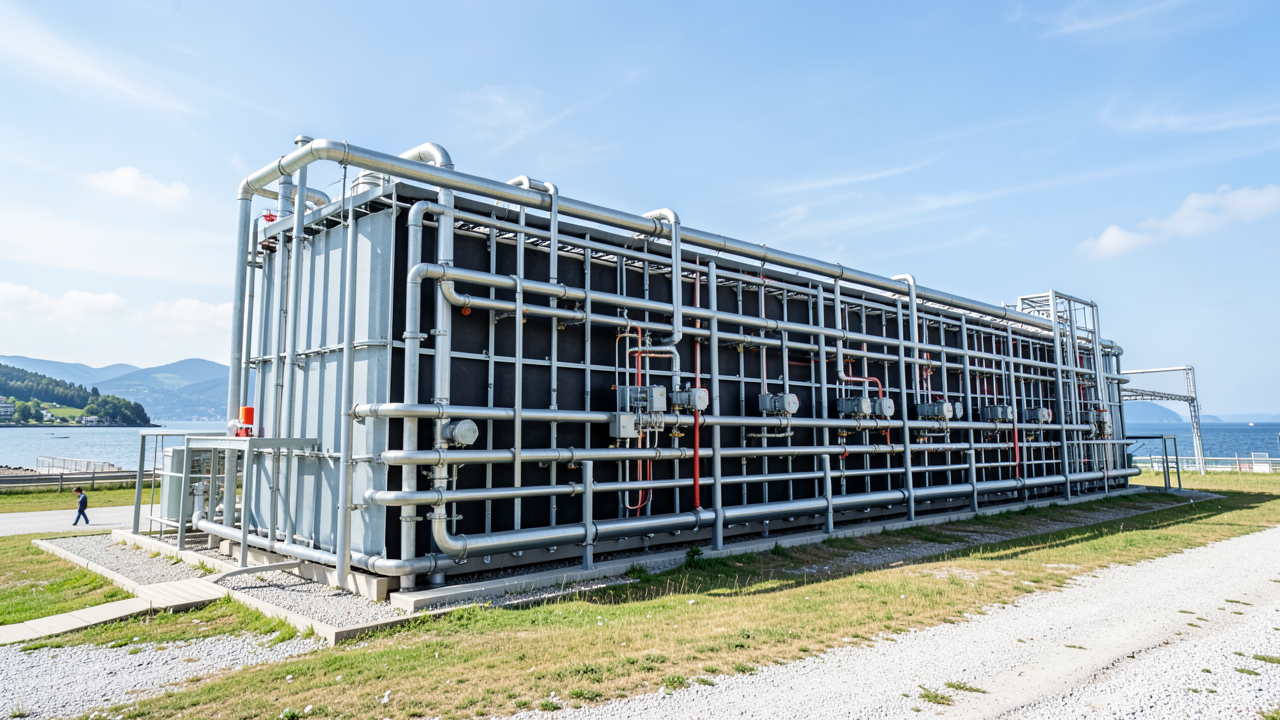
Switzerland and Canada are rapidly deploying large-scale Vanadium Flow Batteries (VFBs) to address the pressing challenges of renewable energy grid integration and power supply stabilization. In Laufenburg, Switzerland, a massive underground VFB is under construction with an initial capacity of 1.5 GWh, expandable up to 2 GWh. This critical infrastructure aims to reduce reliance on expensive backup generation and enhance grid reliability. Concurrently, in Alberta, Canada, North America’s largest VFB, a 100 MW, 400 MWh system, has already commenced operations, demonstrating the commercial viability and practical utility of VFB technology.
Technical Details
Vanadium Flow Batteries are a type of redox flow battery that stores energy in liquid electrolytes. A key advantage of this technology, unlike lithium-ion batteries, is its minimal degradation over time; it can endure daily charge and discharge cycles for decades without significant performance loss. This translates into a very long operational lifespan and a low total cost of ownership. Furthermore, due to the non-flammable nature of its electrolyte, VFBs offer a significant safety advantage with an extremely low risk of fire. For the Swiss project, Invinity Energy Systems serves as the technology partner, with Dutch engineers having optimized VRFB systems to achieve 90% efficiency. The flexibility of independently scaling power (MW) and energy (MWh) is another hallmark, allowing for increased storage capacity simply by enlarging the electrolyte tanks, making them particularly suitable for large-scale grid storage. In the U.S., the Pacific Northwest National Laboratory (PNNL), in collaboration with Invinity Energy Systems, is demonstrating a long-duration VFB with 24-hour discharge capability, aiming to enhance microgrid resilience and cost-effectiveness, and support critical loads during power outages.
Background & Context
As renewable energy adoption accelerates worldwide, energy storage systems capable of absorbing the intermittency of sources like solar and wind and stabilizing the grid are becoming indispensable. While lithium-ion batteries are well-suited for short-duration storage, they face challenges in cost, lifespan, safety, and resource constraints for long-duration, high-capacity, and high-cycle applications. Vanadium flow batteries are emerging as a robust and sustainable alternative solution to these challenges, expected to contribute to long-term grid reliability and the achievement of decarbonization goals. The large-scale projects in Switzerland and Canada clearly indicate that this technology is moving from the theoretical to the practical phase, establishing its position as a major energy storage technology.
Strategic Significance & Outlook
The deployment of large-scale VFBs in Switzerland and Canada is paving new avenues for the global energy storage market. The success of these projects will likely encourage other nations to adopt VFB technology, further accelerating the penetration of renewable energy. The long-term durability, high safety profile, and flexible scalability of vanadium flow batteries position them as a foundational technology for future power grids. They are particularly anticipated to enhance microgrid resilience and serve as an alternative to expensive backup generation, becoming indispensable components in building more sustainable and stable energy supply systems.
Source: https://www.thecooldown.com/green-tech/switzerland-vanadium-flow-battery-grid-storage/
Get our weekly technology intelligence — free
Receive an infographic that lets you judge at a glance whether each field’s analysis report is worth reading.
Subscribe Free — Weekly Tech Intelligence
By subscribing, you’ll receive Troy-Technical’s weekly technology intelligence newsletter.
- Your email and selected fields are used only to deliver the newsletter.
- We never share your information with third parties.
- You can unsubscribe anytime via the link in each email.
See our Privacy Policy for details.
Takes about a minute · Unsubscribe anytime








Comments