Background
Recent years have seen increasing concerns regarding the safety of lithium-ion batteries, particularly their fire risks, coupled with price volatility and supply instability of critical raw materials. Essential infrastructure sectors, including utilities and data centers, demand energy storage systems (ESS) with exceptionally high safety and reliability to ensure uninterrupted power supply. Bridge’s sodium-ion technology emerges as a compelling solution to these challenges, offering a lower-risk, more sustainable alternative by leveraging non-flammable materials and a robust system design.
Key Findings
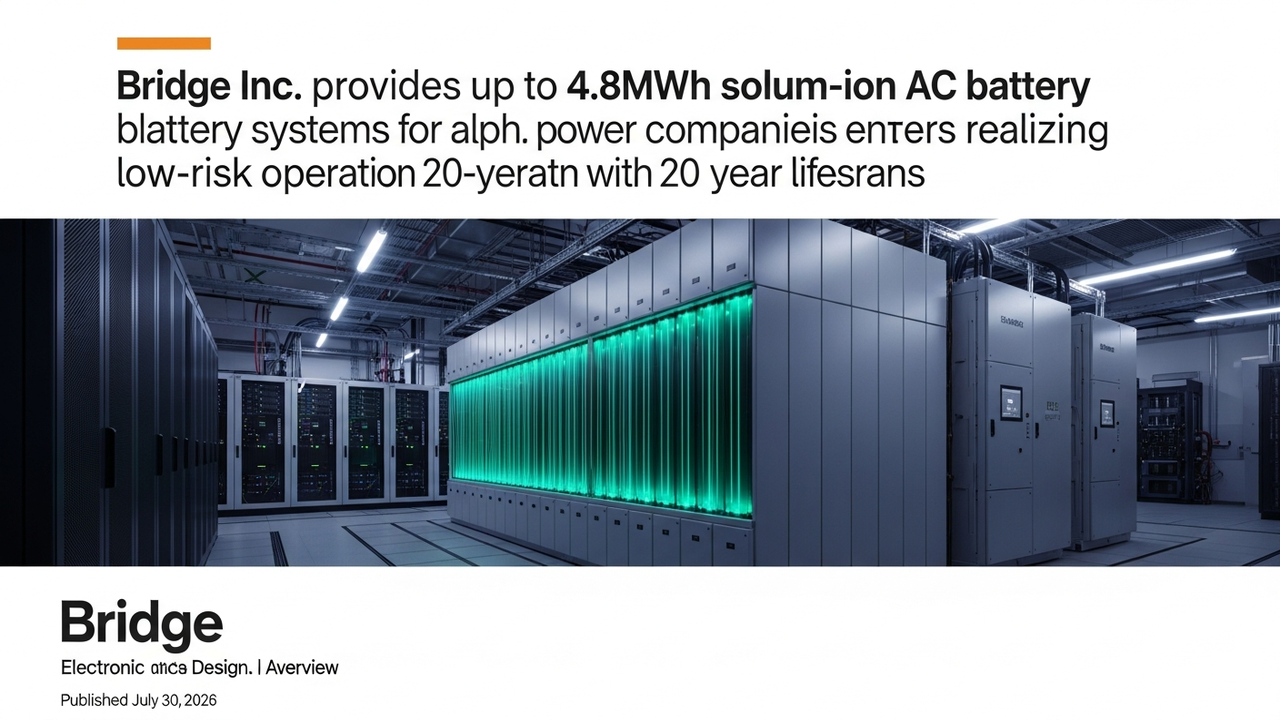
Bridge has introduced an advanced sodium-ion AC battery system, also named ‘Bridge,’ targeting utilities, data centers, and other large-scale commercial and industrial enterprises. This modular system utilizes 1.2 MWh AC battery units, enabling configurations of up to 4.8 MWh of storage capacity within the compact footprint of a standard 20-foot battery container. The technology is rapidly garnering market attention as a safer, lower-risk, and more sustainable alternative to traditional lithium-ion batteries for critical energy storage applications.
Technical Details
The Bridge sodium-ion Battery Energy Storage System (BESS) is engineered for robust performance and exceptional operational resilience. It is designed for stable operation across an impressively broad temperature range, from -40°F to 122°F (-40°C to 50°C), making it highly adaptable for deployment in diverse global climatic conditions. The system boasts a continuous discharge capability of up to 26 hours, ensuring sustained power supply during prolonged grid outages or peak demand. A remarkable design life of up to 20 years further guarantees reliable, long-term operational viability. Additionally, sodium-ion battery chemistry leverages abundant and low-cost raw materials compared to lithium, significantly reducing supply chain risks and enhancing overall cost-effectiveness.
Strategic Significance & Outlook
The introduction of Bridge’s sodium-ion AC battery system represents a compelling new paradigm in the large-scale energy storage market. It is poised to significantly contribute to global decarbonization efforts and enhance grid resilience for utilities and data centers. The system’s expansive operational temperature range and extended design life are expected to translate directly into reduced operational expenditures (OpEx) and increased asset longevity and value. Widespread adoption of this technology promises to foster a more diversified and resilient energy infrastructure, mitigating over-reliance on lithium-ion batteries, thereby stabilizing power supply and accelerating the seamless integration of intermittent renewable energy sources.
Get our weekly technology intelligence — free
Receive an infographic that lets you judge at a glance whether each field’s analysis report is worth reading.
Subscribe Free — Weekly Tech Intelligence
By subscribing, you’ll receive Troy-Technical’s weekly technology intelligence newsletter.
- Your email and selected fields are used only to deliver the newsletter.
- We never share your information with third parties.
- You can unsubscribe anytime via the link in each email.
See our Privacy Policy for details.
Takes about a minute · Unsubscribe anytime