Key Findings
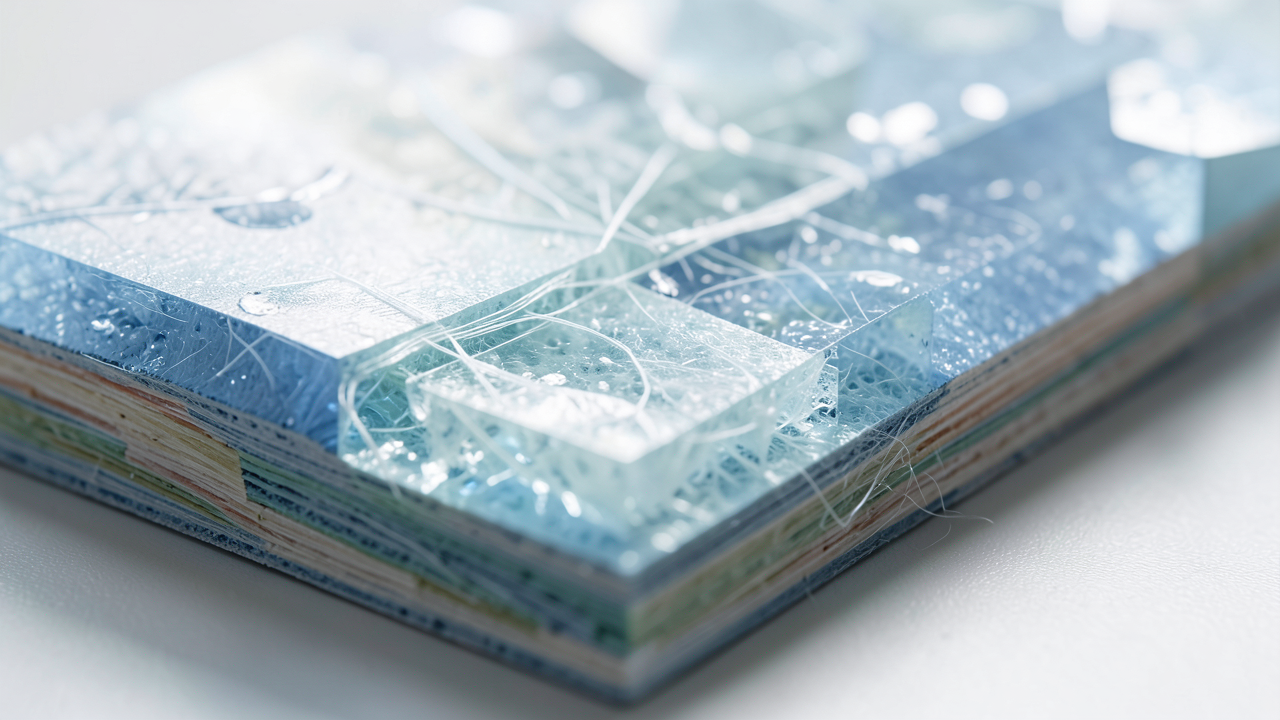
A novel interface engineering strategy for boron nitride (BN) has been developed, dramatically enhancing the performance of high-frequency electronic packaging substrates. This innovative approach features the functionalization of BN using a combination of sucrose-assisted mechanochemical activation and silane coupling. As a result, glass fiber-reinforced bismaleimide-triazine (BT) resin composites achieved an unprecedentedly low dielectric loss (Df) of 0.003 at 10 GHz. Furthermore, the thermal conductivity was substantially improved, marking a significant breakthrough in both thermal management and signal integrity for next-generation high-speed communication devices.
Technical / Clinical Details
Next-generation high-speed communication devices critically require both minimized signal loss and efficient heat dissipation due to their operation in high-frequency bands. This research focused on surface modification techniques for BN particles as a key enabler for uniform dispersion within the BT resin matrix, leveraging BN’s excellent thermal conductivity and insulation properties. Specifically, BN particles were surface-activated through mechanochemical treatment in the presence of sucrose, and subsequently, silane coupling agents were employed to drastically improve interfacial adhesion with the BT resin. This optimized BN functionalization efficiently facilitated the formation of high-thermal-conductivity pathways by the BN particles within the composite, resulting in a significant enhancement of overall thermal conductivity. Crucially, the intrinsically low dielectric properties of BN were maintained throughout the BT resin composite, achieving an outstanding dielectric loss (Df) of just 0.003 at a very high frequency of 10 GHz. This value is significantly lower than that of conventional substrate materials, enabling minimal signal attenuation and high-speed data transmission.
Background & Context
With the advancements in 5G/Beyond 5G, AI, and data centers, electronic devices are becoming increasingly high-frequency and highly integrated. Consequently, conventional substrate materials have revealed two major challenges: dielectric loss of high-frequency signals and heat generation from devices. Dielectric loss causes signal attenuation, reducing communication speed and efficiency, thereby limiting device performance. Excessive heat generation, on the other hand, severely impacts device reliability and lifespan. This research offers a direct and effective solution to these pressing issues. The reduction in dielectric loss contributes to faster signal speeds and improved power efficiency, while enhanced thermal conductivity ensures stable device operation and extended lifespan. Developing high-performance electronic packaging substrates that address these issues has been a critical concern for the entire industry.
Strategic Significance & Outlook
This sucrose-assisted BN interface engineering technology holds great promise for a wide range of applications in next-generation wireless communication equipment, millimeter-wave radar, high-frequency modules, and processor packages for high-performance servers and data centers. Particularly for devices requiring simultaneous miniaturization and performance enhancement, this low dielectric loss, high thermal conductivity BT resin composite will serve as a foundational material to maximize their potential. Future challenges include scaling up this technology for large-scale production and optimizing its cost-effectiveness. This breakthrough is an excellent example of how the synergy between materials science and electronics engineering can solve some of the industry’s most complex challenges, and it is expected to play an indispensable role in shaping the future of high-speed, high-functional electronic devices.
Get our weekly technology intelligence — free
Receive an infographic that lets you judge at a glance whether each field’s analysis report is worth reading.
Subscribe Free — Weekly Tech Intelligence
By subscribing, you’ll receive Troy-Technical’s weekly technology intelligence newsletter.
- Your email and selected fields are used only to deliver the newsletter.
- We never share your information with third parties.
- You can unsubscribe anytime via the link in each email.
See our Privacy Policy for details.
Takes about a minute · Unsubscribe anytime



Comments