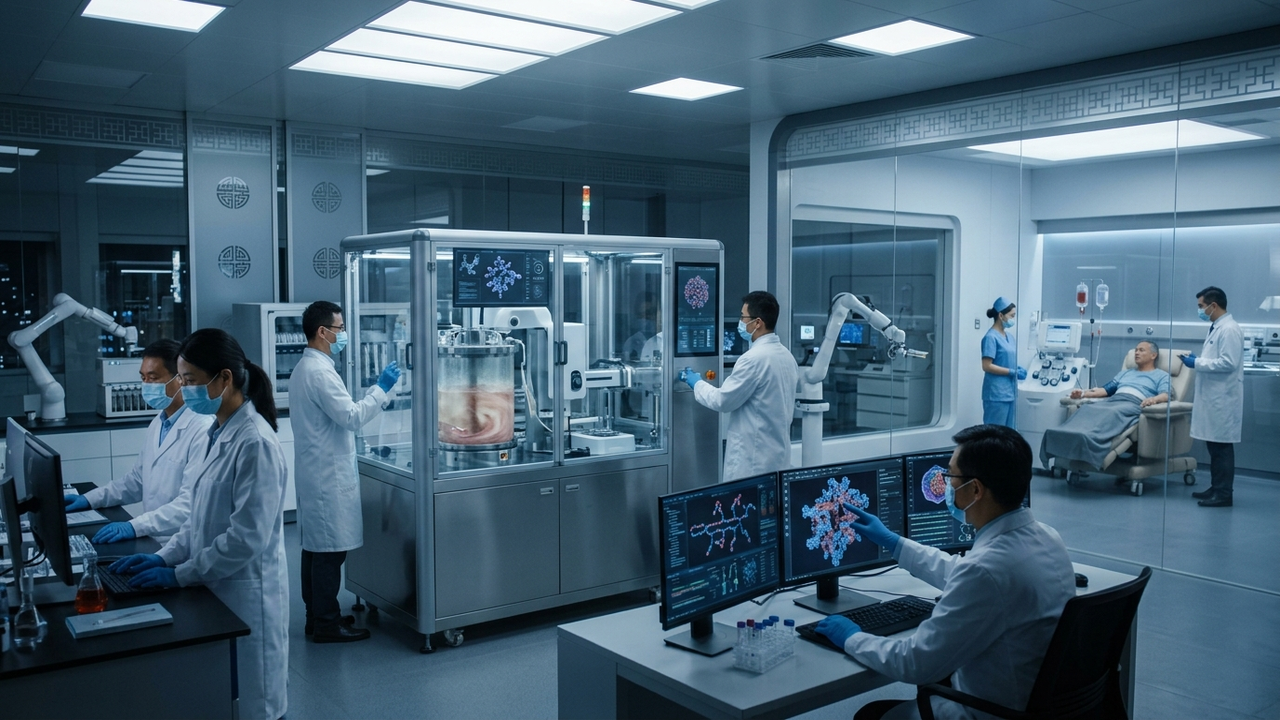
Background and Industry Context
Hematology, far from being limited to the diagnosis of blood cell lineages or anemia, is a dynamic and rapidly evolving discipline. It encompasses a profound focus on understanding human physiology, elucidating disease mechanisms, and exploring the intricate interactions between biology and broader society. China, powered by robust government backing, a vast pool of research talent, and extensive patient cohorts, has made rapid and strategic strides in the biotechnology sector, particularly within cell and gene therapy. Notably, distinctions in clinical trial approval processes when compared to Western countries may also contribute to China’s accelerated leadership in this specialized field, simultaneously fostering both international collaboration and competitive dynamics.
Key Findings
Recent analyses in hematology confirm China’s rapid ascent as a leading global player, achieving significant breakthroughs in cutting-edge fields such as Chimeric Antigen Receptor T-cell (CAR-T) therapy and CRISPR-based hematopoietic stem cell (HSC) gene editing. This trajectory is profoundly reshaping the global landscape of blood disease treatment and research.
Technical and Clinical Advancements
Chinese research institutions and companies are actively exploring diverse target antigens and CAR designs in CAR-T cell therapy development, reporting promising results across numerous clinical trials. Significant efforts are dedicated to enhancing the efficacy and safety of CAR-T therapies for relapsed and refractory hematological malignancies. Concurrently, CRISPR-based HSC editing research is progressing towards curative treatments for inherited blood disorders such as sickle cell anemia and thalassemia, with both in vivo and ex vivo gene editing approaches under vigorous development. These technologies hold the profound potential to deliver long-lasting therapeutic effects by correcting the fundamental genetic causes of disease.
Strategic Significance and Outlook
China’s emergent leadership in CAR-T cell therapy and CRISPR-based HSC editing is poised to be a critical determinant in shaping the future trajectory of global hematology. It is widely anticipated that China will significantly accelerate the commercialization and global expansion of these groundbreaking technologies. While this rapid advancement promises to broaden access to innovative therapies for a greater number of patients afflicted with blood disorders, it also underscores the heightened importance of international cooperation and harmonization, particularly concerning treatment quality, ethical standards, and data sharing protocols. Innovations originating from China are thus poised to play an indispensable role in establishing the next generation of global standards for treating blood diseases.
Get our weekly technology intelligence — free
Receive an infographic that lets you judge at a glance whether each field’s analysis report is worth reading.
Subscribe Free — Weekly Tech Intelligence
By subscribing, you’ll receive Troy-Technical’s weekly technology intelligence newsletter.
- Your email and selected fields are used only to deliver the newsletter.
- We never share your information with third parties.
- You can unsubscribe anytime via the link in each email.
See our Privacy Policy for details.
Takes about a minute · Unsubscribe anytime





Comments