Background: The Challenge of Parkinson’s Disease
Parkinson’s disease is a progressive neurodegenerative disorder characterized by debilitating motor symptoms such as tremor, bradykinesia (slowness of movement), and postural instability. These symptoms stem from the gradual degeneration of dopamine-producing neurons in specific regions of the brain. While current treatments, primarily dopamine replacement therapies like levodopa, can manage symptoms, they do not halt disease progression and are often associated with long-term side effects.
For decades, cell replacement therapy using stem cells has been investigated as a potentially fundamental approach to ameliorate the pathology by replenishing lost dopamine neurons. The advent of induced pluripotent stem cell (iPSC) technology has significantly accelerated research in this field, offering the promise of large-scale and potentially patient-specific production of dopamine neurons for therapeutic use.
Pioneering Clinical Trial: Safety and Feasibility Confirmed
Pioneering clinical research spearheaded by Lund University in Sweden has unequivocally demonstrated the safe and feasible transplantation of iPSC-derived dopamine precursor cells into the brains of Parkinson’s disease patients. The results of this initial Phase 1 human clinical trial, published in Nature Medicine, represent a significant advancement for cell replacement therapy in neurodegenerative disorders.
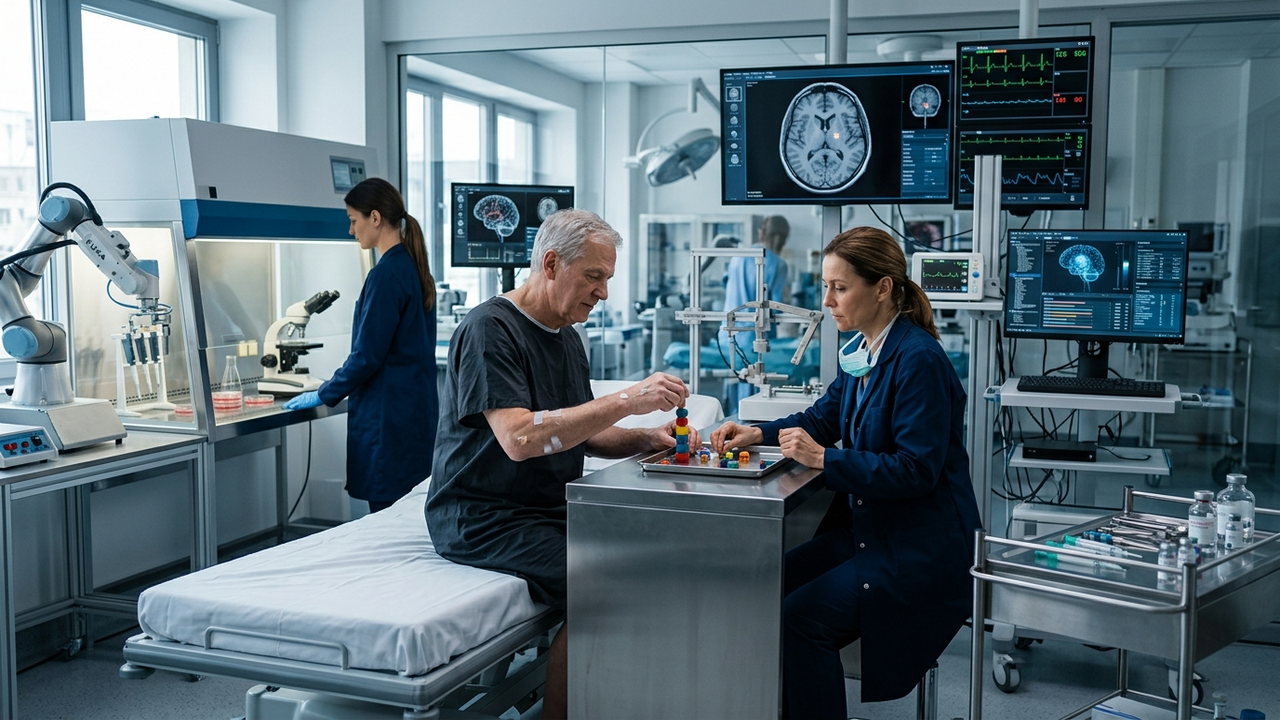
In this trial, eight patients with advanced Parkinson’s disease received transplants of dopamine-producing neuron precursor cells, differentiated from iPSCs, directly into specific brain regions responsible for motor function. During a one-year follow-up period, no severe adverse events attributable to the transplantation procedure or the cell product itself were reported. Crucially, there were no signs of uncontrolled cell proliferation or ectopic differentiation, such as tumor formation, confirming the high safety and tolerability profile of the cellular therapy. The primary objective of these transplanted cells is to engraft within the brain, mature into functional dopamine-producing neurons, and thereby restore lost neurological function.
Strategic Significance and Future Outlook
These positive feasibility and safety data provide strong impetus for advancing iPSC-derived cell therapy for Parkinson’s disease into subsequent clinical stages. The next steps will involve larger Phase 2 and 3 clinical trials to comprehensively evaluate long-term safety, efficacy, and to determine optimal dosage and transplantation sites. The success of this research is also expected to have broad implications for the development of iPSC-based cell therapies for other neurodegenerative conditions, including Huntington’s disease and Alzheimer’s disease. This marks a transformative step, signaling new hope for debilitating diseases where treatment options have historically been limited, heralding a new era for regenerative medicine.
Source: https://www.parkinsonsnsw.org.au/parkinsons-stem-cell-clinical-trial-confirms-feasibility/
Get our weekly technology intelligence — free
Receive an infographic that lets you judge at a glance whether each field’s analysis report is worth reading.
Subscribe Free — Weekly Tech Intelligence
By subscribing, you’ll receive Troy-Technical’s weekly technology intelligence newsletter.
- Your email and selected fields are used only to deliver the newsletter.
- We never share your information with third parties.
- You can unsubscribe anytime via the link in each email.
See our Privacy Policy for details.
Takes about a minute · Unsubscribe anytime



Comments