Background
Drug crystallization is a critical step in pharmaceutical development, profoundly influencing efficacy, safety, and manufacturing viability. However, under terrestrial gravity, factors like crystal growth rate and morphology are often adversely affected, making it challenging to achieve ideal crystal structures. This inherent limitation has spurred growing interest in space-based pharmaceuticals, which leverage the unique properties of the space environment, particularly microgravity. Startups like Serendipity Space are at the forefront of this burgeoning frontier. The Indian government’s active promotion of its commercial space industry aligns with and supports such initiatives, promising new avenues for the pharmaceutical manufacturing supply chain and contributing to global healthcare solutions.
Key Findings
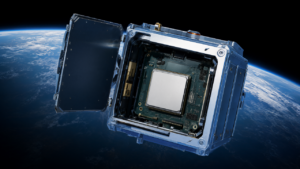
Serendipity Space, India’s inaugural space-pharma startup, has successfully demonstrated its innovative “Alchemy” system for manufacturing pharmaceutical crystals within the Earth’s stratosphere. This system harnesses the unique microgravity environment to produce high-quality drug crystals, offering significant potential to enhance drug stability, solubility, and ultimately, bioavailability. This achievement represents a pivotal step towards revolutionizing drug discovery and development.
Technically, the “Alchemy” system exposes drug molecules to stratospheric microgravity, fostering the formation of uniform, highly ordered crystal structures that are difficult to replicate under Earth’s gravitational pull. In this environment of significantly reduced gravitational influence, undesirable phenomena such as convection and sedimentation during crystal growth are suppressed. This suppression scientifically yields purer, more defect-free crystals with superior structural integrity. Such improvements are projected to enhance the physicochemical properties of drugs, especially their solubility and stability, leading to better patient absorption efficiency and extended shelf life. Crucially, this technology can not only optimize existing drugs but also render pharmaceutically viable novel compounds that are challenging to crystallize terrestrially. Its broad impact is anticipated across the entire pharmaceutical lifecycle, from early discovery to clinical application, accelerating the development of safer and more effective medicines.
Looking ahead, Serendipity Space’s “Alchemy” system has the potential to fundamentally transform pharmaceutical manufacturing paradigms. Future efforts will focus on conducting longer-duration microgravity manufacturing trials and comprehensive pharmacological evaluations of the returned drug crystals. While commercialization necessitates addressing challenges such as reducing launch costs, scaling manufacturing processes, and navigating stringent regulatory requirements, the proven capability to produce high-quality pharmaceutical crystals in space could unlock substantial demand in high-value niche markets, including orphan drugs and specific cancer therapeutics. In the long term, the realization of fully autonomous orbital pharmaceutical factories could enable in-situ drug production for deep-space exploration missions and establish a novel, resilient supply source for terrestrial healthcare systems.
Get our weekly technology intelligence — free
Receive an infographic that lets you judge at a glance whether each field’s analysis report is worth reading.
Subscribe Free — Weekly Tech Intelligence
By subscribing, you’ll receive Troy-Technical’s weekly technology intelligence newsletter.
- Your email and selected fields are used only to deliver the newsletter.
- We never share your information with third parties.
- You can unsubscribe anytime via the link in each email.
See our Privacy Policy for details.
Takes about a minute · Unsubscribe anytime