Key Findings
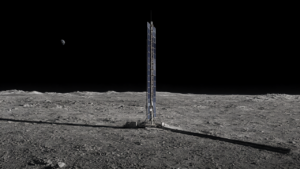
As AI-focused data centers face rapidly increasing power consumption (equivalent to 100,000 homes for a typical facility), posing significant sustainability challenges on Earth, companies including Google are accelerating strategies to relocate portions of their computing infrastructure to Earth orbit. These orbital data centers are poised to fundamentally solve terrestrial power and cooling issues by utilizing continuous solar power and efficient waste heat dissipation into space.
Technical and Clinical Details
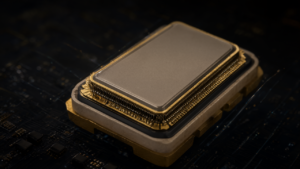
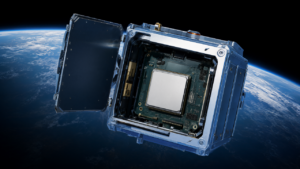
The primary advantages of deploying data centers in orbit lie in energy supply and thermal management. Satellites in carefully chosen orbits (e.g., sun-synchronous) can receive almost continuous sunlight, ensuring a stable power supply from solar arrays. Furthermore, the waste heat generated by computers can be directly radiated into space via giant radiators, eliminating the need for complex and expensive cooling plants required by terrestrial data centers. Google’s ‘Project Suncatcher’ proposes a constellation of small satellites equipped with optically linked Tensor Processing Units (TPUs). This optical linking technology enables faster and lower-latency data transfer than ground-based systems, maximizing the efficiency of distributed AI processing. A joint two-satellite learning mission with Planet is scheduled for early 2027 to demonstrate the feasibility of this concept.
Background and Industry Context
The rapid advancement of AI technology in recent years has led to an explosive demand for large-scale data processing and computational resources. However, traditional terrestrial data centers are confronted with severe challenges: enormous power consumption, high energy requirements for cooling, and geographical siting constraints. Dependence on fossil fuel-derived electricity, in particular, raises sustainability concerns regarding climate change mitigation. Orbital data centers are emerging as an innovative solution to these problems, forming a new trend in infrastructure development that leverages the space frontier. This will further accelerate AI applications across diverse sectors, including national security, scientific research, and commercial services.
Future Outlook
The realization of orbital data centers holds the potential to dramatically enhance AI capabilities. Continuous power supply and efficient thermal management will enable more powerful processors to run at full capacity around the clock, maximizing AI’s computational power in fields such as weather forecasting, Earth observation, space exploration data analysis, autonomous driving, and medical diagnostics. However, orbital data centers also present new challenges, including launch costs, increased space debris, re-entry pollution, and hardware durability in the space environment. While establishing technological and policy solutions to these issues is critical, successful initiatives by major players like Google could lead to the generalization of orbital AI computing by the 2030s, fundamentally redefining the future of digital infrastructure.
Source: https://spacedaily.com/t-ai-data-centre-100000-homes-orbit-sunlight-radiators/
Get our weekly technology intelligence — free
Receive an infographic that lets you judge at a glance whether each field’s analysis report is worth reading.
Subscribe Free — Weekly Tech Intelligence
By subscribing, you’ll receive Troy-Technical’s weekly technology intelligence newsletter.
- Your email and selected fields are used only to deliver the newsletter.
- We never share your information with third parties.
- You can unsubscribe anytime via the link in each email.
See our Privacy Policy for details.
Takes about a minute · Unsubscribe anytime