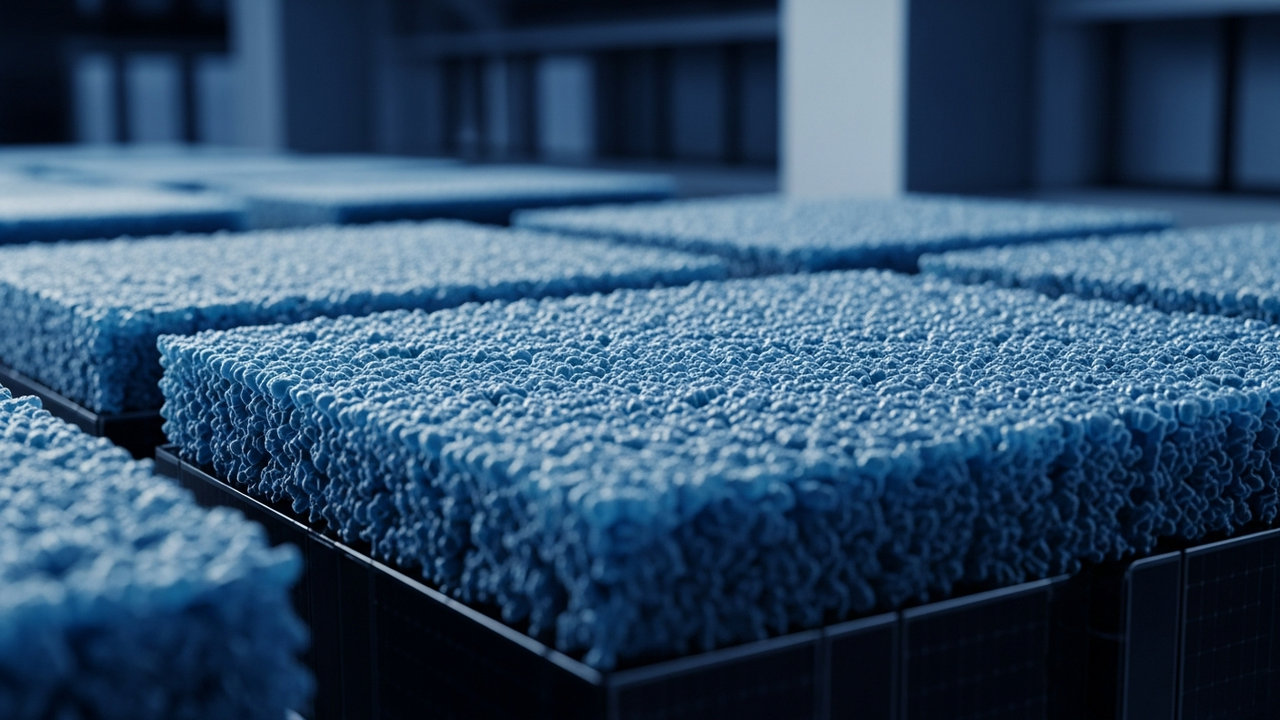
Re-evaluating Surface Textures in Perovskite Solar Cells
Performance enhancements in perovskite solar cells have been pursued from both material science and device architecture perspectives. While surface texturing has been extensively studied for its ability to improve light capture efficiency through “light management,” this review systematically presents that nano- and micro-scale textures offer a wide array of significant benefits beyond just light management. This new perspective suggests novel directions for the design and optimization of perovskite devices.
Multifaceted Functions of Nano- and Micro-Textures
This paper details how surface textures positively influence multiple properties of perovskite devices:
- Improved Film Wettability: Textured substrates enhance the wettability of perovskite precursor solutions, promoting more uniform film formation. This enables the fabrication of high-quality perovskite layers with fewer defects, which is crucial for device performance.
- Enhanced Crystallinity: Texturing influences the growth of perovskite crystals, contributing to optimized grain size, inducing desirable crystal orientation, and improving compositional phase homogeneity. These factors directly impact carrier generation and transport efficiency.
- Boosted Carrier Extraction: Optimal texture design aids in efficiently extracting electrons and holes, generated within the perovskite layer, to their respective transport layers. This reduces carrier recombination and leads to an increase in open-circuit voltage (Voc).
- Improved Mechanical Stability: Especially in flexible perovskite solar cells, substrate texturing has been shown to enhance the device’s resilience against mechanical stresses such as bending and stretching. This is vital for ensuring the long-term durability and reliability of the device.
- Applications Beyond Optical Function: These benefits are not limited to increasing light absorption efficiency in solar cells but also potentially lead to comprehensive performance improvements in other perovskite-based optoelectronic devices, such as photodetectors and light-emitting diodes (LEDs).
Future Research and Industrial Impact
This review emphasizes that in the design of perovskite devices, surface textures should be considered as multifunctional elements that impact material, electrical, and mechanical properties synergistically, rather than merely as light management tools. Future research will likely focus on further exploring optimal texture patterns and fabrication methods for specific application areas. This approach is expected to accelerate the commercialization of perovskite technology and contribute to the realization of higher-performance, more reliable next-generation optoelectronic devices.






Comments