
The Promise of Perovskite Solar Cells in Space
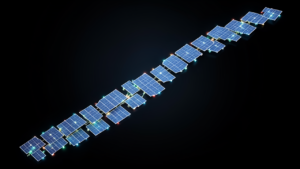
The success of space missions heavily relies on robust and reliable power supply systems. While conventional space solar cells have primarily been based on inorganic semiconductors like silicon and gallium arsenide, these materials present challenges in terms of weight and manufacturing cost. Perovskite solar cells, with their lightweight, thin, flexible nature, and potential for high conversion efficiency, are garnering global attention as a next-generation power source for space. China has taken concrete steps to establish leadership in the space application of this cutting-edge technology.
Shenzhou-23 Mission and In-Orbit Testing
On May 24, 2026, China successfully launched the Shenzhou-23 manned spacecraft. As one of the critical payloads for this mission, perovskite solar cells were onboard, commencing their long-term in-orbit testing. This space experiment, scheduled to last approximately six months, aims to thoroughly verify the following key performance parameters:
- Evaluation of Efficiency Degradation: Measuring how the power conversion efficiency of perovskite cells changes under the intense sunlight, UV radiation, and high-energy particle bombardment of the space environment.
- Verification of Radiation Resistance: Space radiation is a factor that rapidly degrades the performance of semiconductor devices. The experiment will assess perovskite’s durability against radiation and confirm its structural stability.
- Long-Term Stability: Monitoring the physical and electrical stability of the cells under harsh conditions such as vacuum and extreme temperature fluctuations (hundreds of degrees Celsius due to the spacecraft’s day-night cycles).
- Adaptability to Temperature Cycling: Evaluating the impact of frequent temperature increase and decrease cycles in orbit on the interfaces of the perovskite layers, electrodes, and encapsulants.
Impact on Space Industrialization and Outlook
This in-orbit testing aboard Shenzhou-23 represents a crucial milestone for the industrialization of perovskite solar cells for space applications. If these tests yield positive results, it could open possibilities for providing lighter, lower-cost, and more efficient power supply solutions for future satellites, space stations, deep-space probes, and even lunar bases. This is expected to offer numerous benefits in space development, including reduced launch costs, increased payload capacity, and extended mission durations. China, through this technology, aims to further enhance its competitiveness in space development and advance a new era of space utilization.
Source: https://news.metal.com/en/newscontent/103919658-SMM-PV-Perovskite-Cells-Launched-into-Space




Comments