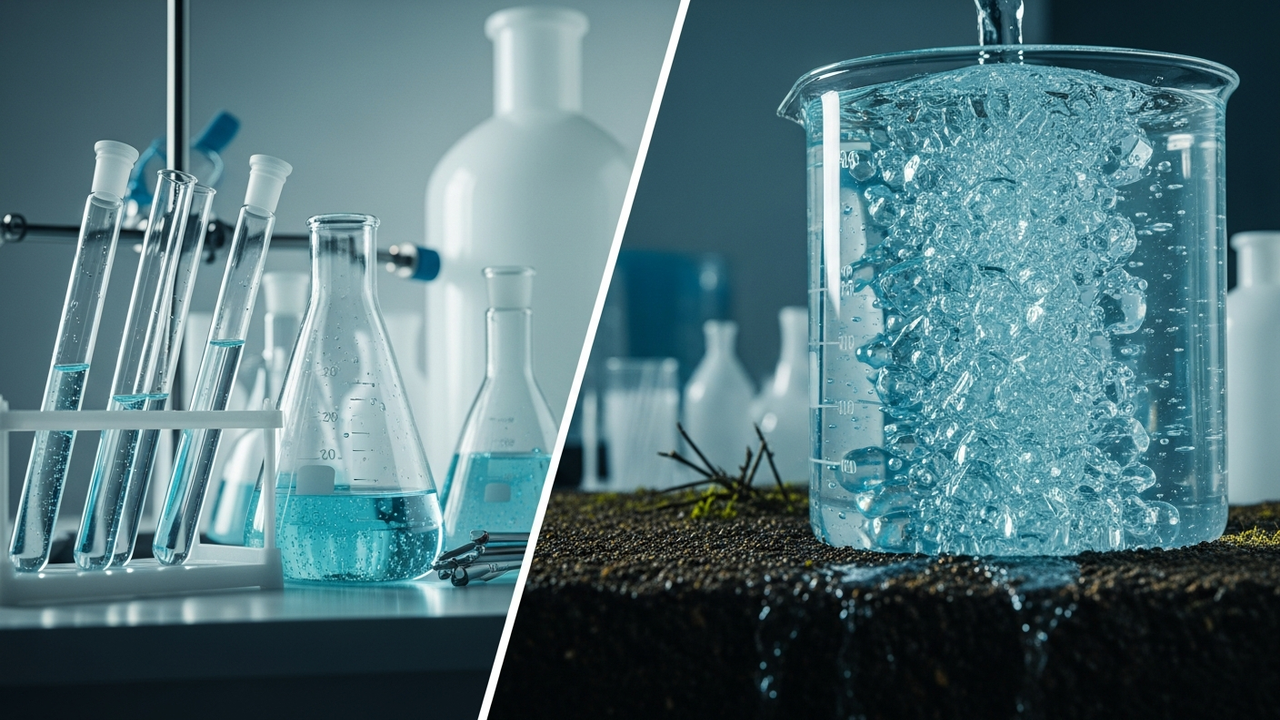
Background: Escalating Water Scarcity Demands Innovative Solutions
Global water scarcity is a pressing issue, driving an urgent need for more efficient water resource management. Traditional water storage and irrigation methods often suffer from substantial losses due to evaporation and percolation, limiting their sustainability. Superabsorbent polymers (SAPs), with their unique ability to absorb, retain, and release water, have long been a subject of research. The recent development of an advanced SAP technology, balancing enhanced performance with reduced environmental impact, promises to revolutionize water conservation efforts.
Key Findings: Molecular Optimization for High Performance and Versatility
The newly unveiled SAP technology features an optimized molecular structure, delivering unparalleled water absorption and retention capabilities compared to previous generations of polymers. It can absorb hundreds of times its own weight in water, retaining moisture over extended periods. This superior performance is achieved through:
- Advanced Molecular Design: Polymer backbone engineered to maximize interaction with water molecules, facilitating highly efficient water uptake.
- Robust Gel Network: Formation of a strong, three-dimensional gel network that encapsulates absorbed water, effectively minimizing evaporation and leakage.
- Environmental Compatibility: Designed with a biodegradable mechanism that ensures gradual decomposition in the environment, minimizing post-use ecological footprint.
This technology holds significant promise for smart irrigation systems in agriculture, where it can substantially reduce water consumption by precisely delivering moisture to crops. In urban infrastructure, integrating SAPs into permeable pavements could facilitate rainwater harvesting, mitigate urban flooding, and combat the urban heat island effect. Furthermore, its potential applications extend to emergency water supply and disaster relief.
Technical Significance & Outlook: Contributing to a Sustainable Future
This advanced SAP technology offers a multifaceted approach to global water challenges. Reduced water usage in agriculture directly supports food security and strengthens climate change adaptation strategies. Urban applications enhance infrastructure resilience and contribute to greener, more livable cities. Beyond these, the market for SAPs is expected to expand rapidly into new areas, including soil conditioning, desert greening, cooling materials, and waste treatment.
The commercialization of this technology is anticipated to improve living conditions in water-stressed regions and contribute significantly to global ecosystem protection, marking a crucial step towards a sustainable society. Future developments may include smart SAPs with advanced functionalities such as integrated moisture sensing and self-healing properties, further pushing the boundaries of polymer science in environmental applications.







Comments