Key Findings
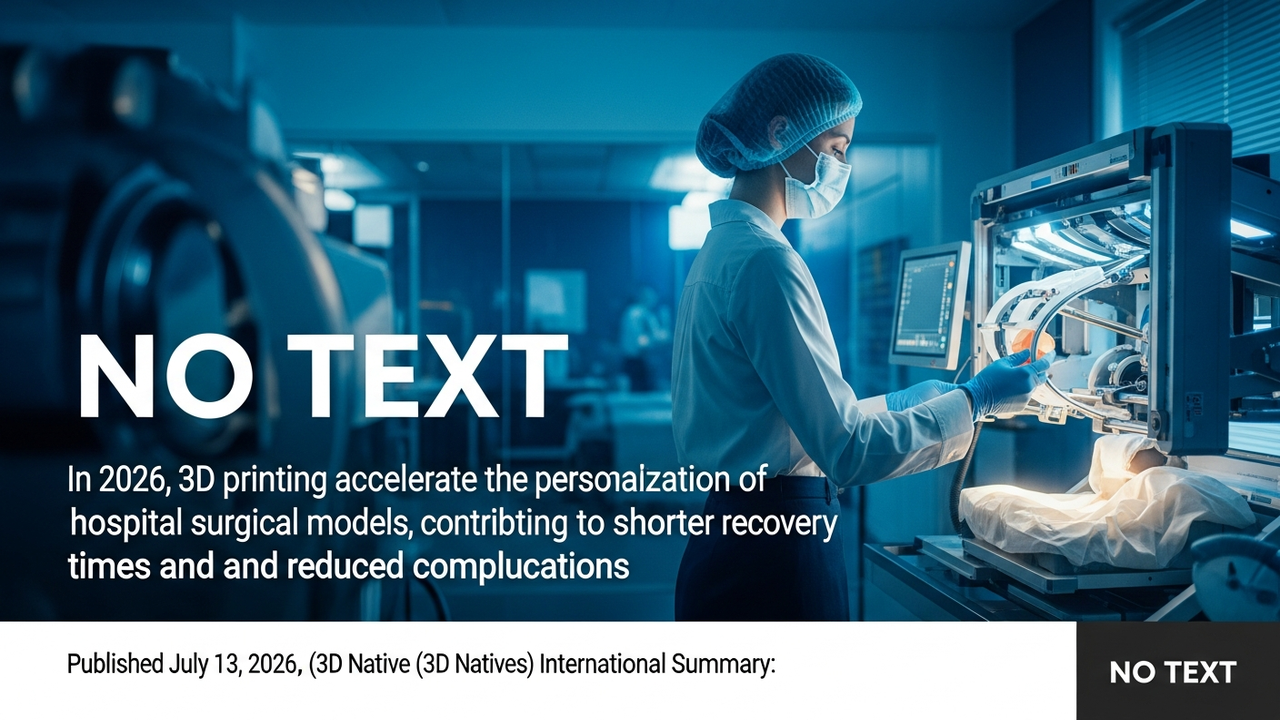
As of 2026, 3D printing has significantly advanced beyond experimental stages in the medical field, particularly within hospitals, transforming into a concrete, life-saving solution. The implementation of this technology enables the creation of highly precise surgical models tailored to each patient’s unique anatomy. This, in turn, contributes to a substantial reduction in patient recovery times and a notable decrease in the incidence of surgical complications. Yoav Zeif, CEO of Stratasys, reports that the adoption of 3D printing in healthcare has been one of the fastest-growing sectors between 2025 and 2026.
Technical / Clinical Details
3D printing technology rapidly generates highly detailed, life-sized, or scaled models of organs, bones, and blood vessels using patient imaging data from CT scans and MRI. These patient-specific models allow surgeons to simulate complex procedures and plan optimal approaches before surgery. For instance, institutions like the Mayo Clinic have successfully used these to quickly create patient-specific surgical guides, enhancing surgical precision. This leads to shorter operating times, reduced blood loss, decreased risk of damage to nerves and blood vessels, and ultimately, improved patient outcomes and quality of life. The materials primarily used are biocompatible resins and polymers, capable of withstanding sterilization processes.
Background & Context
The progression of Precision Medicine is a major trend in modern healthcare. Traditional standardized medical approaches have often been insufficient in addressing the diverse and unique needs of individual patients. 3D printing powerfully advances the realization of personalized medicine by providing patient-specific anatomical models, surgical instruments, and implants. Especially in surgical fields, detailed pre-operative planning significantly impacts the success rates of complex tumor resections, congenital heart defect repairs, and orthopedic surgeries. The adoption of 3D printing dramatically enhances the safety and efficiency of such advanced procedures.
Strategic Significance & Outlook
The rapid proliferation of 3D printing in the medical sector is expected to continue. Beyond creating surgical models, its applications are expanding into areas such as organ and tissue regenerative medicine, drug delivery systems, and personalized manufacturing of prosthetics and orthotics. As the technology evolves and costs decrease, more healthcare institutions will be able to adopt 3D printing, with patients worldwide benefiting from its advantages. Medical 3D printing is poised to solidify its position as an indispensable tool in advancing personalized medicine and improving patient outcomes globally.
Source: https://www.youtube.com/watch?v=xxxxxxxxxxx
Get our weekly technology intelligence — free
Receive an infographic that lets you judge at a glance whether each field’s analysis report is worth reading.
Subscribe Free — Weekly Tech Intelligence
By subscribing, you’ll receive Troy-Technical’s weekly technology intelligence newsletter.
- Your email and selected fields are used only to deliver the newsletter.
- We never share your information with third parties.
- You can unsubscribe anytime via the link in each email.
See our Privacy Policy for details.
Takes about a minute · Unsubscribe anytime








Comments