Key Findings
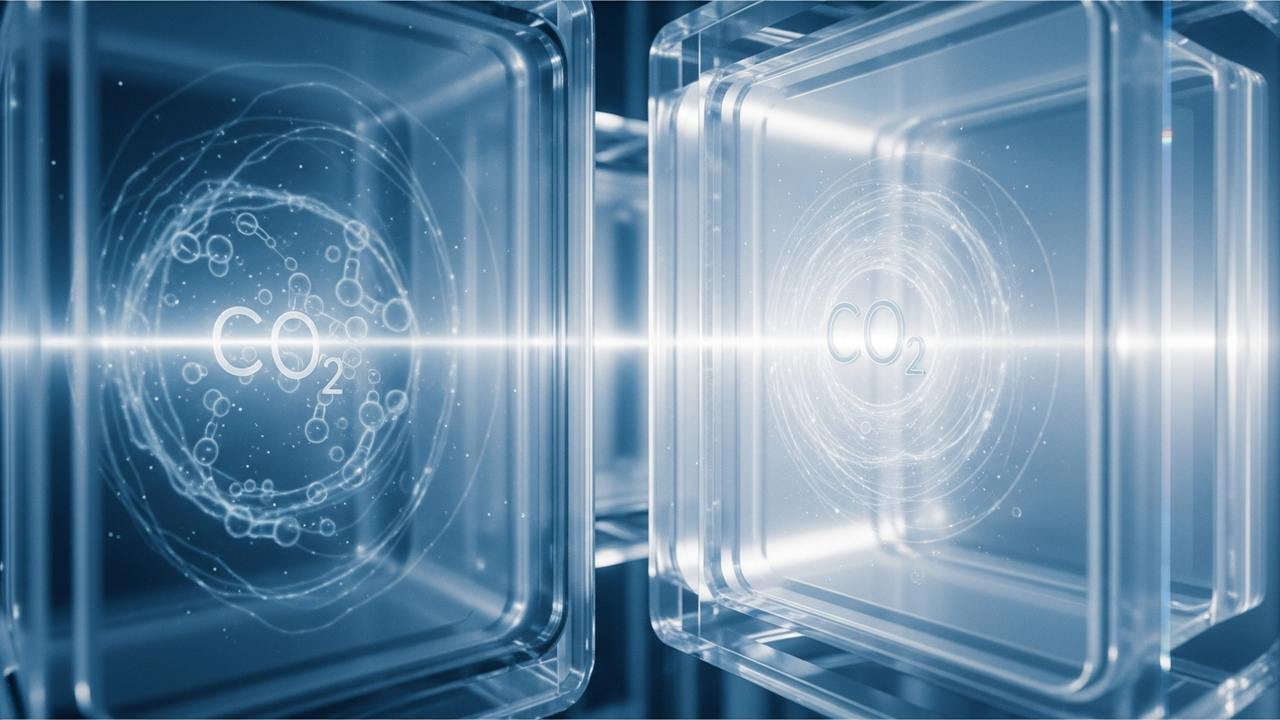
In the last decade, CO2 separation and capture technology has made significant strides, emerging as a forefront area in polymer science and membrane research. Polymeric membranes, in particular, have become a leading solution, enabling highly energy-efficient and effective separation of CO2 from various gas mixtures, including CO2/N2, CO2/H2, and CO2/CH4. Innovative new polymeric membrane materials, such as ether-oxygen-rich polymers, polymeric ionic liquids, perfluoropolymers, and thermally rearranged polymers, are now generating considerable excitement as highly promising candidates for diverse CO2 separation applications.
Technical / Clinical Details
CO2 separation using polymeric membranes is based on the principle of selective permeation, where the membrane acts as a barrier that allows specific gas molecules to pass through while blocking others. Ether-oxygen-rich polymers achieve high separation selectivity by preferentially adsorbing and permeating CO2 molecules due to their chemical affinity. Polymeric ionic liquids offer high CO2 solubility and stable separation performance due to their non-volatile nature. Perfluoropolymers are known for their excellent chemical and thermal stability, along with high CO2 permeability, making them suitable for harsh conditions. Thermally rearranged polymers can form dense selective layers through specific heat treatments, significantly enhancing CO2 separation performance. These materials, by precisely controlling membrane thickness, pore size, and chemical structure, are expected to reduce energy consumption by approximately 10-30% compared to existing separation technologies, enabling a more environmentally friendly and economical CO2 capture process.
Background & Context
Reducing greenhouse gas emissions, especially CO2, a primary contributor to global warming, is an urgent global challenge. Advanced Carbon Capture and Storage (CCS) technologies are essential for effectively curbing CO2 emissions from power plants and industrial processes. Traditional CCS methods, predominantly liquid-phase absorption methods like amine absorption, have faced challenges such as high energy regeneration costs, corrosion issues, and environmental impact from amine degradation byproducts. CO2 separation by polymeric membranes is garnering attention as a next-generation CCS technology that overcomes these challenges, offering energy efficiency and environmental friendliness, leading to significant research and development progress over the past ten years.
Strategic Significance & Outlook
The continuous advancement of polymeric membrane technology offers a crucial pathway toward achieving CO2 emission reduction targets. Future key challenges include developing even higher-performance and more durable new polymeric membrane materials, as well as scaling up membrane modules and reducing costs. These membrane technologies are expected to contribute not only to CO2 capture from large-scale industrial emitters like power plants and steel mills but also to diverse applications such as biogas upgrading, natural gas processing, and potentially direct air capture (DAC). Through the synergy of polymer science and engineering, the realization of more efficient and economical CO2 separation and capture solutions, indispensable for combating global warming, is set to accelerate.
Source: #
Get our weekly technology intelligence — free
Receive an infographic that lets you judge at a glance whether each field’s analysis report is worth reading.
Subscribe Free — Weekly Tech Intelligence
By subscribing, you’ll receive Troy-Technical’s weekly technology intelligence newsletter.
- Your email and selected fields are used only to deliver the newsletter.
- We never share your information with third parties.
- You can unsubscribe anytime via the link in each email.
See our Privacy Policy for details.
Takes about a minute · Unsubscribe anytime





Comments