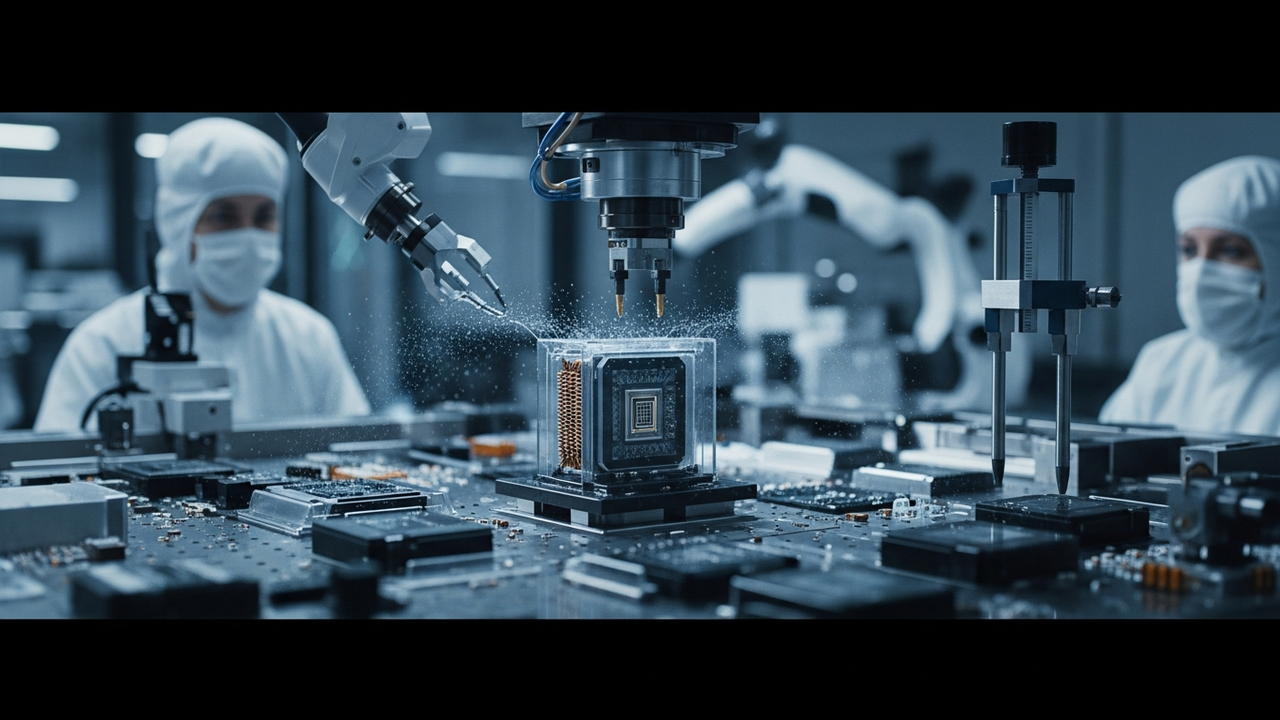
Background: Mounting Demands on Power Semiconductor Packaging
Modern electronic devices, particularly power semiconductor components critical for electric vehicles, renewable energy systems, and 5G communication infrastructure, face increasing demands for both miniaturization and higher power output. This trend leads to higher wiring density and concentrated high voltages/currents within devices, necessitating packaging materials with extremely high electrical insulation performance, thermal dissipation, and long-term reliability. Conventional mold compounds have struggled to meet these stringent requirements, with issues like dielectric breakdown, partial discharge, and moisture absorption degrading device lifespan and performance. Addressing these challenges requires fundamental material-level innovation.
Key Findings: Mitsubishi Electric’s Mold Compound Innovation
Mitsubishi Electric’s new epoxy-based mold compound aims to revolutionize the electrical insulation properties of power semiconductor devices. The core of this technology is a synergistic combination of several key elements:
- High-Purity Silica Fillers: Carefully selected silica with superior insulating properties to minimize the formation of conductive pathways due to impurities.
- Specialized Coupling Agents: Enhance interfacial adhesion between fillers and the epoxy resin, suppressing void formation and eliminating electrical weak points.
- Nanoscale Filler Dispersion Technology: Ensures uniform dispersion of fillers at the nanometer level, significantly boosting the dielectric breakdown strength of the overall mold compound while also reducing the coefficient of thermal expansion.
- Optimized Curing Process: Promotes a uniform curing reaction, mitigating internal stresses and microcracks, thereby enhancing material homogeneity and reliability.
Through these technical advancements, the developed mold compound achieves a dielectric breakdown voltage exceeding 50 kV/mm, representing a significant performance improvement over conventional materials. Furthermore, its low moisture absorption ensures stable insulation performance in humid environments, and it exhibits excellent thermal cycling performance at temperatures up to 200°C. These properties promise extended device lifetimes and high reliability under demanding operating conditions.
Technical Significance & Outlook: Enabling Next-Generation Electronic Devices
The introduction of this high-performance mold compound provides a crucial foundation for the advancement of sophisticated electronic devices, including 5G communication modules, next-generation power modules, and high-reliability control units for autonomous driving systems. Its superior insulation and thermal characteristics will accelerate device miniaturization, power output, and reliability, especially in applications requiring stable operation under high-frequency and high-voltage conditions. This Mitsubishi Electric technology underscores Japan’s ongoing innovation in semiconductor materials, contributing to the maintenance and enhancement of its international competitiveness. Moving forward, this material is expected to find applications in an even wider range of electronic devices, fulfilling its role as a foundational technology supporting a sustainable society.






Comments