Key Findings
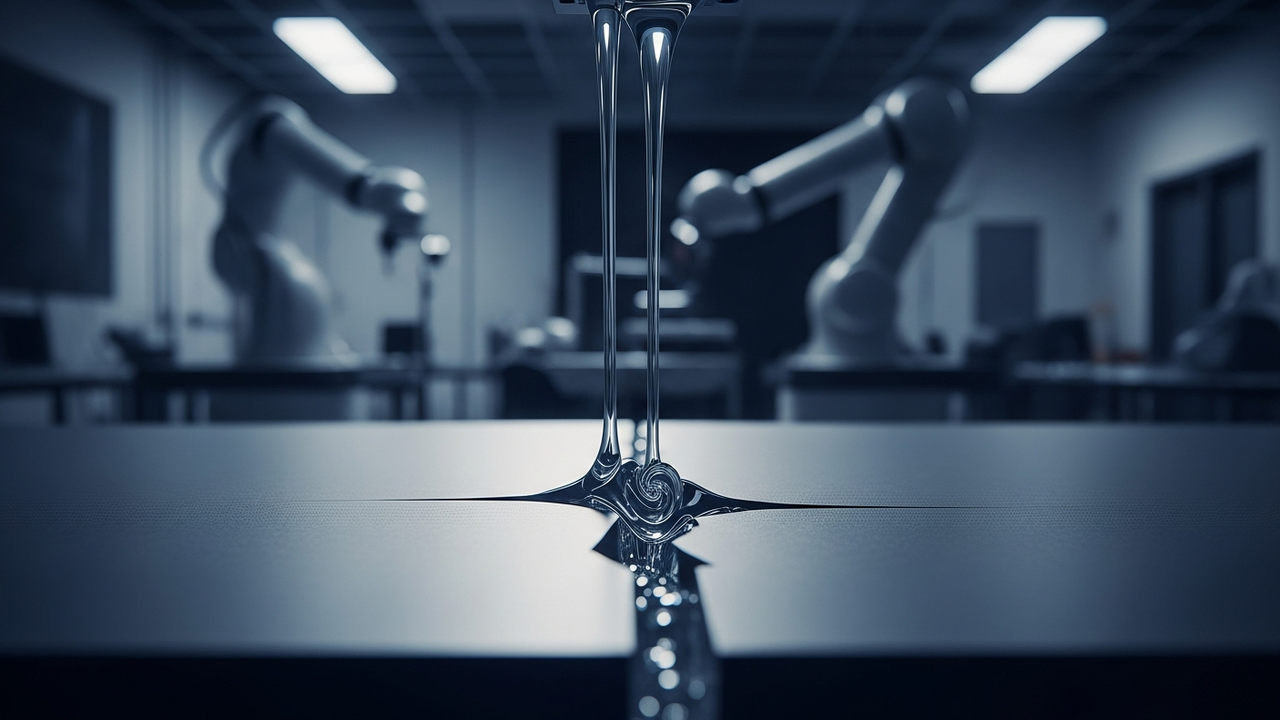
Oak Ridge National Laboratory (ORNL) is spearheading the development of a groundbreaking primer-less, self-healing sealant for building envelopes, aiming to significantly surpass the performance of existing commercial technologies. This innovative dynamic polymer integrates both hydrogen bonds and flexible polymer chains, facilitating a more rapid and autonomous self-repair of micro-cracks. Crucially, it also demonstrates improved adhesion by actively absorbing dust particles from the environment. Designed to achieve a peel strength of at least 20 lb./inch, this sealant promises to extend the longevity of building envelopes and substantially reduce energy loss caused by air leaks.
Technical / Clinical Details
- Primer-Less Adhesion: Conventional sealants typically require a primer to achieve adequate adhesion to building surfaces. ORNL’s sealant eliminates this need through its intrinsic material properties, simplifying installation, reducing labor costs, and accelerating construction schedules.
- Dynamic Polymer Chemistry: The sealant is composed of a special polymer featuring dynamic hydrogen bonds and highly flexible polymer chains. These hydrogen bonds are reversible, enabling the material to autonomously re-form broken bonds when micro-cracks occur, initiating the self-healing process.
- Accelerated Self-Repair: Micro-cracks, often caused by thermal expansion/contraction or structural movement, are common failure points in building envelopes, leading to air and moisture infiltration. The sealant’s ability to quickly and autonomously repair these minor defects ensures the continuous integrity of the building envelope over extended periods.
- Enhanced Adhesion via Dust Absorption: A unique feature of this sealant is its capacity to absorb ambient dust particles. This mechanism not only strengthens the sealant-substrate interface but also helps to maintain robust adhesion even in dusty environments, further contributing to its long-term durability.
- Tunable Mechanical Properties: The polymer composition can be engineered to tailor specific mechanical properties, such as hardness, elasticity, and tensile strength, to suit various application requirements. The target peel strength of ≥20 lb./inch is a benchmark for superior performance, significantly exceeding many current market offerings.
Background & Context
Energy efficiency in buildings is a critical global priority for climate change mitigation and reducing energy consumption. Air leakage through building envelopes is a major contributor to energy loss for heating and cooling. Traditional sealants degrade over time, losing their elasticity and adhesive properties, which leads to cracks and gaps. This necessitates frequent maintenance and replacement, adding to both financial and environmental costs. Self-healing sealants offer a transformative solution by proactively maintaining the integrity of building envelopes, thereby reducing energy waste and extending maintenance cycles.
Strategic Significance & Outlook
ORNL’s primer-less, self-healing sealant is poised to bring a paradigm shift to the construction industry. By dramatically increasing the lifespan of sealants and minimizing air infiltration, it will directly contribute to significant reductions in heating and cooling energy consumption, making buildings more sustainable and energy-efficient. This technology is applicable across a broad spectrum of building types—from residential to commercial and public infrastructure. Its commercialization will improve building durability, occupant comfort, and environmental performance, marking it as a next-generation material critical for the future of green building and infrastructure resilience.
Source: https://www.energy.gov/cmei/buildings/articles/primer-less-self-healing-sealant-building-envelopes


Comments