Background: The Complexities of Hyperscale AI Infrastructure
Building and operating hyperscale AI infrastructure for training and inference of Large Language Models (LLMs) presents immense technical and economic challenges. It’s not merely about aggregating a vast number of high-performance GPUs, but rather optimizing the entire stack—including hardware architecture, interconnectivity, power delivery, and software frameworks. The case of xAI’s Colossus 1 supercomputer starkly illustrates how architectural choices can profoundly impact efficiency and cost-effectiveness in the pursuit of frontier AI capabilities.
Colossus 1’s Inefficiency and Lease to Anthropic
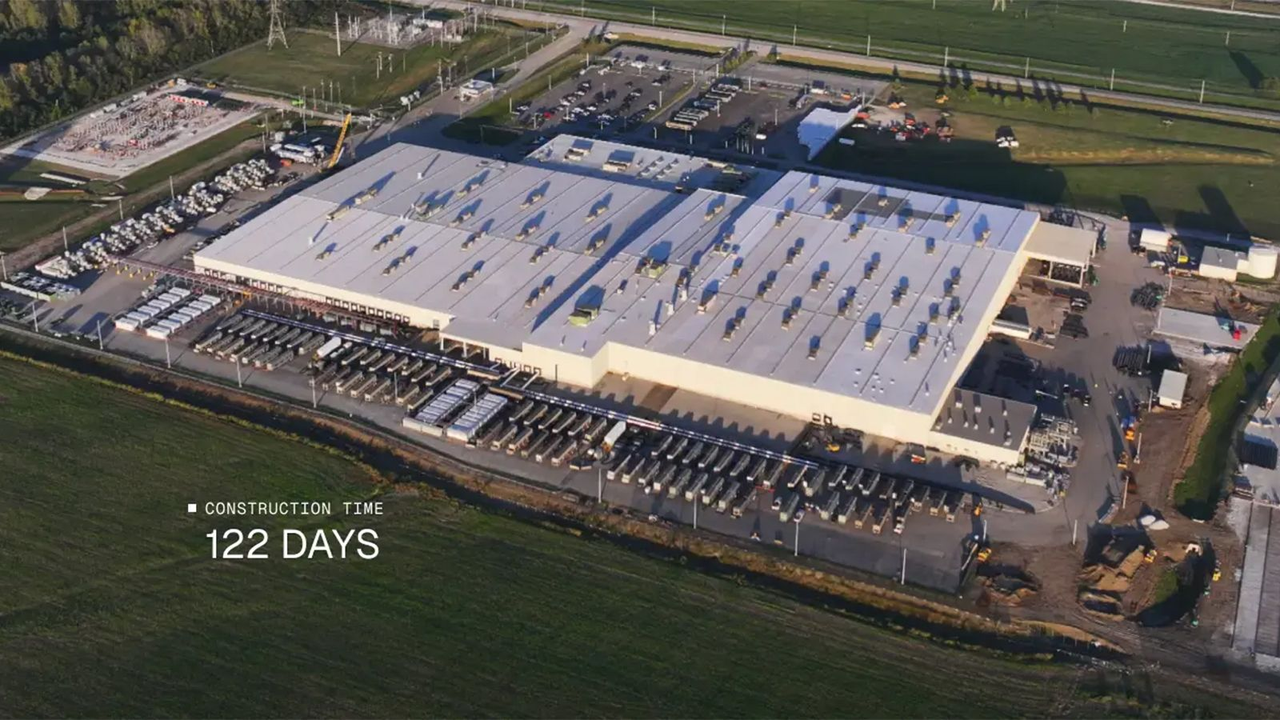
xAI, led by Elon Musk, constructed the “Colossus 1” AI supercomputer with a heterogeneous architecture comprising a mix of NVIDIA H100, H200, and GB200 GPUs. This mixed-generation and mixed-type GPU setup proved to be highly inefficient for training xAI’s Grok models. The complex interplay between different hardware generations and the resulting challenges in software orchestration led to a drastically low GPU utilization rate of merely 11%. This level of inefficiency made the supercomputer prohibitively expensive and slow for cutting-edge training tasks.
In a strategic pivot, Elon Musk decided to lease the entire Colossus 1 cluster, comprising approximately 220,000 GPUs and consuming 300 MW of power, to Anthropic. Anthropic will repurpose this infrastructure to address the inference bottlenecks for its Claude models. By gaining access to this massive compute capacity, Anthropic aims to relax Claude Code usage limits, eliminate throttling, and significantly raise API rate limits, thereby enhancing user experience and scaling its service offerings. This move highlights a key distinction: inference workloads, while demanding, often exhibit more architectural flexibility than the stringent requirements of efficient, distributed model training.
xAI’s Future Strategy: Colossus 2 and the Blackwell Era
Learning from the challenges of Colossus 1, xAI is now planning a new, highly optimized supercomputer named “Colossus 2.” This next-generation system is designed to be exclusively powered by Nvidia’s advanced Blackwell GPUs. The Blackwell architecture is expected to deliver unparalleled efficiency and performance for large-scale parallel computing, thanks to its unified design and highly optimized interconnects, specifically engineered to overcome the bottlenecks observed in heterogeneous clusters.
The investment in Colossus 2 signifies xAI’s renewed commitment to building a purpose-built infrastructure for frontier AI training, aiming to significantly improve the efficiency of developing models like Grok. This massive undertaking also carries significant financial implications, potentially paving the way for an xAI IPO. The saga of Colossus 1 and the planned Colossus 2 underscores the critical importance of a harmonized and optimized hardware architecture for effective AI development, particularly as the computational demands for both training and inference continue to escalate.








Comments