Materials Informatics– category –
-

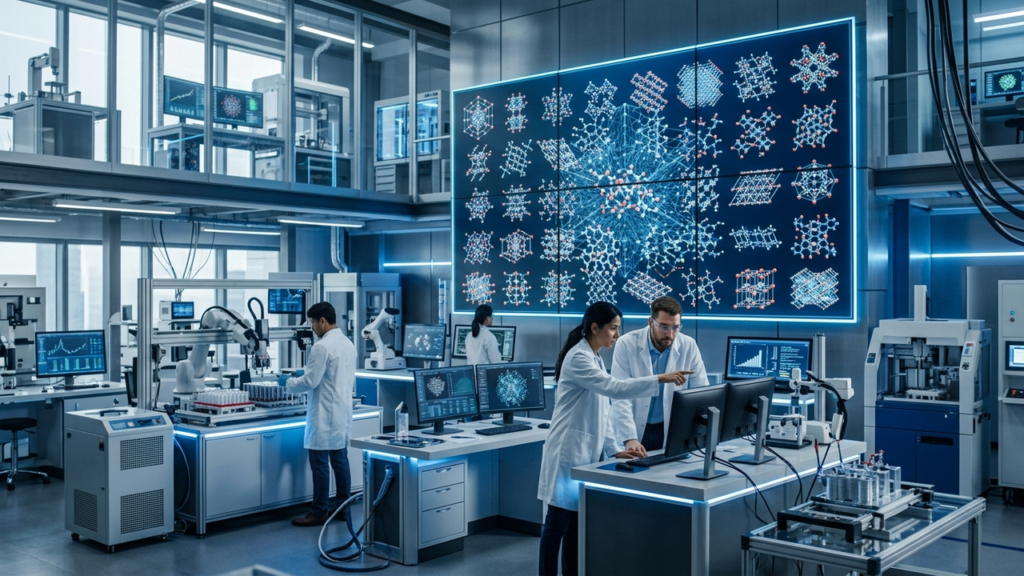
Google DeepMind GNoME and Microsoft MatterGen Accelerate Materials Discovery, Predicting Millions of Novel Stable Structures
Facebook (MIT DMSE) USA Overview Generative AI models, including Google DeepMind's GNoME and Microsoft's MatterGen, are significantly accelerating materials discovery by proposing novel material combinations and predicting their stabilit... -
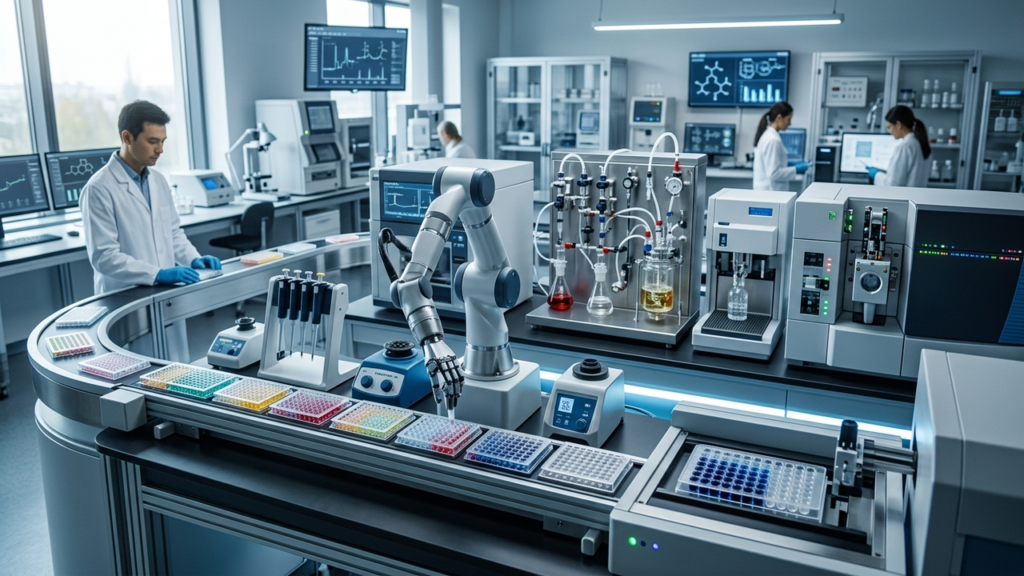
Large Language Model Agents Achieve 50-88% Success Rate in Biopharma Automated Synthesis, Accelerating DMTA Cycles
PharmExec USA Overview Agentic AI is revolutionizing the biopharmaceutical sector, with automated small molecule synthesis platforms like onepot.ai gaining prominence. These integrated systems, combining retrosynthesis engines, web searc... -
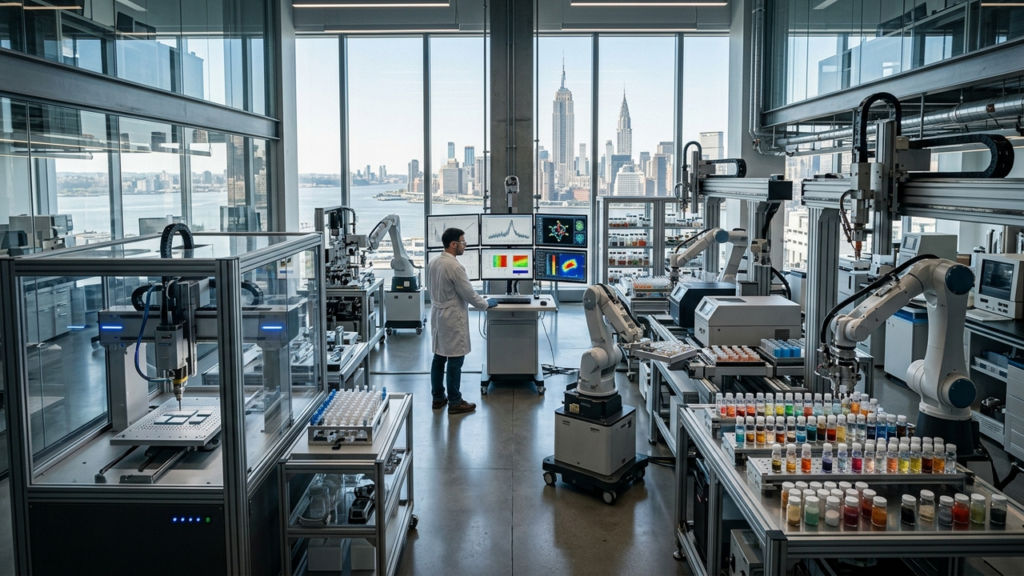
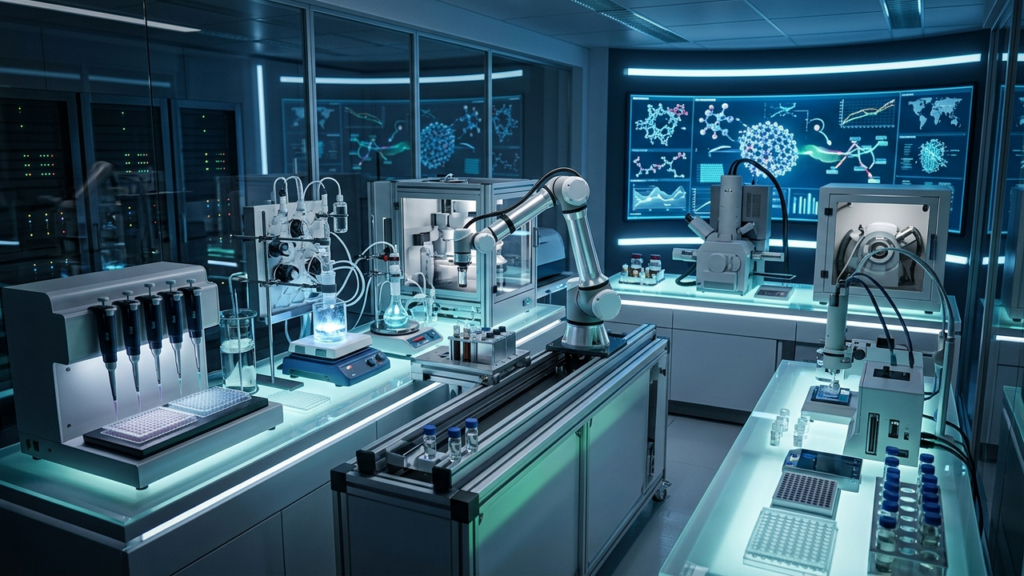
Radical AI Launches AI-Driven Autonomous Lab in NYC, Accelerating Material Development 10x Faster Than Human Pace
The Bulletin (Facebook) USA Overview Materials R&D company Radical AI has launched an AI-driven autonomous laboratory in New York City, where robots synthesize and test materials while AI decides the next experiment, dramatically acc... -
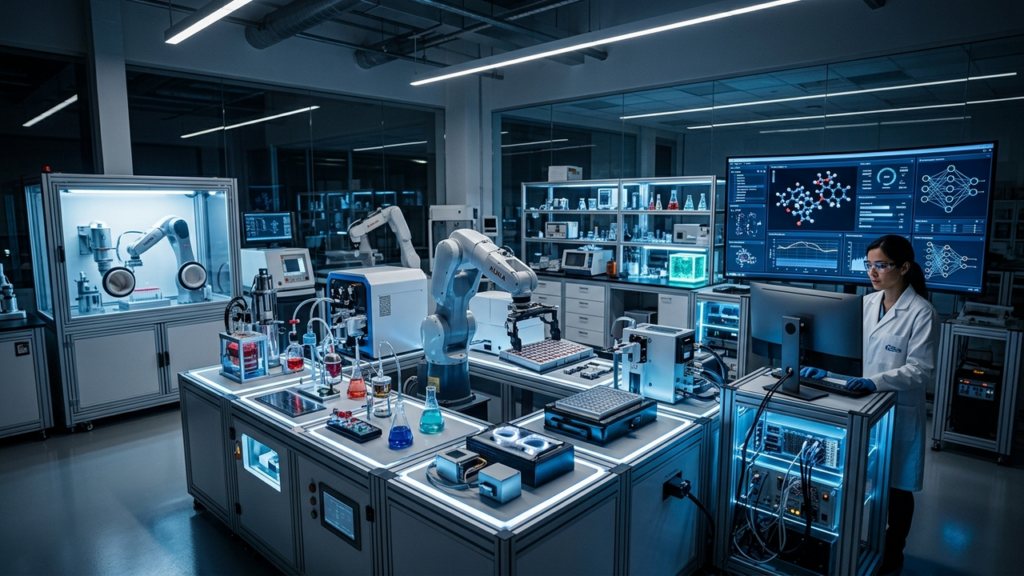
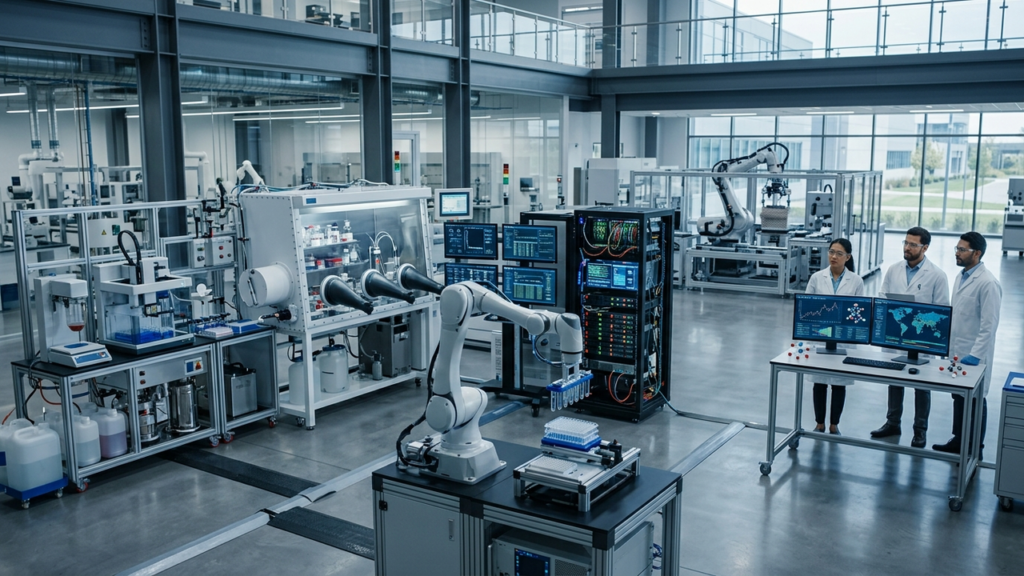
Closed-Loop Nanomaterial Discovery Platforms Accelerate R&D through AI and Robotic Integration
nano-matter.com International Overview Closed-loop nanomaterial discovery platforms integrate AI, robotic synthesis hardware, and automated characterization loops, designed to eliminate human bottlenecks in advanced materials science. At... -
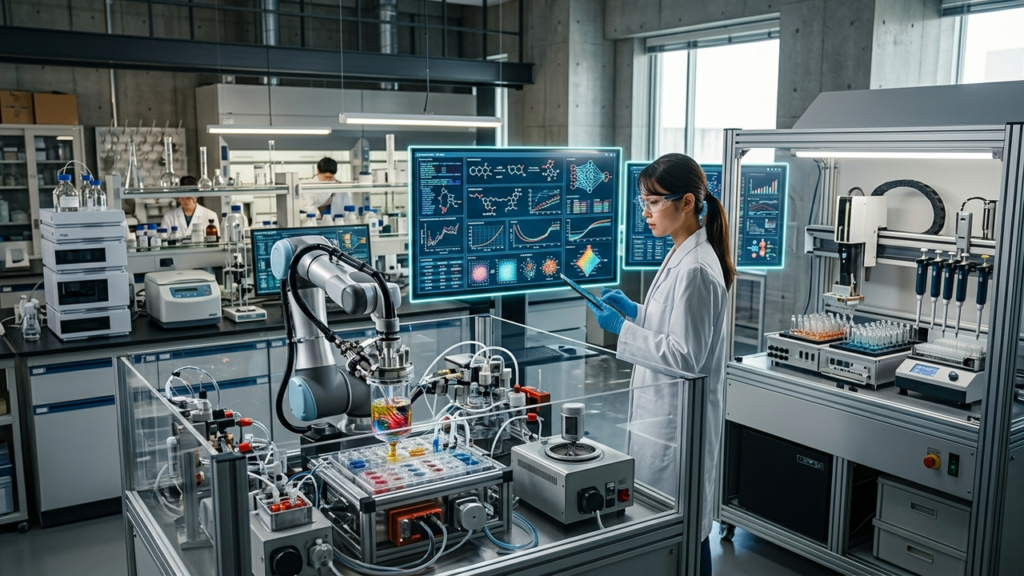
Self-Driving Labs Optimize Nanomaterial Synthesis and Property Prediction, Drastically Cutting Development Lead Times
nano-matter.com International Overview Self-driving labs (SDLs) function as closed-loop systems, combining machine learning algorithms with automated hardware to autonomously design, execute, analyze, and refine nanomaterial experiments ... -
Equivariant Graph Neural Network Interatomic Potentials Accelerate Nanomaterials Simulation by 100x
nano-matter.com International Overview Equivariant Graph Neural Network (GNN) interatomic potentials are accelerating nanomaterials research by predicting atomic forces and energies with DFT-comparable accuracy, while reducing computatio... -
U.S. Department of Energy Unveils Strategy to Accelerate Scientific Discovery and Economic Competitiveness with AI-Driven Autonomous Laboratories
Department of Energy (DOE) USA Overview The U.S. Department of Energy (DOE) announced a critical strategy for AI-driven autonomous laboratories to directly propel American scientific leadership and economic competitiveness. These labs wi... -
Tohoku University Proposes New AI-Integrated Autonomous Framework for Polymer Materials Discovery
EurekAlert! (Advanced Institute for Materials Research (AIMR), Tohoku University) Japan Overview A research team at Tohoku University has proposed a novel framework integrating AI and autonomous laboratories to overcome key bottlenecks i... -
GRACE-OFF Achieves High-Precision Machine-Learned Interatomic Potentials for Organic Liquids via GRACE Architecture
Journal of Chemical Theory and Computation | ACS Publications USA Overview This study introduces GRACE-OFF, a machine-learned interatomic potential (MLIP) built on the Graph Atomic Cluster Expansion (GRACE) neural network architecture, d... -
LAMMPS Integrates DeePMD-kit, NequIP for Quantum-Accurate ML Potentials, Enhancing Molecular Dynamics Simulations
LAMMPS Molecular Dynamics Simulator USA Overview LAMMPS, a widely used open-source molecular dynamics simulator, now supports cross-code frameworks and interoperability tools for machine learning interatomic potentials (MLPs), including ...