Key Findings
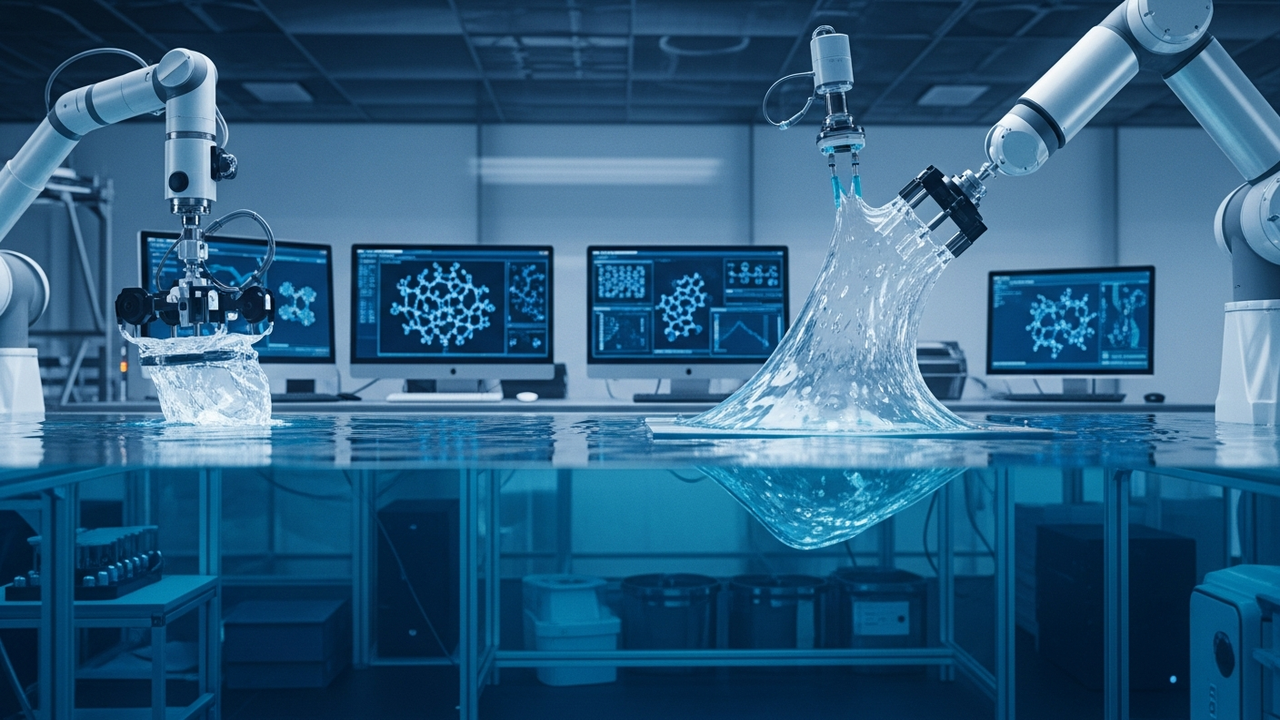
Researchers at Osaka University have achieved a significant breakthrough by successfully developing an innovative super-adhesive hydrogel that leverages artificial intelligence (AI) to exhibit both extremely strong underwater adhesion and self-healing properties. This AI-driven framework represents a pivotal achievement, as it dramatically accelerated the entire material discovery process by swiftly and efficiently identifying promising chemical compositions, far surpassing traditional manual trial-and-error methodologies.
Technical / Clinical Details
The developed hydrogel is composed of a specific combination of polymers and crosslinking agents, with AI playing a deep role in its molecular design. The research team trained AI models with vast datasets concerning material composition, structure, and critical properties such as underwater adhesive strength and self-healing efficiency. The AI extracted complex patterns from this data, predicting the optimal chemical interactions and structural features required to constitute a hydrogel with desired performance. This ‘inverse design’ approach enabled the AI to screen hundreds, even thousands, of candidate materials in a short period, a task that would typically take conventional materials scientists months to years. Specifically, the AI-proposed hydrogel, with particular monomer ratios and crosslinking densities, demonstrated adhesion strength comparable to dry adhesives in aqueous environments and exhibited robust self-healing capabilities to recover original performance after damage. This mechanism is attributed to the AI’s optimization of the self-assembly capacity of dynamic non-covalent bonds (e.g., hydrogen bonds and coordination bonds) formed within the hydrogel structure.
Background & Context
Underwater adhesives and self-healing materials hold immense promise for diverse applications, including medical fields (biocompatible adhesives, surgical sealants), soft robotics (flexible actuation components), wearable electronics (self-repairing sensors), and even subaquatic infrastructure repair. However, the aqueous environment severely degrades adhesive performance, and developing materials with self-healing functionalities has been extremely challenging due to their complex chemical and physical requirements. Osaka University’s AI-driven approach offers a new pathway to overcome these technical hurdles, pushing the boundaries of conventional material development. This achievement re-emphasizes the potential of ‘materials informatics’ to rapidly and efficiently design materials with specific functionalities.
Strategic Significance & Outlook
This AI-designed super-adhesive hydrogel is particularly anticipated for applications as surgical adhesives and wound-healing materials in the medical field. Furthermore, its ability to self-repair after damage will significantly enhance the reliability of soft robots and extend the lifespan of wearable devices. The research team plans to further optimize this AI framework, aiming for even greater biocompatibility and mechanical property enhancements, as well as broader applications across diverse environmental conditions. This breakthrough is expected to further strengthen the role of AI in the design and discovery of functional materials, providing novel solutions to currently unresolved technical and societal challenges.
Source: #
Get our weekly technology intelligence — free
Receive an infographic that lets you judge at a glance whether each field’s analysis report is worth reading.
Subscribe Free — Weekly Tech Intelligence
By subscribing, you’ll receive Troy-Technical’s weekly technology intelligence newsletter.
- Your email and selected fields are used only to deliver the newsletter.
- We never share your information with third parties.
- You can unsubscribe anytime via the link in each email.
See our Privacy Policy for details.
Takes about a minute · Unsubscribe anytime


Comments